
All on 4 Dental Implants Explained for Patients
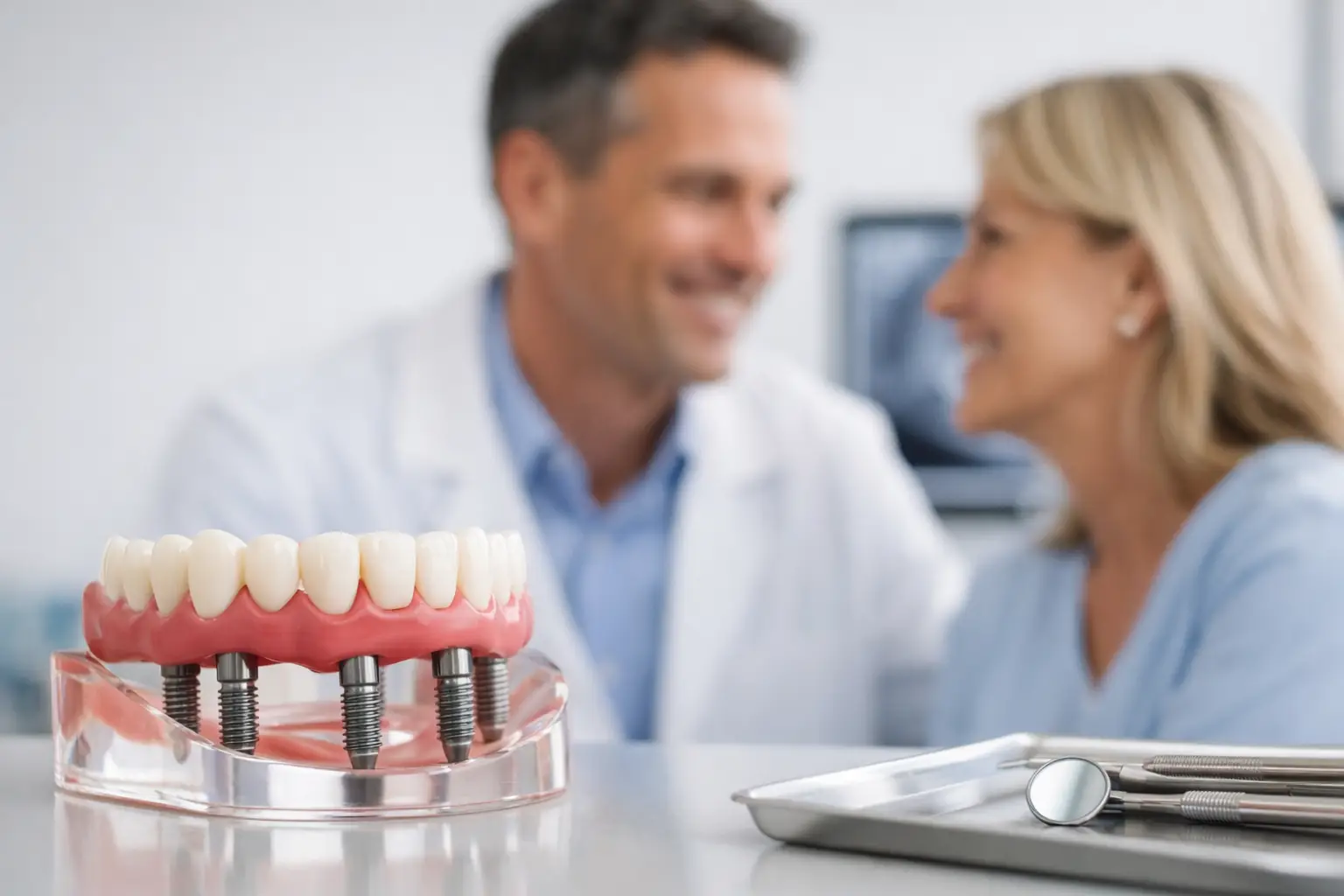
When loose dentures affect what you eat, how clearly you speak, or whether you smile freely in photos, a full-arch implant solution can be life-changing. This guide has all on 4 dental implants explained in clear, practical terms, including what treatment involves, who may be a candidate, and what to expect before making a decision.
What Are All-on-4 Dental Implants?
All-on-4 is a method of replacing a full upper or lower arch of missing teeth with a fixed restoration supported by four dental implants. Rather than placing one implant for every missing tooth, a dentist strategically positions four implants in the jawbone and attaches a custom full-arch bridge to them.
The two implants near the front of the mouth are generally placed vertically, while the back implants may be angled. This approach can make use of available bone and may reduce the need for bone grafting for some patients. Once the implants heal and integrate with the jawbone, they act like artificial tooth roots that support a stable set of replacement teeth.
All-on-4 is often discussed as an alternative to removable dentures. A traditional denture rests on the gums and can shift during meals or conversations. An implant-supported full arch is secured in place by implants, so it does not rely on adhesive and is not removed at home.
How the All-on-4 Process Works
Treatment begins with a thorough exam, digital imaging, and a conversation about your health history, goals, and concerns. Your dental team evaluates the condition of your gums, remaining teeth, bite, and bone volume. Planning is personal because no two mouths, smiles, or health histories are the same.
If failing or damaged teeth remain, they may need to be removed. The implants are then placed into carefully selected areas of the jaw. In many cases, patients can receive a temporary fixed bridge on the same day or soon after surgery. This temporary set of teeth lets you leave with a fuller smile while the implants heal.
Healing, called osseointegration, is the period when bone grows around and stabilizes the implants. It commonly takes several months. During that time, you will follow a modified diet and attend checkups so your dentist can monitor healing and protect the implants from excess pressure.
After healing, a final custom bridge is created. It is designed for strength, comfort, natural appearance, and the way your upper and lower teeth come together. The final restoration is typically more durable and refined than the temporary bridge.
Same-day teeth do not mean same-day completion
The phrase “teeth in a day” can be helpful, but it can also create unrealistic expectations. It usually refers to receiving a temporary fixed restoration shortly after implant surgery, not completing the entire treatment in one appointment. The final bridge is placed after adequate healing and careful adjustment.
For the best long-term result, patience during this stage matters. Following dietary instructions and avoiding chewing hard foods too early helps protect the implants while they become secure.
Who May Be a Good Candidate?
All-on-4 may be appropriate for adults who are missing most or all teeth in one arch, have dentures they cannot tolerate, or have several teeth that are severely decayed, loose, worn down, or beyond predictable repair. It can also be an option for someone who wants a more stable alternative to a removable denture.
Good candidates need sufficient bone in strategic areas of the jaw, although the angled placement of back implants can make treatment possible for some people who have experienced bone loss. Healthy gums and good oral hygiene habits are also important. Gum disease must be addressed before or as part of implant treatment because inflammation can threaten the foundation around implants.
Medical factors deserve an honest discussion. Conditions such as uncontrolled diabetes, certain immune disorders, untreated sleep apnea, or medications that affect bone healing may change the treatment plan. Smoking and vaping can raise the risk of complications and implant failure. These factors do not automatically rule out treatment, but they should be considered carefully.
A consultation is the only reliable way to determine candidacy. An experienced dental team should explain whether All-on-4, individual implants, a removable implant-supported denture, or another restorative option best fits your needs.
All on 4 Dental Implants Explained: Benefits and Trade-Offs
The biggest benefit of All-on-4 is stability. Because the restoration is anchored to implants, it generally feels more secure than a conventional denture. Many patients find it easier to speak, laugh, and enjoy a wider range of foods without worrying about a denture slipping.
Implants also transmit chewing forces into the jawbone, which can help preserve bone compared with wearing a traditional denture alone. A full-arch restoration can restore facial support and give the smile a more natural shape when it is thoughtfully planned.
However, this is a surgical and financial commitment, not a quick cosmetic fix. Recovery requires attention, and complications are possible, including infection, swelling, implant failure, or the need for adjustments to the bite or bridge. The restoration itself is durable but not indestructible. It can chip, wear, or require repair over time.
All-on-4 also means that the bridge is connected across the entire arch. If a patient has several healthy, savable teeth, preserving those teeth with other restorative care may be the more conservative choice. A trustworthy treatment plan should never recommend removing teeth that can be predictably maintained just to make room for implants.
What Does All-on-4 Cost?
The cost of All-on-4 varies based on the arch being treated, whether extractions are needed, the type of temporary and final restoration, imaging, sedation needs, and the complexity of your oral health. Some patients also need periodontal treatment or bone grafting before or during care.
Because this treatment includes surgery, custom restorations, multiple appointments, and long-term follow-up, it is a significant investment. Dental insurance may contribute toward certain parts of treatment, but coverage differs widely. Before proceeding, ask for a written treatment plan that explains what is included, what may involve an additional cost, and what payment options are available.
The lowest advertised price is not always the best value. Planning, implant quality, the materials used for the final bridge, and ongoing care all affect the longevity and comfort of the result.
Caring for an All-on-4 Smile
Implants cannot get cavities, but the gums and bone around them can still become infected. Daily home care and professional maintenance are essential. You will brush the bridge and gums carefully, clean underneath the restoration with tools recommended by your dental team, and keep regular hygiene visits.
Many patients benefit from a water flosser, implant-specific floss, or interdental brushes, depending on the design of their bridge. Your dental team will show you exactly how to clean areas that are not easy to see. Regular visits also allow the team to check the bite, inspect the bridge, and monitor the health of the tissues around the implants.
Avoid using your teeth as tools, chewing ice, or biting very hard objects. If you clench or grind your teeth, a night guard may help protect the restoration.
Questions Worth Asking at Your Consultation
Before choosing a provider, ask what type of final bridge is planned, how long the healing phase may take, and what follow-up care is included. It is also reasonable to ask about sedation options, how complications are handled, and whether you will have a temporary restoration during healing.
You should leave the conversation understanding the alternatives, not feeling pressured into one solution. At Sendero Dental Studio, implant recommendations are built around your health, comfort, and long-term goals, with clear answers at every stage of care.
A stable, comfortable smile can make everyday moments feel easier again, from sharing a meal with family to speaking up with confidence. The right next step is a personal consultation that gives you a clear picture of what is possible for your smile.