
Modern Dental Technology for Patients: What’s Changed
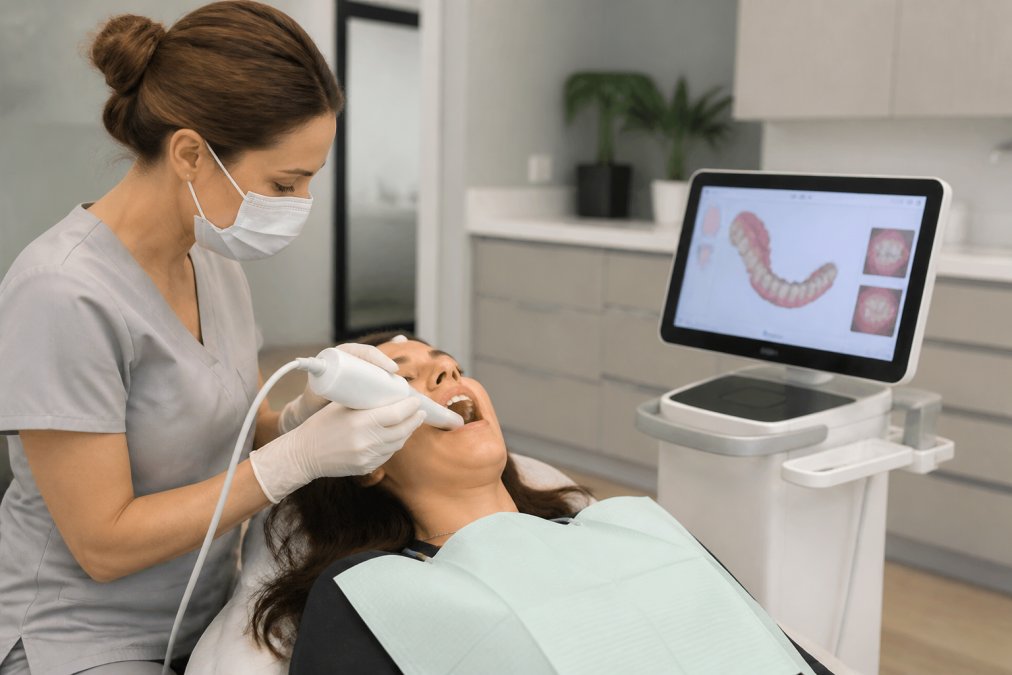
Table of Contents
- Why Modern Dental Technology Matters for Your Care
- Benefits of Digital Dentistry in Diagnosis and Planning
- How Digital X-Rays Reduce Radiation Exposure
- Intraoral Cameras and Real-Time Visualization
- Benefits of Laser Dentistry for Precision and Comfort
- Same-Day Restorations with 3D Printing and CAD/CAM
- How Modern Technology Reduces Dental Anxiety
- Data Privacy and Security in Digital Dental Records
- Frequently Asked Questions
Last Updated: September 1, 2026
Why Modern Dental Technology Matters for Your Care
Modern dental technology transforms how dentists diagnose, plan, and deliver care. Digital systems mean faster appointments, more accurate diagnoses, and treatments tailored to your specific needs. Better technology reduces chair time, lowers radiation exposure, and lets you see problems on a screen during your appointment instead of relying on your dentist’s description.
Practices adopting modern dental technology report better patient satisfaction, fewer treatment surprises, and the ability to catch problems earlier when they’re cheaper and easier to fix. For families managing multiple dental needs, seniors requiring complex restorations, and anyone with dental anxiety, these advances make a real difference in experience and outcomes.
Benefits of Digital Dentistry in Diagnosis and Planning
Digital dentistry fundamentally changes how dentists see and plan your treatment. Instead of relying solely on physical examination and traditional X-rays, your dentist has detailed digital images, 3D models, and treatment simulations before the first drill touches your tooth.
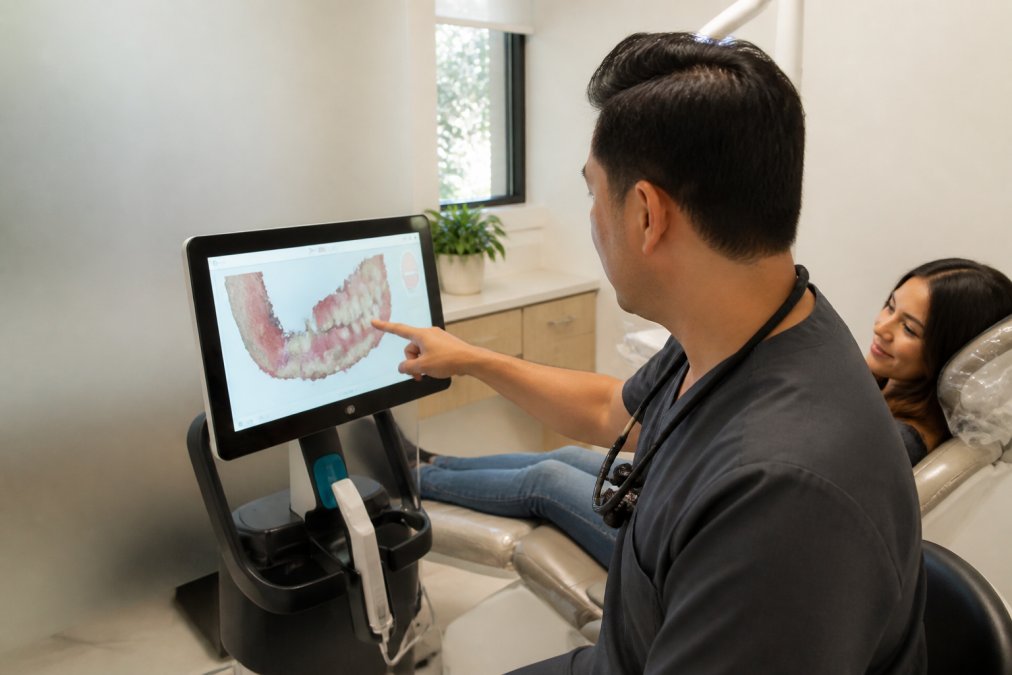
Digital imaging captures detail that traditional methods miss. Your dentist can zoom in on specific areas, measure precisely, and identify early-stage problems like small cavities or bone loss before they become painful or expensive. Real-time visualization during your appointment changes the conversation, instead of your dentist describing what they see, they show you on a monitor. You see the exact location and size of a cavity and understand why particular treatment is recommended.
Treatment planning becomes more predictable with digital tools. Your dentist can simulate different approaches and show you what your smile will look like after treatment. For patients considering significant work, this visualization reduces anxiety and sets realistic expectations.
Digital records integrate seamlessly across your care. Your dentist at Sendero Dental Studio can access your complete digital history, images, and notes instantly. If you need specialist consultation or emergency care elsewhere, your full digital record travels with you.
How Digital X-Rays Reduce Radiation Exposure
Digital X-rays deliver the diagnostic information your dentist needs while using significantly less radiation than traditional film (the FDA). This matters especially for children, pregnant patients, and anyone receiving frequent imaging.
Digital sensors are more efficient at capturing images, requiring less exposure to produce the same diagnostic quality. Your dentist takes only the specific X-rays necessary for your situation. If you need a full mouth series, that’s one set. If you’re here for a cleaning and checkup with no symptoms, you might need just a few bite-wing images.
Digital X-rays are safer to store and retrieve. No chemical processing or storage concerns. Your images are archived securely and can be accessed instantly at future appointments or shared with specialists if needed. The digital format also allows your dentist to enhance images for better visibility without any additional radiation exposure.
The American Dental Association recognizes digital imaging as a standard of care precisely because it maintains diagnostic quality while minimizing patient exposure (the American Dental Association).
Intraoral Cameras and Real-Time Visualization
An intraoral camera is a small, wand-like device that captures high-resolution images inside your mouth and displays them on a chairside monitor. When your dentist uses it, you see exactly what they see. A small cavity appears on the screen before treatment begins.
This visibility reduces anxiety, you’re no longer wondering what’s happening; you’re watching it unfold. Patients who see their own plaque buildup or gum inflammation are more motivated to improve their home care. Seeing is believing.
For treatment planning, intraoral cameras provide documentation that improves communication. Your dentist can take images during your appointment and use them to explain recommended treatment. The technology also creates a record of your mouth over time. Images from today can be compared to images from your next visit, showing whether gum health is improving or if a filling is holding up well.
Benefits of Laser Dentistry for Precision and Comfort
Laser dentistry uses focused light energy to perform specific dental procedures with precision that traditional drills cannot match. Applications span from gum disease treatment to cavity removal to cosmetic procedures, with benefits including reduced bleeding, faster healing, and less post-treatment discomfort.
A laser removes only diseased or decayed tissue, leaving healthy tooth structure intact. This selectivity means smaller cavities require smaller restorations. Gum disease treatment with lasers removes infected tissue while stimulating the remaining gum to heal and reattach to the tooth.
Many laser procedures require minimal or no anesthetic. The laser cauterizes blood vessels as it works, reducing bleeding and pain sensation. For patients with dental anxiety, the absence of the high-pitched drill sound and vibration reduces stress.
Healing happens faster with laser treatment. Post-operative bleeding is minimal. Swelling and bruising are reduced compared to traditional surgical approaches. Patients often return to normal activities sooner and experience less discomfort in the days following treatment.
Laser gum contouring reshapes your gum line with accuracy impossible with a scalpel. If your smile shows too much gum, laser contouring can reveal more tooth and create a more balanced appearance. The procedure is quick, healing is fast, and results are immediately visible.
Same-Day Restorations with 3D Printing and CAD/CAM
Same-day restorations represent a fundamental shift in how dental work is completed. Instead of tooth preparation, impression, lab fabrication, temporary restoration, and return visit weeks later, modern technology allows your dentist to design, mill, and place a permanent restoration in a single appointment.
CAD/CAM systems work like this: after your tooth is prepared, an optical scanner captures a 3D image of the preparation and your bite. Your dentist uses design software to create a virtual restoration, a crown, inlay, or veneer, that matches your tooth perfectly. A milling machine then fabricates the restoration from a ceramic or composite block while you wait.
The accuracy is remarkable. The digital design ensures perfect fit and occlusion. Traditional crowns often require adjustment after placement because lab fabrication introduces variables. Same-day restorations are milled to exact specifications, reducing chair time for adjustments.
For patients, same-day restorations mean one appointment instead of two. You avoid the temporary crown that doesn’t feel quite right and sometimes comes loose. You leave with a finished restoration ready to use immediately.
3D printing extends these capabilities further. For complex cases, multiple implant restorations, orthodontic guides, or surgical templates, 3D printing creates precise models and guides that improve planning and execution. Implant placement becomes more accurate when guided by a 3D-printed surgical template.
At Sendero Dental Studio, same-day restoration technology means your family can complete necessary dental work without disrupting your schedule.
How Modern Technology Reduces Dental Anxiety
Dental anxiety affects millions of people. Fear of pain, fear of the unknown, loss of control, and past negative experiences create real barriers to seeking care. Modern technology directly addresses each of these anxiety sources.
Modern anesthetics, delivered through thin needles with gentle technique, eliminate pain during treatment. Laser dentistry often requires no anesthetic at all. When patients experience a genuinely painless procedure, the fear that drove their anxiety begins to dissolve.
Visibility and control reduce psychological fear. When you can see what’s happening on a monitor, the experience becomes less mysterious and threatening. You understand each step and can ask questions. Intraoral cameras show you your own mouth, which makes the experience feel less invasive.
Your dentist explains what will happen before it happens. Chairside monitors let you watch the procedure in real time. This predictability reduces anxiety significantly. Modern dental offices designed with anxious patients in mind use soft lighting, calming colors, and comfortable seating. Same-day restorations mean fewer appointments overall.
For children, modern technology is transformative. Showing a child their own cavity on a monitor makes the problem real and understandable. Shorter appointments mean kids don’t have time to become overwhelmed.
Sedation options, when needed, are safer with modern monitoring technology. Pulse oximeters and blood pressure monitors track your vital signs continuously. Your dentist can adjust medication precisely.
Data Privacy and Security in Digital Dental Records
Digital records offer tremendous benefits, but they introduce legitimate concerns about privacy and security. Your dental records are protected under federal law. The Health Insurance Portability and Accountability Act (HIPAA) establishes strict standards for how healthcare providers handle your personal health information (hhs.gov). Your dentist cannot share your records without your written consent except in specific circumstances.
Digital systems at reputable dental practices meet or exceed HIPAA requirements. Data is encrypted both in transit and at rest. Access is controlled, only authorized staff can view your records. Audit trails track who accessed your information and when.
Your role in protecting your information matters too. When you create a patient portal account, use a strong password and don’t share your login credentials. Be cautious about accessing your records on public WiFi networks.
Modern dental practices, including Sendero Dental Studio, invest in secure systems because patient trust depends on it. Your health information is sensitive, and protecting it is a fundamental obligation.
Modern dental technology exists to serve you, to make your care faster, more accurate, more comfortable, and more understandable. At Sendero Dental Studio, we’ve embraced these technologies because they align with our commitment to providing comprehensive, family-oriented care. Whether you’re bringing your child for a routine checkup, seeking relief from dental anxiety, or planning complex restorative work, modern technology makes that care more precise and comfortable. Request your appointment today and experience the difference that patient-centered, technology-enabled dentistry makes.
Frequently Asked Questions
Q: What is the latest technology in modern dental technology for patients?
A: Today’s dental practices use digital imaging, intraoral cameras, laser systems, 3D printing, and CAD/CAM technology for same-day restorations. These tools improve diagnostic accuracy, reduce treatment time, and enhance patient comfort. Many practices also offer teledentistry for virtual consultations and remote monitoring, making care more accessible and personalized to your needs.
Q: How does digital imaging improve dental diagnosis?
A: Digital imaging provides high-resolution, real-time visualization of teeth, bone, and soft tissues. Cone beam computed tomography (CBCT) creates 3D models for precise treatment planning. These images reduce diagnostic errors, help dentists spot early intervention opportunities, and allow patients to see exactly what the dentist sees, building confidence in recommended treatment.
Q: Are modern dental procedures less painful than traditional methods?
A: Modern techniques like laser dentistry and minimally invasive approaches typically cause less discomfort than older methods. Laser systems reduce bleeding and swelling, intraoral cameras allow precise work with less tissue trauma, and digital planning ensures predictable outcomes. However, comfort depends on the specific procedure and individual factors, discuss pain management options with your dentist during consultation.
Q: How do same-day restorations work, and what’s the benefit?
A: CAD/CAM and 3D printing technology allow dentists to design and mill crowns, inlays, or other restorations chairside in a single appointment. Intraoral scanning captures precise measurements, software designs the restoration, and a milling unit fabricates it while you wait. This eliminates temporary restorations, reduces office visits, and ensures a better fit than traditional lab-made restorations.
This article was written using GrandRanker