
Dental Implant vs Bridge: Which Fits Your Smile?
A missing tooth can change more than the way your smile looks in photos. It can make chewing less comfortable, affect the teeth beside it, and leave you wondering whether you should act now or wait. When comparing a dental implant vs bridge, the right answer depends on your oral health, timeline, budget, and what will best protect your smile for years ahead.
Both options can restore a gap with a natural-looking tooth. The difference is how they are supported. A dental bridge is anchored to neighboring teeth, while an implant is supported by the jawbone. At Sendero Dental Studio, we help patients weigh those differences carefully, without pressure, so treatment feels like a confident decision rather than a rushed one.
Dental Implant vs Bridge: The Core Difference
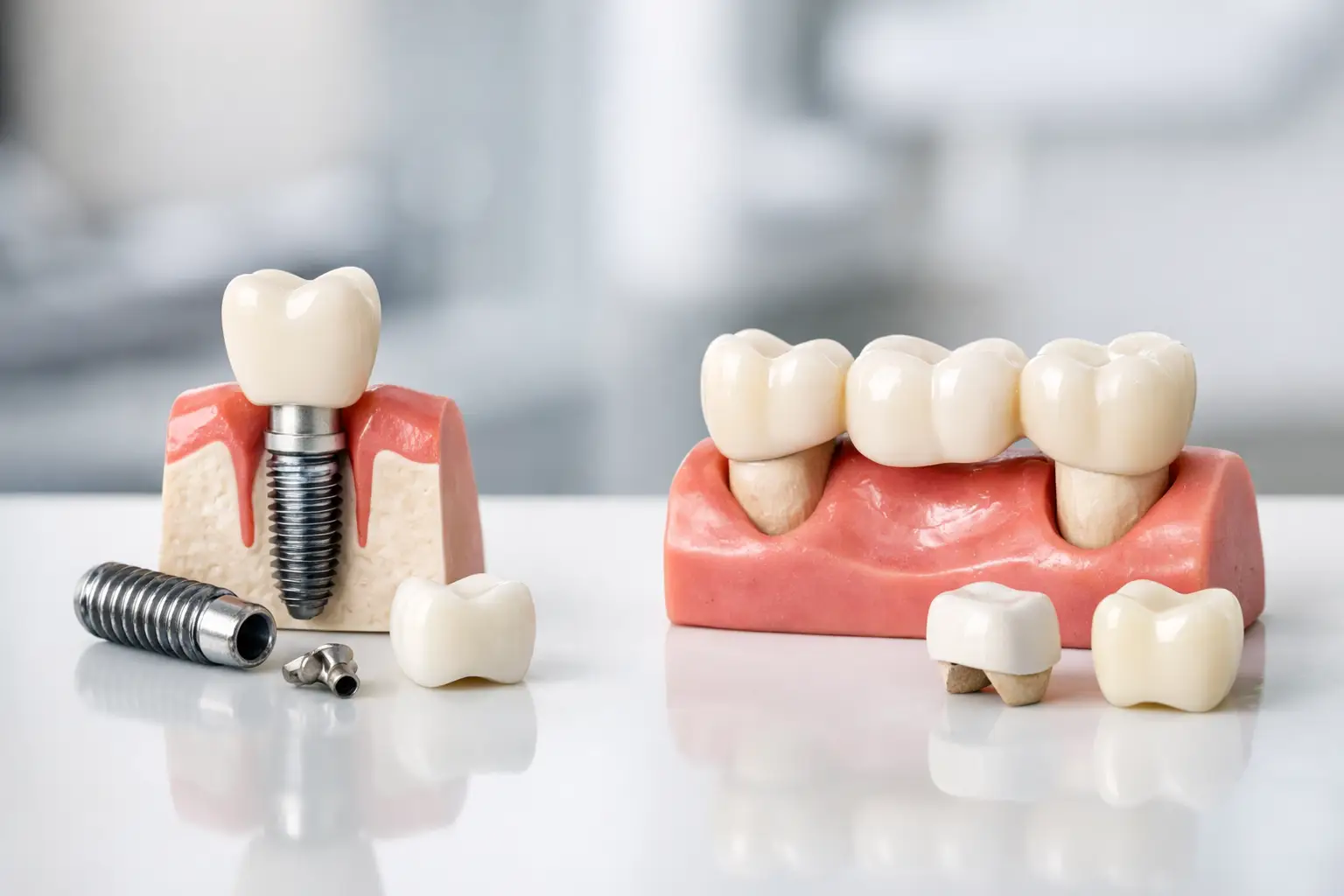
A traditional dental bridge replaces a missing tooth by placing a false tooth, called a pontic, between two crowns. The crowns fit over the natural teeth on either side of the gap, holding the replacement tooth in place. In some situations, a bridge may be supported by only one neighboring tooth or by implants rather than natural teeth.
A dental implant replaces the root as well as the visible portion of the tooth. A small titanium post is placed in the jawbone, where it gradually bonds with the bone during healing. Once stable, the implant receives a custom crown. The finished restoration is designed to look, feel, and function much like a natural tooth.
That distinction matters because natural tooth roots stimulate the jawbone when you chew. When a tooth is lost, the bone in that area can gradually shrink. An implant can help preserve that bone. A traditional bridge restores the space above the gumline but does not replace the missing root.
When a Dental Bridge May Be the Better Choice
A bridge can be an excellent, reliable solution, especially when it fits the condition of the surrounding teeth. It is often completed more quickly than an implant because it does not require a surgical placement and healing period. For someone with a wedding, work event, or upcoming travel, that shorter timeline may be a meaningful advantage.
A bridge may also make sense if the teeth next to the missing tooth already need crowns because of large fillings, fractures, or significant wear. Since those teeth would benefit from coverage anyway, using them to support a bridge can be a practical approach.
Some patients are not ideal candidates for implant surgery right away. Active gum disease, uncontrolled medical conditions, heavy tobacco use, or limited bone volume can affect implant planning. These concerns do not always rule out an implant permanently, but they may need to be addressed before treatment begins. A bridge can sometimes provide a suitable alternative.
The trade-off is that a traditional bridge requires reshaping the neighboring teeth for crowns. Even healthy enamel must be reduced to create room for the restorations. Bridges also need diligent cleaning beneath the replacement tooth, where food and plaque can collect. A floss threader, interdental brush, or water flosser may become part of your daily routine.
When a Dental Implant May Be Worth the Investment
An implant is often the most conservative choice for the teeth beside a single missing tooth because it does not rely on them for support. The dentist can replace the gap without filing down healthy neighboring teeth. For many patients, that benefit is one of the strongest reasons to consider an implant.
Implants are also known for stability. Because the post is anchored in the jawbone, the crown does not rest on adjacent teeth or move during normal chewing. With thoughtful planning and consistent home care, an implant can be a long-term tooth replacement solution. The crown attached to it may eventually need repair or replacement, just as a natural tooth may need dental care over time, but the implant itself can last many years.
Bone preservation is another important consideration. After tooth loss, the jawbone can begin to change, sometimes affecting facial support and future restoration options. An implant transfers chewing forces to the bone, helping maintain the area where the tooth root once was.
Still, an implant is not always the fastest path. After extraction, some patients need time for the socket to heal. Others may need a bone graft before placement. Then, after implant surgery, the post needs time to integrate with the bone before the final crown is placed. The total process can take several months, though temporary tooth options may be available during treatment.
Cost, Insurance, and Long-Term Value
The up-front cost of a bridge is usually lower than that of a single implant. A bridge generally involves crowns and a replacement tooth, while an implant involves surgery, a post, an abutment, and a crown. Insurance plans may cover portions of one option differently than the other, and coverage can vary widely.
Looking only at the first estimate, however, does not tell the whole story. A bridge connects several teeth in one restoration. If a supporting tooth develops decay, a crack, or a problem beneath its crown, the bridge may need more extensive repair or replacement. An implant is separate from the neighboring teeth, although it requires healthy gums and bone to remain successful.
The best value is not automatically the least expensive treatment or the most advanced one. It is the option that fits your health needs, can be maintained comfortably, and supports your goals over the long term. A clear exam and treatment discussion can help you understand the anticipated costs, insurance considerations, and expected maintenance before you decide.
Comfort, Appearance, and Everyday Function
Modern bridges and implant crowns are custom designed to blend with your surrounding teeth in shape and color. In many cases, friends and coworkers will not notice the restoration at all. What patients tend to notice most is how the tooth feels while eating and smiling.
An implant often feels particularly natural because it functions independently, like a tooth with its own root. A bridge can also feel comfortable and secure, especially after the brief adjustment period that follows placement. The quality of planning, bite alignment, materials, and fit matters greatly for either option.
For front teeth, appearance can make the decision more complex. The gumline, bone level, tooth color, and smile line all influence whether an implant or bridge will create the most predictable cosmetic result. For back teeth, chewing forces and access for cleaning may carry more weight. This is why a one-size-fits-all recommendation is rarely the right approach.
What Your Dentist Will Evaluate
Choosing between a bridge and an implant starts with more than looking at the empty space. Your dental team will assess your gums, bite, neighboring teeth, bone levels, and overall medical history. Digital imaging may be used to evaluate the jawbone and plan implant placement precisely.
Your habits matter, too. If you grind or clench your teeth, wear a nightguard, or have difficulty cleaning between teeth, those details can influence which restoration is likely to serve you best. The location of the missing tooth, how long it has been absent, and whether the surrounding teeth have existing crowns all shape the recommendation.
Questions Worth Asking at Your Visit
You do not need to arrive knowing which treatment you want. It is helpful, though, to ask how each option would affect the adjacent teeth, what the expected treatment timeline looks like, and what daily care will be required. Ask whether bone grafting is needed for an implant and what would happen if a bridge support tooth needs future treatment.
It is also reasonable to discuss the full financial picture, including phased treatment options when appropriate. A good plan should make clinical sense and feel manageable for your family.
Caring for a Bridge or Implant
Neither option is maintenance-free. A bridge should be brushed thoroughly along the gumline and cleaned under the pontic every day. Regular professional cleanings are especially important because bacteria can enter at the edges of crowns if plaque is allowed to build up.
An implant crown should be brushed and flossed like a natural tooth, with careful attention to the gum tissue around it. Healthy gums are essential for implant longevity. Regular exams allow your dentist to check the bite, crown, implant area, and surrounding bone before small concerns become larger ones.
Whether you choose a bridge or an implant, replacing a missing tooth is an investment in comfortable eating, clear speech, and confidence in your smile. Schedule a conversation with a dental team you trust, bring your questions, and choose the solution that feels right for your health and your life.