
Veneers vs Crowns for Front Teeth
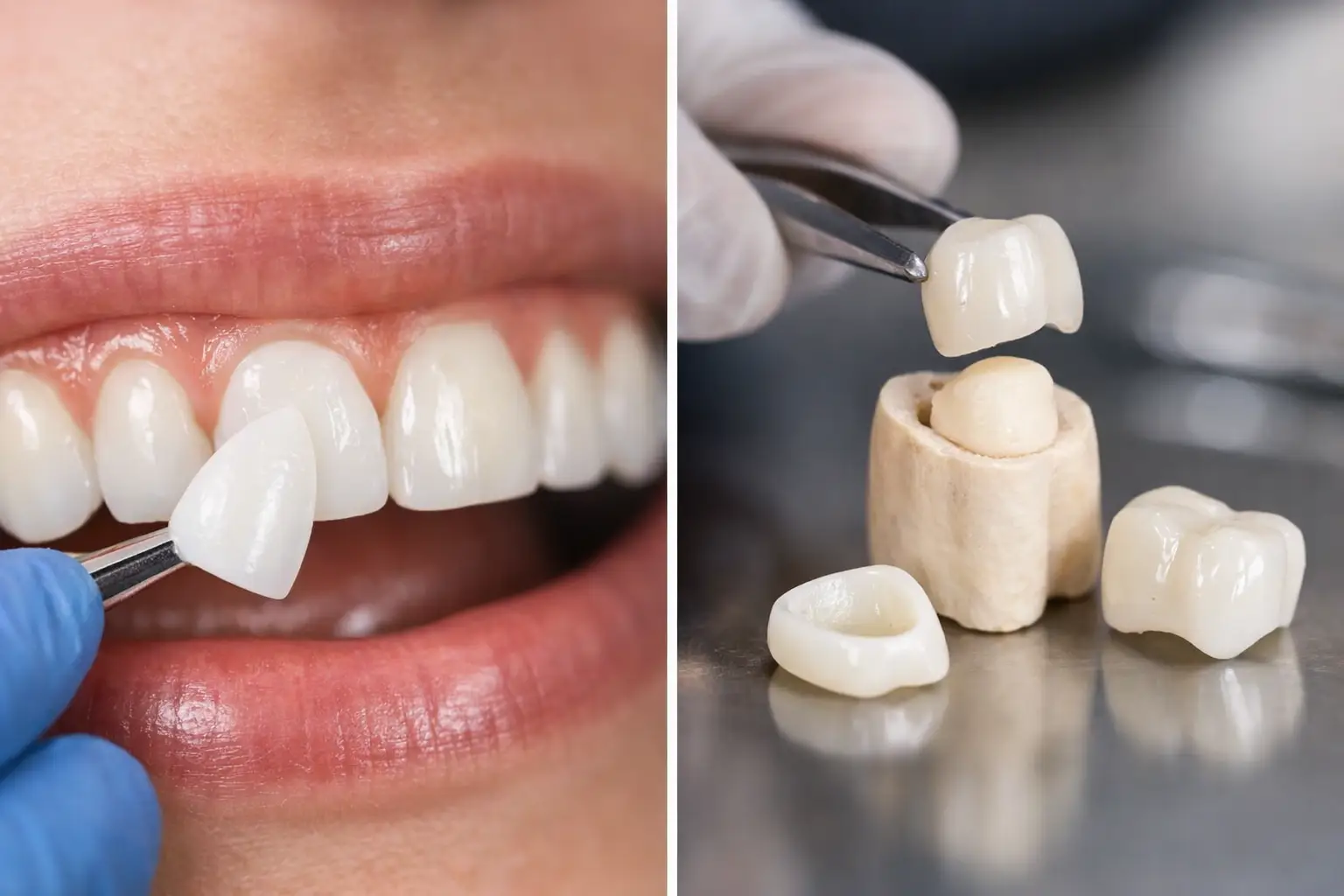
A front tooth can change the whole feel of your smile. If one is chipped, discolored, misshapen, worn down, or weakened by previous dental work, the question often becomes veneers vs crowns for front teeth – and the right answer depends on more than appearance alone.
Both treatments can improve how a front tooth looks. Both can be made to blend beautifully with your natural smile. But they serve different purposes. Veneers are usually chosen when the goal is mostly cosmetic improvement with a more conservative approach. Crowns are typically recommended when a tooth needs more protection because its structure has been compromised.
For many patients, the hardest part is knowing which concerns matter most. Are you trying to brighten a dark tooth? Repair a chip? Cover enamel damage? Strengthen a tooth after a large filling or root canal? Those details guide the decision.
Veneers vs Crowns for Front Teeth: The Core Difference
The simplest way to think about it is coverage. A veneer covers the front surface of a tooth. A crown covers the entire tooth above the gumline.
Because veneers only cover the visible front portion, they usually require less reshaping of the natural tooth than crowns. That makes them appealing for patients who want to improve color, shape, minor gaps, or small chips while keeping as much healthy tooth structure as possible.
A crown, on the other hand, acts more like a protective cap. It is designed not just to improve appearance, but also to reinforce a tooth that has become weak, cracked, heavily filled, or structurally compromised. Front teeth do not handle biting force the same way back teeth do, but they still matter for daily function, especially when you bite into foods and speak.
When Veneers Make More Sense
Veneers are often a strong option when the tooth is healthy overall but does not look the way you want it to. If a front tooth is stained and whitening will not help, slightly uneven, mildly chipped, or smaller than surrounding teeth, a veneer may provide the cosmetic change you want without the added coverage of a crown.
They are especially popular for smile design because they can create a very natural, polished look. Modern porcelain veneers can reflect light in a way that closely resembles enamel, which matters for front teeth where every detail is visible.
That said, veneers are not ideal for every situation. If the tooth has a large filling, significant decay, a fracture, or very little healthy enamel left, a veneer may not offer enough support. Veneers can improve appearance beautifully, but they are not a substitute for structural repair when a tooth is already weakened.
When Crowns Are the Better Choice
Crowns are usually recommended when the tooth needs protection as much as it needs cosmetic improvement. If a front tooth has had root canal treatment, has a large broken area, has extensive wear, or contains a lot of old dental work, a crown often provides the more predictable long-term result.
This is one of the biggest trade-offs in veneers vs crowns for front teeth. A crown requires more preparation of the tooth, but in return it gives more coverage and strength. For a tooth that is already vulnerable, that extra protection can be the reason the tooth remains healthy and functional.
Crowns can also be excellent from an aesthetic standpoint. Many patients hear the word crown and imagine something bulky or obvious, but modern all-ceramic crowns for front teeth can be highly lifelike. The key is using the right material, shape, and shade so the restoration fits naturally with the surrounding teeth.
Appearance, Strength, and Longevity
If your main priority is cosmetics, veneers often win on conservatism and subtle smile enhancement. They can transform a front tooth while preserving more natural structure. For the right case, that is a meaningful advantage.
If your main priority is durability for a damaged tooth, crowns usually offer more security. They are designed to hold a compromised tooth together and reduce the risk of further breakdown.
Longevity depends on several factors, including the condition of the tooth, bite habits, oral hygiene, and whether you grind or clench your teeth. Both veneers and crowns can last many years when they are properly placed and well cared for. Neither option is permanent in the sense that it will never need maintenance or replacement.
Patients sometimes assume veneers are always the less expensive and easier choice, but that is not always true over time. A veneer placed on a tooth that really needed a crown may lead to future repairs or replacement. On the other hand, placing a crown on a healthy tooth purely for cosmetic reasons may be more treatment than necessary. The best value usually comes from choosing the option that fits the tooth’s actual needs.
How Dentists Decide Between Veneers and Crowns
A good recommendation starts with a close look at the tooth itself, not just the smile photo. Your dentist will usually evaluate how much healthy enamel remains, whether there is any cracking or decay, how the tooth functions in your bite, and what kind of result you want aesthetically.
For example, a tooth that is dark after trauma but still structurally sound may be a veneer candidate, though internal whitening or a crown could also be considered depending on the case. A tooth with a large old filling and repeated chipping may look like a cosmetic concern on the surface, but clinically it may need the full support of a crown.
Your bite matters more than many people realize. If your front teeth hit heavily when you chew or if you grind at night, that can affect which restoration is likely to hold up better. Habits like nail biting, chewing ice, or opening packages with your teeth also influence the decision.
Veneers vs Crowns for Front Teeth After Injury or Decay
When a front tooth has been injured, the decision becomes more health-driven. A small chip from an accident may be corrected with bonding or a veneer. A deeper fracture, especially one that weakens the tooth, may call for a crown.
The same is true with decay. If the damage is limited and enough strong tooth remains, more conservative treatment may be possible. If decay has removed a significant amount of structure, a crown may be the safer option because it restores both form and function.
This is why there is no one-size-fits-all answer. Two front teeth can look similar in the mirror and still need very different treatment based on what is happening underneath.
What the Process Feels Like
From the patient side, both treatments are planned carefully and designed to feel comfortable. Veneers usually involve less reshaping, impressions or digital scans, and a custom final restoration that is bonded into place. Crowns follow a similar path, but because they cover the full tooth, the preparation is more extensive.
In either case, the goal is not just to make the tooth look better on its own. It should fit your smile, your bite, and your long-term dental health. That is where personalized care matters. At a family-focused practice like Sendero Dental Studio, the conversation should never feel rushed. You deserve to understand why a treatment is being recommended and what to expect from it.
Questions Worth Asking Before You Decide
If you are choosing between a veneer and a crown for a front tooth, ask what condition the tooth is in today, how much natural structure can be preserved, how the restoration will look next to neighboring teeth, and what maintenance may be needed in the future.
It is also reasonable to ask if there are other options. Sometimes cosmetic bonding, whitening, or replacing an old filling can solve the problem without a veneer or crown. In other cases, delaying the stronger solution can make the tooth harder to save later.
The best treatment is the one that respects both the appearance of your smile and the health of the tooth underneath. If you are weighing veneers vs crowns for front teeth, a thoughtful exam can bring the answer into focus and help you move forward with confidence.