
All on 4 Guide: What to Know Before You Choose
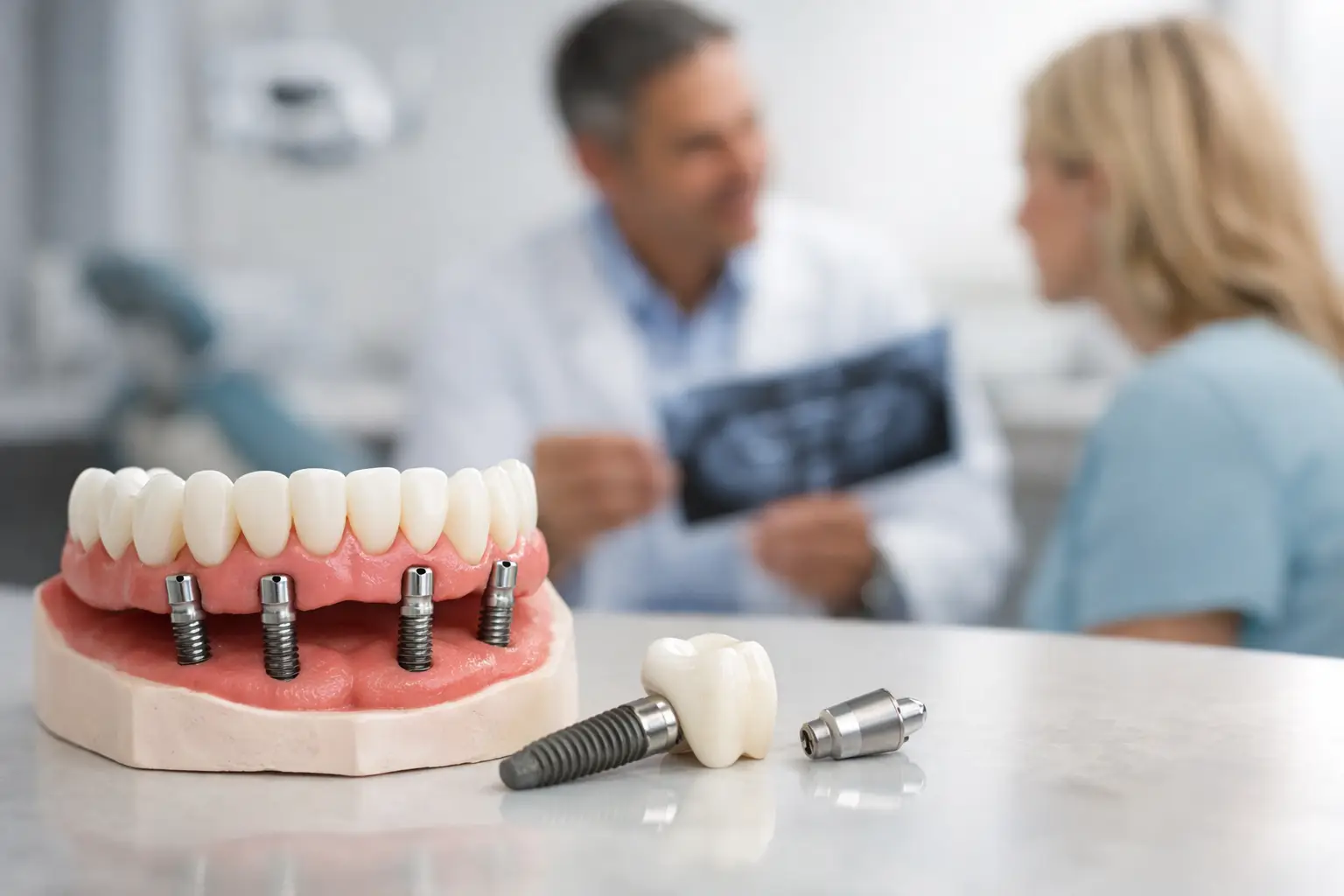
Losing most or all of your teeth changes more than the way you eat. It can affect how clearly you speak, how confidently you smile in photos, and whether everyday meals feel enjoyable or stressful. This all on 4 guide explains how a full-arch implant solution works, who may be a good candidate, and what to consider before choosing treatment.
All-on-4 treatment is designed for people who need to replace an entire upper arch, lower arch, or both. Rather than placing an implant for every missing tooth, a dentist uses four strategically positioned implants to support a full, fixed bridge of replacement teeth. For many patients, it offers a more stable alternative to traditional removable dentures.
What Is All-on-4?
All-on-4 is a full-mouth tooth replacement approach that anchors a complete arch of teeth to four dental implants. The front implants are generally placed vertically, while the back implants are angled to make the best use of available bone. This design can sometimes reduce the need for bone grafting, though it does not eliminate the need for a careful evaluation.
The teeth attached to the implants are custom-made to restore the look and function of a natural smile. They do not come out at night like a conventional denture. A dentist removes the final restoration when professional maintenance is needed.
For the right patient, this treatment can improve chewing comfort, support facial appearance, and eliminate common frustrations such as a denture shifting during conversation. It is a significant treatment, however, and the best decision comes from understanding both the benefits and the responsibilities that come with it.
Who May Be a Candidate for All-on-4?
Many adults with extensive tooth loss, failing teeth, loose dentures, or severe decay may be candidates. People often consider All-on-4 when they are tired of avoiding certain foods or repeatedly repairing teeth that have a poor long-term outlook.
Candidacy depends on more than the number of missing teeth. Your dentist will review the health of your gums and jawbone, your bite, medical history, medications, and daily habits. Advanced imaging is commonly used to assess bone volume and plan implant placement precisely.
Healthy healing is essential. Uncontrolled diabetes, active gum disease, heavy smoking, untreated teeth grinding, and certain medical conditions can increase the risk of complications. These factors do not always rule out implant treatment, but they may mean that additional care or lifestyle changes should happen first.
Patients also need to be comfortable committing to ongoing hygiene and follow-up visits. Implants cannot get cavities, but the tissues around them can become infected. Home care and regular professional maintenance protect the investment you make in your new smile.
Your All on 4 Guide to the Treatment Process
The process begins with a detailed consultation. Your dental team will talk with you about your goals, concerns, health history, and budget. If you still have teeth that need to be removed, the team will determine whether extractions can be completed on the same day as implant placement or whether a staged approach is safer.
During surgery, any necessary teeth are removed, the implant sites are prepared, and four implants are placed in the jaw. Sedation options may be available for patients who feel anxious or who are having more extensive treatment. Comfort and safety should guide the plan, not a one-size-fits-all timeline.
In some cases, a temporary fixed bridge can be attached shortly after implant placement. This gives you teeth while healing takes place. Not every patient is a candidate for immediate loading, particularly if the implants do not achieve the stability needed to support a temporary bridge. When protecting the healing implants is the priority, a different temporary option may be recommended.
Over the next several months, the implants integrate with the jawbone. Once healing is complete and your bite is stable, your dentist takes detailed records for the final bridge. The final restoration is designed around your facial proportions, smile goals, speech, bite, and preferred tooth shade.
How Long Does Recovery Take?
Most people need a few days away from their usual routine after surgery, although recovery varies. Swelling, tenderness, bruising, and fatigue are common in the first week. Your dental team will provide specific instructions for medications, oral hygiene, activity, and what to eat.
A soft-food diet is usually necessary while the implants heal. That can feel like an adjustment, especially if you are eager to enjoy a normal diet again. Following food restrictions matters because too much pressure on healing implants can affect their stability.
As healing progresses, patients generally move from soft foods to a broader diet based on their dentist’s guidance. The final teeth are made for everyday function, but very hard foods, ice chewing, and using teeth as tools can damage any restoration.
Benefits and Trade-Offs to Consider
The appeal of All-on-4 is easy to understand. A fixed full arch can feel more secure than a removable denture, and it may make meals and conversations feel more natural. Because the implants stimulate the jawbone, they can also help limit the bone loss that often follows tooth loss.
Still, no dental treatment is maintenance-free. All-on-4 requires surgery, a healing period, careful planning, and a meaningful financial commitment. Although four implants support the bridge, an implant can fail, a restoration can chip or wear, and the tissues around implants need ongoing attention.
There is also a difference between replacing a full arch and saving healthy natural teeth. If teeth can be predictably treated with periodontal care, root canal therapy, crowns, or other restorative treatment, preserving them may be the better choice. A thoughtful dentist will discuss every realistic option rather than presenting full-arch implants as the automatic answer.
All-on-4 Compared With Other Tooth Replacement Options
Traditional dentures remain an affordable solution for many patients. They can restore appearance and basic chewing ability without surgery, but they may move, require adhesives, and need periodic adjustments as the jawbone changes.
Implant-supported overdentures use implants to secure a removable denture. They provide more stability than a conventional denture while allowing the appliance to be removed for cleaning. For some patients, this is an excellent middle ground between traditional dentures and a fixed bridge.
A full arch supported by more than four implants may be appropriate when bone quality, bite forces, or treatment goals call for added support. Individual implants can also be used to replace a few missing teeth when the remaining teeth are healthy. The best option depends on your anatomy, health, priorities, and long-term plan.
Caring for a Fixed Implant Bridge
Daily cleaning is essential. Food debris and plaque can collect where the bridge meets the gums, so patients often use a soft toothbrush along with tools such as floss threaders, implant-specific floss, or a water flosser. Your dental team can demonstrate a routine that fits your restoration.
Professional visits are equally important. At these appointments, the team checks the gums, bite, implants, and bridge, and cleans areas that are difficult to reach at home. If you grind your teeth, a nightguard may help protect the restoration from excessive force.
A fixed bridge should feel like part of your life, but it still deserves attention. Persistent bleeding, swelling, bad taste, looseness, a change in your bite, or pain should be evaluated promptly rather than waiting for a routine visit.
Questions Worth Asking at Your Consultation
Before moving forward, ask what is included in your treatment plan, from imaging and extractions to temporary teeth, the final bridge, sedation, and follow-up care. It is also reasonable to ask about the materials used, expected timeline, warranty policies, financing options, and what happens if an implant or temporary restoration needs repair.
Most importantly, ask why a specific plan is being recommended for you. A clear answer should account for your current oral health, bone structure, bite, medical needs, and goals – not simply a standard package.
A full-arch implant solution can be life-changing when it is carefully planned and supported by ongoing care. If you are weighing your options, a personal consultation at Sendero Dental Studio can give you clear answers and a treatment plan built around your comfort, health, and future smile.