
Dental Implants vs Bridges: Which Lasts Longer?
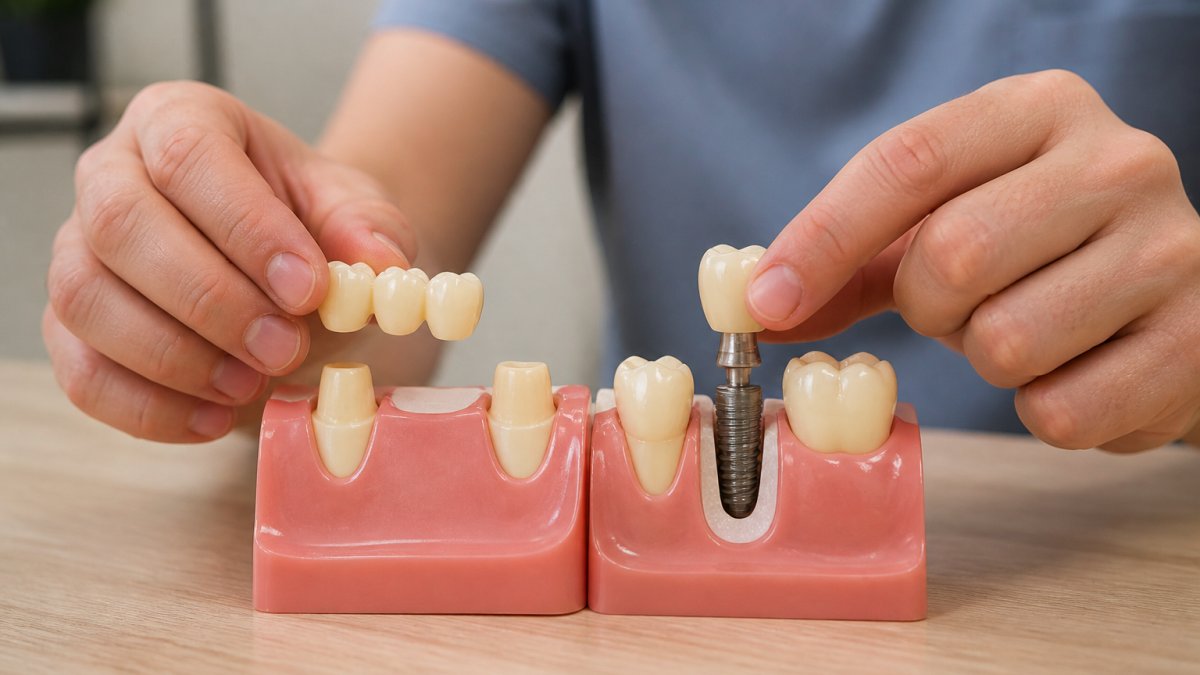
Table of Contents
- How Implants and Bridges Replace a Missing Tooth
- Dental Bridge vs Implant Pros and Cons
- Dental Implant vs Bridge Cost: Initial and Long-Term
- How Long Do Dental Bridges Last?
- Dental Implant or Bridge: Which Is Better for You?
- Risks, Candidacy, and Questions to Ask Before You Decide
- Conclusion: Making a Confident Choice
- Frequently Asked Questions
Last Updated: October 13, 2026
How Implants and Bridges Replace a Missing Tooth
When you lose a tooth, the choice often comes down to dental implants vs bridges, and that decision shapes your oral health for decades. This guide from Sendero Dental Studio walks through the real differences in cost, longevity, and comfort so you can decide with confidence. Dental implants vs bridges is really a question about trade-offs: surgery and bone preservation on one side, speed and lower upfront cost on the other.
A dental implant is a titanium post placed into the jawbone that fuses with bone over time and supports a crown. A dental bridge is a fixed restoration that anchors a false tooth to the neighboring teeth.
How each one works:
- Implant: the implant post replaces the tooth root; a crown sits on top.
- Bridge: crowns on the abutment teeth hold a pontic in the gap.
- Bone: implants stimulate the jawbone; bridges do not.
American Dental Association guidance on implants and bridges
Dental Bridge vs Implant Pros and Cons
Dental implants preserve bone and don’t touch neighboring teeth; dental bridges are faster and less invasive. Neither is universally better, and the honest answer depends on your jawbone, health, and budget.
| Factor | Dental Implant | Dental Bridge |
|---|---|---|
| Involves surgery | Yes | No |
| Affects neighboring teeth | No | Yes, reshaped |
| Preserves jawbone | Yes | No |
| Timeline | Months | Weeks |
| Typical lifespan | Often decades | Roughly 5-15 years |
The main drawback of a bridge is that it relies on the abutment teeth staying healthy. If one fails, the whole restoration needs rework.
A common mistake is choosing a bridge purely on price without checking the health of the neighboring teeth. If those teeth decay later, you may pay to redo the entire bridge.
Dental Implant vs Bridge Cost: Initial and Long-Term
The upfront price tag is only one line in a much longer ledger. A bridge usually costs less on the day of treatment, while an implant often costs less across a lifetime because it may never need to be replaced. The dental implant vs bridge cost comparison only becomes honest when you map every stage of spending, not just the first invoice.
What drives the initial fee
- Implant: the fee typically bundles the surgical placement, the abutment, and the crown, but it can also include a separate charge for a bone graft or sinus lift if your jaw needs preparation. Imaging such as a cone-beam CT scan is often billed separately.
- Bridge: the fee usually covers preparing the abutment teeth, the pontic, and the crowns that hold it. If the abutment teeth need root canals or fillings first, those are added on top.
What drives the long-term cost
- Bridge: most bridges need to be replaced at some point, and each replacement means paying for the restoration again. The abutment teeth also carry a higher risk of decay and may eventually need root canals or crowns of their own, which compounds the total.
- Implant: the crown on top of an implant can wear or chip and may need replacement even when the implant itself stays healthy. The implant post itself, when it integrates and is maintained, is designed to last for decades.
- Both: routine maintenance, exams, and imaging apply to either option, and skipping them tends to raise costs later rather than lower them.
Why a single number is misleading
Treatment plans vary by case, by region, and by the materials a practice uses, so any figure quoted online is a starting point, not a quote. A patient with good bone and healthy neighbors may face a very different total than someone who needs grafting, gum treatment, or replacement of failing abutment teeth. That is why the useful question is not “which costs less today” but “which costs less over the years I expect to keep it.”
Insurance and payment
Coverage varies by plan. Some plans treat implants as a cosmetic or elective procedure and exclude them, while others cover a portion of the crown or the extraction. Bridges are more often partially covered because they are considered restorative. Our team reviews your plan line by line so you know what is covered before treatment starts.
Ask any office for a written treatment plan that separates the surgical fee, the restoration fee, and any preparatory work. At Sendero Dental Studio, we provide that breakdown before you commit, so the long-term picture is clear from the start.
- Upfront: bridges generally cost less.
- Long-term: implants often win on total cost of ownership because they may not need replacing.
- Hidden variables: grafting, root canals on abutment teeth, and crown replacement can shift the math in either direction.
- Insurance: coverage varies; our team helps you review your plan.
We can’t quote a fixed price here because it depends on your case. Request a consultation for a personalized estimate.
How Long Do Dental Bridges Last?
Most dental bridges last roughly five to fifteen years with good care, while implants often last much longer. How long do dental bridges last depends heavily on hygiene and the health of the supporting teeth.
To extend a bridge’s life:
- Clean under the pontic daily with floss threaders or interdental brushes.
- Keep the abutment teeth free of decay.
- Book regular exams so we can catch problems early.
Dental Implant or Bridge: Which Is Better for You?
There’s no single winner: implants suit patients who want maximum longevity and have adequate bone, while bridges suit those who want a faster, less invasive fix.

A quick decision framework:
- If you have good bone and want the longest-lasting result: implant.
- If you want to avoid surgery and need a faster fix: bridge.
- If the neighboring teeth already need crowns: bridge.
- If you have gum disease or uncontrolled health conditions: treat those first.
Risks, Candidacy, and Questions to Ask Before You Decide
Both options carry real risks, and the honest comparison is not “safe versus unsafe” but “which risks apply to your body and your habits.” Implants carry surgical risks; bridges carry risks to the teeth that support them. A candidacy check is what separates a predictable outcome from a costly surprise.
Implant risks and complications
- Failed integration: the implant post may not fuse with the bone, which usually means removal and a retry after healing.
- Infection: peri-implantitis, an infection around the implant, can develop even years later and can lead to implant loss if untreated.
- Nerve or sinus involvement: in the upper jaw, an implant placed too close to the sinus can cause complications; in the lower jaw, proximity to the inferior alveolar nerve matters.
- Bone insufficiency: without enough bone volume, the implant cannot be placed safely without grafting first.
Bridge risks and complications
- Decay under the bridge: the abutment teeth are still natural teeth and can still decay, often where the bridge meets the gum line.
- Damage to supporting teeth: preparing abutment teeth removes enamel, which is irreversible, and a failing abutment can take the whole bridge with it.
- Gum inflammation: the pontic and connectors can trap plaque if hygiene is inconsistent.
- Replacement cycles: because bridges typically need replacement sooner than implants, each cycle repeats the cost and the wear on the abutment teeth.
Candidacy: what actually changes the recommendation
- Smoking: it impairs healing and raises the risk of implant failure and post-surgical infection. Many practices ask patients to stop before and after surgery.
- Diabetes and other systemic conditions: uncontrolled blood sugar slows healing and raises infection risk. Well-controlled diabetes is often not a barrier, but control matters more than the diagnosis itself.
- Medications: blood thinners, bisphosphonates, and some immunosuppressants can affect bleeding, bone healing, or implant integration and should be reviewed before surgery.
- Bone volume: a thin or resorbed jaw may need grafting before an implant, which adds time and cost.
- Gum health: active gum disease should be treated first, because it threatens both implants and the teeth supporting a bridge.
- Oral hygiene: either restoration depends on daily cleaning. A bridge needs floss threaders or interdental brushes under the pontic; an implant needs the same care as a natural tooth.
Questions to ask any dentist
- Am I a candidate for an implant, and why or why not?
- Do I need a bone graft or sinus lift, and how would that change the timeline and cost?
- What happens if the bridge or implant fails, and what would the fix involve?
- What is the full cost, including follow-up visits and any preparatory work?
- How will we maintain this over the years, and what does maintenance look like at home?
National Institute of Dental and Craniofacial Research on tooth loss
The best restoration is the one that fits your bone, health, and budget. Get a candidacy assessment before deciding, and ask how your specific health factors change the risk on each side.
Conclusion: Making a Confident Choice
Choosing between an implant and a bridge is a long-term decision, and it deserves a real conversation, not a rushed quote. At Sendero Dental Studio, our team offers comprehensive restorative care, same-day emergency support, and advanced technology to make treatment comfortable and health-centered. We’ll walk you through candidacy, timelines, and costs so you can choose with confidence. Request your appointment and let’s find the right solution for your smile.
Frequently Asked Questions
Which lasts longer, a dental implant or a bridge?
Implants typically last longer. The implant post is designed to fuse with the jawbone and can last decades with good care, while the crown on top may need replacement after 10 to 15 years. Dental bridges usually last 5 to 15 years depending on materials, hygiene, and how well the supporting teeth hold up. Many patients find that a bridge eventually needs replacement, while an implant often does not.
Is a bridge or an implant more painful?
Most patients report mild soreness after either procedure. A bridge involves reshaping the neighboring teeth, which can cause temporary sensitivity, but it does not require bone surgery. An implant is a surgical procedure, so there may be more swelling and a longer initial recovery. Your dentist can discuss sedation and comfort options to make either experience manageable.
How do I care for a dental bridge compared with an implant?
A bridge needs extra cleaning underneath the pontic (the artificial tooth) using floss threaders or interdental brushes to prevent decay in the supporting teeth. An implant is cleaned like a natural tooth with brushing and regular flossing, but it still needs routine dental visits. Both require good oral hygiene to last. Your dentist can show you the right technique for your specific restoration.
Do dental implants help prevent bone loss?
Yes. When a tooth is missing, the jawbone in that area can shrink over time. An implant post stimulates the bone much like a natural tooth root, which helps preserve bone density. A bridge does not stimulate the bone under the pontic, so bone loss may continue. This is one reason some dentists recommend implants for long-term oral health.