
Benefits of Multi-Specialty Dental Practices for Children
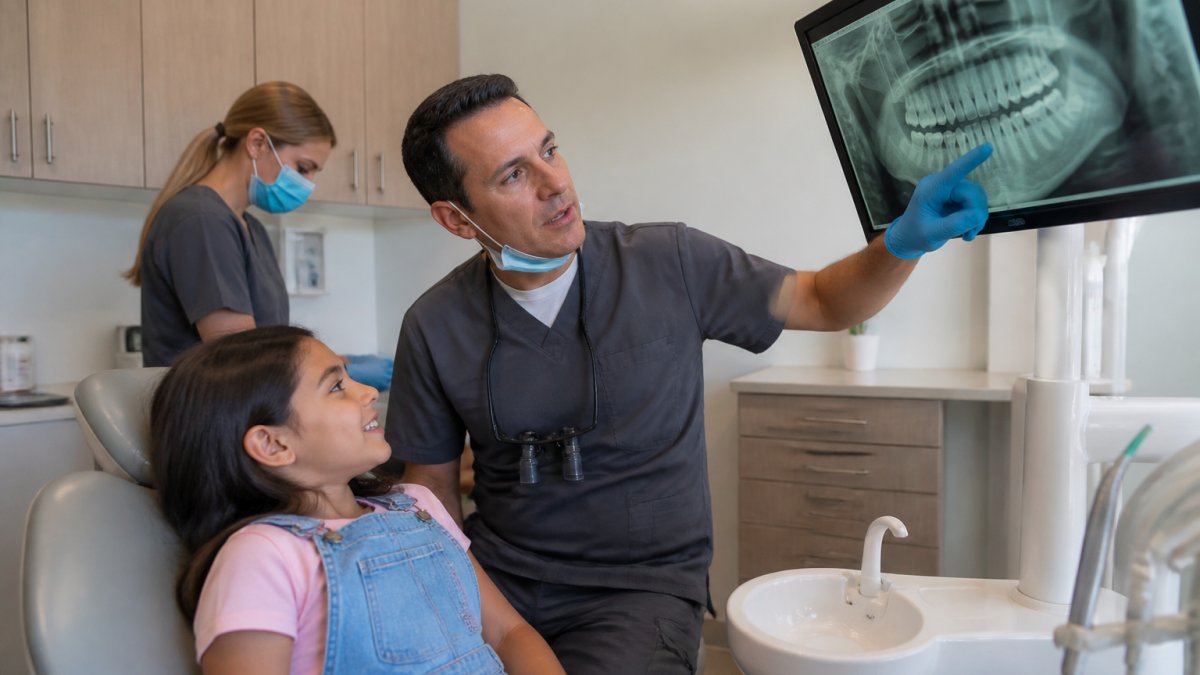
Table of Contents
- Why Multi-Specialty Dental Practices Make Sense for Children
- Seven Benefits of Multi-Specialty Dental Practices for Children
- Pediatric Dentist vs Family Dentist: Which Fits Your Child?
- Children’s Dental Specialists You May Meet Under One Roof
- How Coordinated Dental Care for Children Actually Works
- Dental Care for Children With Special Needs
- Costs, Insurance, and Scheduling: What Parents Should Ask
- How to Evaluate a Multi-Specialty Practice Before You Commit
- Frequently Asked Questions
Last Updated: October 14, 2026
Why Multi-Specialty Dental Practices Make Sense for Children
Most parents eventually face the same logistical headache: a pediatric dentist on one side of town, an orthodontist on the other, and a growing stack of appointment reminders that never quite line up. A multi-specialty dental practice solves that problem by keeping pediatric dentistry, orthodontics, and other specialties under one roof, so a child’s care stays connected instead of scattered.
The benefits of multi-specialty dental practices for children come down to three things: fewer trips, faster communication between providers, and a dental home that already knows your child’s history. Children establish a dental home by age one, and a single practice that covers multiple specialties makes that home far easier to keep.
The Problem With Piecing Together Care Across Town
Splitting a child’s dental care across several offices creates gaps that are easy to miss. Records don’t always travel, so each new provider starts from scratch. A pediatric dentist might spot an early bite issue, then hand off to an orthodontist who never sees the original notes. Meanwhile, you’re the one repeating your child’s medical history, re-explaining anxiety triggers, and juggling three different scheduling systems.
That fragmentation has a real cost. A common mistake is treating each visit as a standalone event rather than part of a long-term plan. When the pediatric dentist, orthodontist, and oral surgeon aren’t talking to each other, small issues can sit unaddressed until they become bigger, more expensive ones.
Seven Benefits of Multi-Specialty Dental Practices for Children
The clearest advantage of a multi-specialty dental practice is continuity: one team, one record, one plan. Here are seven benefits families tend to notice first.
- Fewer appointments and less driving. Multiple services happen in one location, often on the same day.
- Shared records. Every provider sees the same chart, so nothing gets lost in a referral.
- Earlier detection. A pediatric dentist who notices a developing bite problem can loop in an orthodontist immediately.
- Consistent communication style. Your child hears the same explanations and comfort approach from every provider.
- Faster scheduling for urgent needs. Prompt response to dental emergencies is a benefit.
- Less anxiety for kids. Familiar faces and familiar rooms reduce the fear of the unknown.
- A single point of contact. One front desk handles billing, insurance, and follow-ups.
The biggest benefit isn’t convenience, it’s that nothing falls through the cracks. When one team owns your child’s whole dental picture, prevention and treatment stay aligned instead of running on separate tracks.
Pediatric Dentist vs Family Dentist: Which Fits Your Child?
A pediatric dentist completes additional training focused on children’s dental growth, behavior guidance, and treating kids with special health care needs. A family dentist treats patients of all ages, often with a general dentistry focus. Neither is automatically better; the right choice depends on your child’s needs and your family’s situation.
For a child with no complicating factors, a family dentist can handle routine checkups, cleanings, and cavity treatment comfortably. For a child with significant anxiety, developmental disabilities, or a complex bite, a pediatric dentist’s specialized training usually pays off. The pediatric dentist vs family dentist decision often comes down to how much specialized behavioral and developmental expertise your child needs.
Sendero Dental Studio provides comprehensive dental care for the entire family.
Children’s Dental Specialists You May Meet Under One Roof
A multi-specialty practice brings together several types of children’s dental specialists, each handling a different part of your child’s oral health. Knowing who does what, and roughly when each one enters the picture, makes it easier to understand why a referral happens and what to expect.
- Pediatric dentists complete additional training beyond dental school focused on children’s dental growth, behavior guidance, and treating kids with special health care needs. They are typically the entry point for a child’s care, from the first visit (the American Academy of Pediatric Dentistry recommends establishing a dental home by age one) through the teen years.
- Orthodontists correct bite and alignment issues. Many children get an early evaluation around age seven, when the first permanent molars and incisors have erupted and a developing malocclusion is easiest to intercept. Not every early evaluation leads to braces; some lead to monitoring.
- Oral surgeons handle extractions (including impacted wisdom teeth), exposure of unerupted teeth, biopsies, and some surgical procedures. Teens are the most common age group, but younger children may need an oral surgeon for a severely damaged or non-restorable tooth.
- Periodontists treat gum health. This matters most for teens, but also for children with certain medical conditions, those taking medications that affect the gums, or those with aggressive early gum disease.
- Endodontists perform root canal treatment when a tooth is badly damaged or infected. In children, this is often a pulpotomy or pulpectomy on a primary tooth, or a root canal on a permanent tooth after trauma.
When a Child Needs a Specialist, and When They Don’t
Not every child needs a specialist, and a good practice won’t push one. Routine preventive care, cleanings, sealants, fluoride, and small fillings are general dentistry work. A specialist becomes relevant when there’s a specific problem: a developing malocclusion, a tooth that won’t erupt normally, a gum condition, a dental injury, or a medical complexity that affects dental treatment.
The advantage of a multi-specialty setting is that the decision happens internally. A pediatric dentist can review the same X-rays with an orthodontist and give you one clear recommendation instead of a referral slip and a phone number. That internal handoff is the difference between a practice that merely houses multiple providers and one that actually coordinates care.
Ask how internal referrals work. In a truly coordinated practice, the pediatric dentist can walk your child’s chart to the specialist without you re-explaining the history or re-submitting paperwork.
How Coordinated Dental Care for Children Actually Works
Coordinated dental care for children means the providers share records, compare notes, and sequence treatment so each step supports the next. In practice, that looks like a pediatric dentist flagging an early bite issue during a routine checkup, an orthodontist reviewing the same digital scans the following week, and a single treatment timeline that both providers follow.

Here’s a simple way to picture the flow:
- Step 1: Your child has a routine checkup and cleaning.
- Step 2: The pediatric dentist notes anything that needs specialist input.
- Step 3: The relevant specialist reviews the same records, often the same day.
- Step 4: The team agrees on a plan and shares it with you in plain language.
- Step 5: Follow-up visits are scheduled together, not separately.
Ask whether the practice uses shared digital records before you book. If each provider keeps a separate chart, you’re still coordinating care yourself, just from one parking lot.
Dental Care for Children With Special Needs
Dental care for children with special needs requires more than clinical skill; it requires patience, adapted communication, and an environment that reduces stress. Children with developmental disabilities, physical disabilities, or medical conditions that affect the mouth often need longer appointments, modified behavior guidance, and providers who understand how medication effects can influence oral health.
A multi-specialty practice helps here because the team can coordinate treatment safely. If a child takes medication that affects gum health or needs a procedure that requires input from more than one provider, the plan comes together internally rather than through a chain of referrals. The American Academy of Pediatric Dentistry’s guidance on special health care needs outlines how pediatric dentists adapt care for these patients, and practices that follow that framework tend to make visits calmer for everyone.
Costs, Insurance, and Scheduling: What Parents Should Ask
Cost questions are legitimate, and a good practice answers them before treatment starts.
Multi-specialty practices add a layer most single-provider offices don’t have: how services from different providers are billed and scheduled. Here’s what to clarify.
Scheduling coordination. The whole point of a multi-specialty practice is fewer trips.
Emergency arrangements. Ask what happens after hours. Does the practice have an on-call provider, a shared after-hours line, or a relationship with a local emergency department?
Payment plans and larger treatment. For orthodontics or surgical care, ask about installment plans, financing partners, and whether a down payment is required.
When you call, ask these questions directly:
- Is each provider I might see in-network with my dental insurance plan?
- What does a routine cleaning and exam include?
- Are payment plans available for larger treatments like braces or surgery?
- How are multi-specialty visits billed, together or separately?
- Can appointments across departments be scheduled on the same day?
- What’s the cancellation and rescheduling policy, and is there a no-show fee?
- What’s the process for a dental emergency outside normal hours?
The CDC’s overview of children’s oral health notes that preventive care like fluoride and sealants reduces cavities, which is worth remembering when comparing costs.
Don’t assume a multi-specialty visit bundles everything into one charge. Some practices bill each provider separately, which can surprise families with two copays for one trip. Ask how billing works before your first combined appointment.
How to Evaluate a Multi-Specialty Practice Before You Commit
Evaluating a multi-specialty practice comes down to coordination, communication, and comfort. Look for shared charts, internal referrals, and providers who can describe how they work together.
Use this checklist when you visit or call:
- Do all providers share one digital record for my child?
- Can a specialist see my child without a separate referral process?
- How does the practice handle anxious or fearful children?
- Will my child see the same dentist at each visit?
- What’s the process for a dental emergency outside normal hours?
- How are treatment recommendations explained, and do I get options?
- Does the practice treat the whole family, or only children?
The ADA’s consumer resources on finding dental care recommends confirming a provider’s credentials and asking about their approach to treatment planning. A practice that welcomes those questions is usually one that communicates well once you’re a patient.
Frequently Asked Questions
What is a multi-specialty dental practice?
A multi-specialty dental practice brings several types of providers under one roof, typically including general dentists, pediatric dentists, orthodontists, and oral surgeons. For families, this means a child’s cleaning, cavity treatment, braces consultation, and even a tooth extraction can happen at the same office, with the clinicians sharing notes and X-rays instead of each starting from scratch. That continuity is one of the biggest benefits of multi-specialty dental practices for children.
When should a child see a pediatric dentist instead of a family dentist?
A pediatric dentist completes extra training focused on children’s tooth development, behavior guidance, and treating kids with special health care needs. A family dentist treats patients of all ages and can handle most routine care for older children and teens. If your child has significant anxiety, a developmental disability, or complex treatment needs, a pediatric dentist is often the better fit. Many multi-specialty offices employ both, so you can switch providers without changing buildings.
Can a child get orthodontic and general dental care at the same practice?
Yes, and it is one of the practical advantages of coordinated dental care for children. When the orthodontist and general dentist work in the same office, they can time cleanings around braces adjustments, flag cavities before brackets go on, and share imaging rather than requesting new X-rays. Ask whether the practice handles the referral internally or sends you to an outside orthodontist, since that determines how many appointments you are managing.
How can parents prepare a child for a visit with a dental specialist?
Keep the explanation simple and positive. Tell your child who they will meet and what will likely happen, without promising that nothing will hurt. If your child has dental anxiety, call ahead and ask what comfort options the practice offers, such as a quiet room, scheduled extra time, or a visit just to meet the team. Bringing a comfort item and scheduling earlier in the day often helps too.
Coordinating your child’s dental care shouldn’t require a calendar and a map. Sendero Dental Studio brings pediatric, general, orthodontic, and restorative care together in one comfortable, family-oriented practice, with same-day emergency care, advanced technology, and an uninsured patient special for families without coverage. Request your appointment with Sendero Dental Studio and give your child a dental home where every provider already knows the whole story.