
Best Age for First Dental Exam: A Parent’s Guide
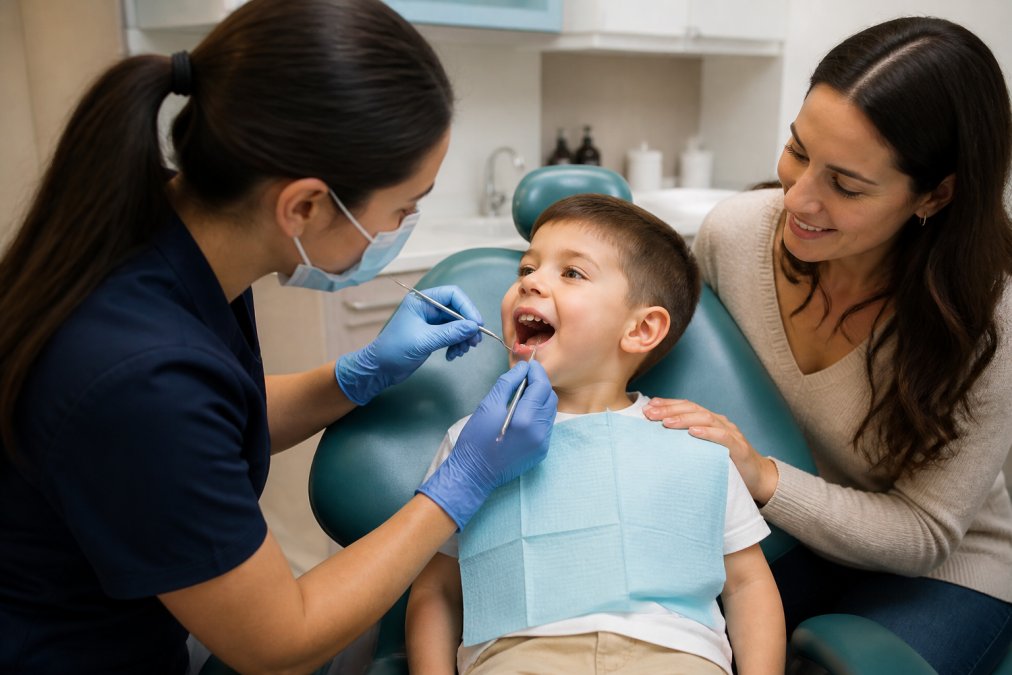
Table of Contents
- Why the First Dental Exam Matters More Than You Think
- The Best Age for a First Dental Exam: What Experts Recommend
- What to Expect at Your Child’s First Dental Exam
- Preparing a Toddler for the First Dentist Visit Without Tears
- Sensory-Friendly Preparation for Anxious or Sensitive Kids
- Insurance, Cost, and What to Ask Before You Book
- After the Exam: Follow-Up Care and Home Habits That Protect Baby Teeth
- Conclusion: Early Visits Build a Lifetime of Calm Dental Care
- Frequently Asked Questions
Last Updated: September 17, 2026
Why the First Dental Exam Matters More Than You Think
Cavities are the most common chronic disease in young children and can start as soon as the first tooth appears. That’s why the first dental exam is not a formality: it catches problems while they’re small and cheap to fix, and teaches you how to protect your child’s teeth at home.
The Best Age for a First Dental Exam: What Experts Recommend
The best age for a first dental exam is by the first birthday, or within six months of the first tooth coming in, whichever happens first. This gives your child a dental home before problems start.
The Age One Rule and the First Tooth
The “age one” rule exists because the eruption of the first tooth usually happens around six months. From that moment, teeth are exposed to sugars and bacteria.
A few things happen at this stage:
- Your child’s diet changes as solids are introduced
- Milk and juice sit on teeth longer
- Plaque buildup can begin within days
Why Waiting Until Age Three Misses the Window
Many parents wait until age three because that’s when they remember going themselves. By then, early childhood caries may already be visible.
Waiting until your child can “sit still” often backfires. By age three, a child may already have decay, and the first visit becomes a treatment appointment instead of a friendly hello.
What to Expect at Your Child’s First Dental Exam
A first dental exam is short, usually 15 to 30 minutes, and focuses on looking, counting, and coaching, rarely any drilling or scraping.
The Knee-to-Knee Exam and Visual Screening
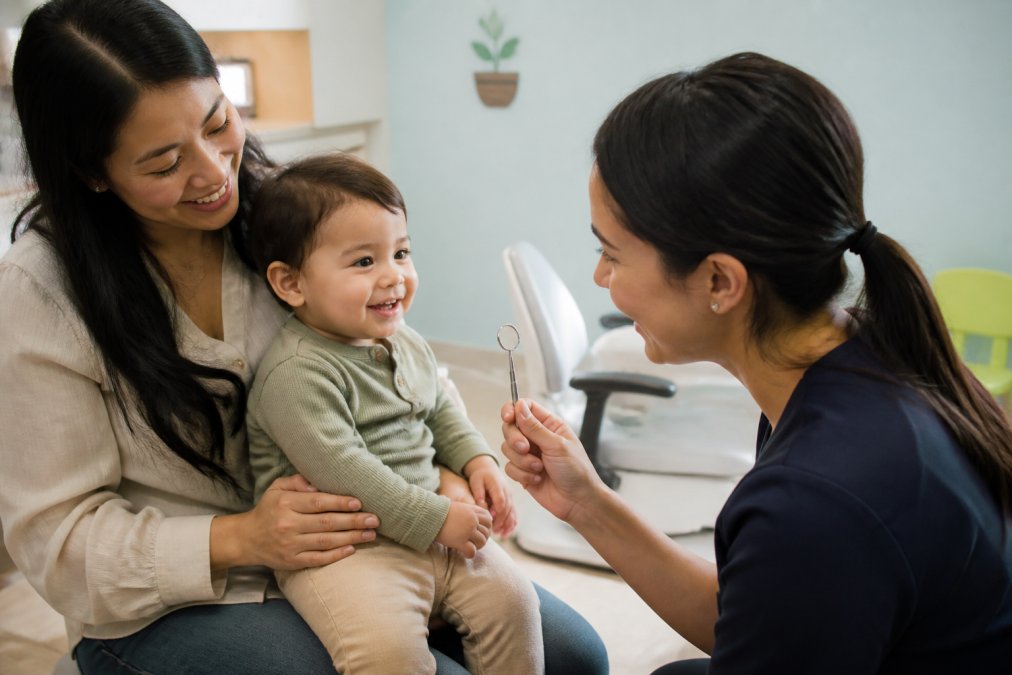
The knee-to-knee exam is standard for infants and toddlers: you sit in one chair, the dentist faces you, and your child lies back across both laps, letting the dentist see every tooth while your child stays close to you.
Here’s what gets checked:
- Oral development and jaw shape
- Soft tissue, tongue, and gums
- Signs of tooth decay on each tooth
- Teething patterns and spacing
Fluoride, Cleaning, and Anticipatory Guidance
Most first visits include a gentle wipe-down of the teeth and, for higher-risk kids, a fluoride treatment. The dentist also gives anticipatory guidance tailored to your child’s age:
- How to brush a squirmy toddler
- Which foods and drinks to limit
- When to expect the next teeth
- How to handle night feedings
Bring your child’s toothbrush to the first visit. The dentist can show you the exact angle and pressure to use, which is far more useful than a pamphlet.
Preparing a Toddler for the First Dentist Visit Without Tears
Preparing a toddler for the first dentist visit starts days before, not in the waiting room. Small, calm steps at home make the chair feel familiar.
Try this sequence:
- Read a picture book about the dentist two or three times
- Practice opening wide in front of a mirror
- Let your child hold a small flashlight and count your teeth
- Talk about the visit in plain, happy words
- Schedule the appointment for a well-rested time of day
Sensory-Friendly Preparation for Anxious or Sensitive Kids
Most guides stop at “bring headphones.” That is not a plan. For a child with autism, ADHD, sensory processing differences, or a strong startle reflex, the dental office is a stack of sensory inputs at once: overhead light, glove taste, suction sound, cold mirror, reclined posture, and an unfamiliar adult in their personal space. The fix isn’t one accommodation, it’s a sequence that removes surprises one at a time.
Why the Overload Happens
In pediatric practices, distress is driven less by pain than by unpredictability. A child who knows the order of events, sit, count teeth, wipe, look, done, has a script; a child who doesn’t reacts to each new input in real time, and by the fourth surprise the nervous system is past its threshold. That’s why a quiet, slow first visit often prevents the meltdown that shows up at visit three.
A Step-by-Step Sensory Plan
Build the plan around your child’s specific triggers, not a generic checklist: is it sound, taste, light, touch, or position?
- Call ahead and name the diagnosis or the pattern. You do not need a formal diagnosis to say, “My child covers his ears at the sound of a vacuum and gags on mint.” Front-desk staff can flag the chart and schedule accordingly.
- Request the first appointment of the day. A quiet waiting room with no other children, no television, and no competing noise removes the hardest variable before the exam starts.
- Ask for a desensitization visit. Many pediatric offices will schedule a five-minute “hello” appointment with no exam, no instruments, and no chair. The child meets the dentist, sits in the chair, and leaves. The real exam happens on visit two.
- Bring the tools that already work at home. Noise-reducing headphones, sunglasses for the overhead lamp, a weighted lap pad, a favorite small toy, or a chew necklace. If it calms your child at a haircut, it will calm them here.
- Ask for a flavor-free or unflavored polish. Mint and bubblegum are the two most common gag triggers in young children. Most offices stock an unflavored option and simply do not offer it unless asked.
- Request the knee-to-knee position even for an older toddler. Lying back across a parent’s lap is often less threatening than a reclined chair, because the child can see the parent’s face the entire time.
- Agree on a stop signal in advance. A raised hand, a squeeze, or a word. Tell the dentist what it is. A child who knows they can pause the exam is a child who stays in the chair.
Practice the sequence at home the week before. Sit on the floor, have your child open wide, count their teeth out loud with a flashlight, then say “all done” and clap. Repeating the script three or four times turns the real visit into something familiar rather than new.
What to Tell the Office When You Book
Be specific and brief: “My child is sensitive to sound and taste, needs a slow pace, and does better lying on my lap than in the chair. Can we schedule the first slot of the day and skip the polish flavor?” That one sentence lets the team prepare the room before you arrive.
Insurance, Cost, and What to Ask Before You Book
Cost is the question most parents are afraid to ask, and it’s why many first visits get delayed past the first birthday. Ask anyway: a first exam is one of the least expensive dental visits your child will ever have, and under most pediatric dental plans it’s covered at 100 percent as preventive care.
How Pediatric Dental Coverage Usually Works
Most dental plans, standalone or embedded in a medical plan, divide care into three tiers:
- Preventive (typically covered at 100 percent, no deductible): exams, cleanings, fluoride varnish, and often oral health counseling. The first dental exam falls here.
- Basic (typically covered at 70-80 percent after deductible): fillings, simple extractions, and some sealants.
- Major (typically covered at 50 percent after deductible): crowns, sedation, and hospital dentistry.
Coverage Varies by Plan Type
- Employer-sponsored dental PPO: usually the most generous preventive coverage, with an in-network dentist.
- Medicaid and CHIP: in most states, children’s dental is a covered benefit, including exams, cleanings, fluoride, and treatment. Find a provider who accepts it before you book.
- Marketplace or ACA plans: pediatric dental is an essential health benefit for children, but it may be embedded in medical coverage rather than sold separately. Confirm which network applies.
- No coverage: ask about a cash or uninsured rate. Many practices price a first exam and cleaning as a flat package, often less than a single urgent-care copay.
Questions to Ask Before You Book
Write these down and call the office. A clear answer to each one prevents a surprise at checkout.
- Is my child’s first exam and cleaning billed as preventive care, and is it covered at 100 percent?
- Are you in-network with my specific plan, or out-of-network?
- What is my exact out-of-pocket cost for today’s visit?
- Is fluoride varnish included, or billed separately?
- Do you file the claim for me, or do I pay upfront and submit it myself?
- If treatment is needed later, do you offer payment plans or third-party financing?
- Do you have a discounted self-pay rate for uninsured families?
- What is your policy on missed appointments, and is there a fee?
A “free first visit” promotion is not always free. Ask what is included, some cover only the exam and bill separately for the cleaning, fluoride, or X-rays. Get the itemized list in writing before the appointment.
The Real Math on Waiting
A first exam and cleaning is a routine preventive expense; treating early childhood caries is not. When toddler decay requires sedation or general anesthesia, costs climb into the hundreds or thousands, often involving a hospital or surgical center, a day off work, and a child who now associates dental care with fear. The preventive visit is the cheapest line item in that comparison.
The cheapest dental visit is the one that prevents a problem. A first exam costs far less than treating a cavity in a toddler, which often needs sedation.
After the Exam: Follow-Up Care and Home Habits That Protect Baby Teeth
What you do in the six months after the first exam matters more than the exam itself. Home habits decide whether the next visit is easy or eventful.
Build these into your daily routine:
- Wipe gums with a soft cloth before teeth appear
- Brush twice a day with a rice-grain smear of fluoride toothpaste
- Switch from bottles to cups by the first birthday
- Never put a child to bed with a bottle
- Offer water between meals instead of juice
CDC information on children’s oral health and cavity prevention
Conclusion: Early Visits Build a Lifetime of Calm Dental Care
The first dental exam shapes how your child feels about dental care for decades. Getting it right by age one, or within six months of the first tooth, sets a calm foundation.
Frequently Asked Questions
Should a 2 year old go to a dentist?
Yes. By age two, most children should have already had their first dental exam and be scheduling regular check-ups. The American Academy of Pediatric Dentistry recommends a first visit by age one or within six months of the first tooth erupting. At two, a child has multiple primary teeth and is at risk for early childhood caries, so a dental screening is important. If your two-year-old has not been seen yet, book an appointment soon.
What happens during a child’s first dental appointment?
A first dental exam usually involves a visual check of the teeth, gums, and bite, often with the child sitting on your lap. The dentist may use a small mirror to look for early signs of tooth decay, plaque buildup, or teething issues. They will also discuss feeding habits, fluoride needs, and at-home dental hygiene. The appointment is short and focused on prevention, not treatment. You can expect anticipatory guidance on thumb sucking, bottle use, and oral development milestones.
Are early dental visits necessary if my child has no teeth yet?
Yes. Even before teeth appear, a dental visit can catch issues like tongue-tie or early gum problems. More importantly, it establishes a dental home and gives you a chance to ask about infant oral care, teething, and feeding practices that affect oral health. The eruption of the first tooth is a key milestone, but the exam is about setting a foundation for cavity prevention. Early visits also help your child get used to the dental environment.
How can I prepare my toddler for their first dentist visit?
Start a few days ahead by reading a picture book about dentists or playing pretend with a toothbrush. Keep your language positive and avoid words like ‘pain’ or ‘shot.’ Schedule the appointment for a time when your child is well-rested, often in the morning. Bring a comfort item like a stuffed animal. On the day, stay calm yourself; children pick up on anxiety. If your child is sensitive to sounds or lights, call the office ahead to ask about sensory-friendly accommodations.