
Best Dentist for Sleep Apnea Screening: 2026 Guide
Table of Contents
- What Is Sleep Apnea Screening, and Why Your Dentist Plays a Role
- Signs of Sleep Apnea Your Dentist Can Spot Before You Can
- How a Dental Sleep Apnea Screening Actually Works
- Home Sleep Test vs. In-Lab Polysomnography: What Comes Next
- Oral Appliance Therapy for Sleep Apnea: What Dentists Provide
- Cost of Dental Sleep Apnea Appliances: What Affects the Price
- What to Look for in the Best Dentist for Sleep Apnea Screening
- Frequently Asked Questions
Last Updated: August 17, 2026
What Is Sleep Apnea Screening, and Why Your Dentist Plays a Role
Sleep apnea screening is a structured clinical process to identify patients at elevated risk for obstructive sleep apnea before formal medical diagnosis. Obstructive sleep apnea (OSA) occurs when the upper airway repeatedly collapses during sleep, interrupting breathing and dropping oxygen saturation. Untreated OSA is associated with elevated cardiovascular risk, metabolic disruption, and impaired cognitive function, as documented by the American Academy of Sleep Medicine clinical guidelines.
Dentists occupy a unique position in this picture. They examine the airway, tongue position, soft palate, and jaw structure during routine visits, the same anatomy that drives OSA. That proximity makes dental offices a natural first checkpoint for patients who have never been told they might have a problem.
The Critical Difference Between Screening and Diagnosis
A sleep apnea screening identifies risk factors and clinical signs that warrant further evaluation. A diagnosis requires a sleep study, either a home sleep test or in-lab polysomnography, interpreted by a licensed medical doctor or sleep specialist. Dentists cannot diagnose OSA. What they can do is conduct a thorough pre-screening, document findings, and refer patients to a certified sleep center or sleep medicine physician for confirmation.
The screening step is genuinely valuable. Catching risk factors early shortens the path to treatment, and for many patients, the dental office is the first place anyone raises the question.
Signs of Sleep Apnea Your Dentist Can Spot Before You Can
Most patients don’t notice the oral signs of OSA, they’re asleep when symptoms occur. A trained dentist reads those clues in the anatomy.
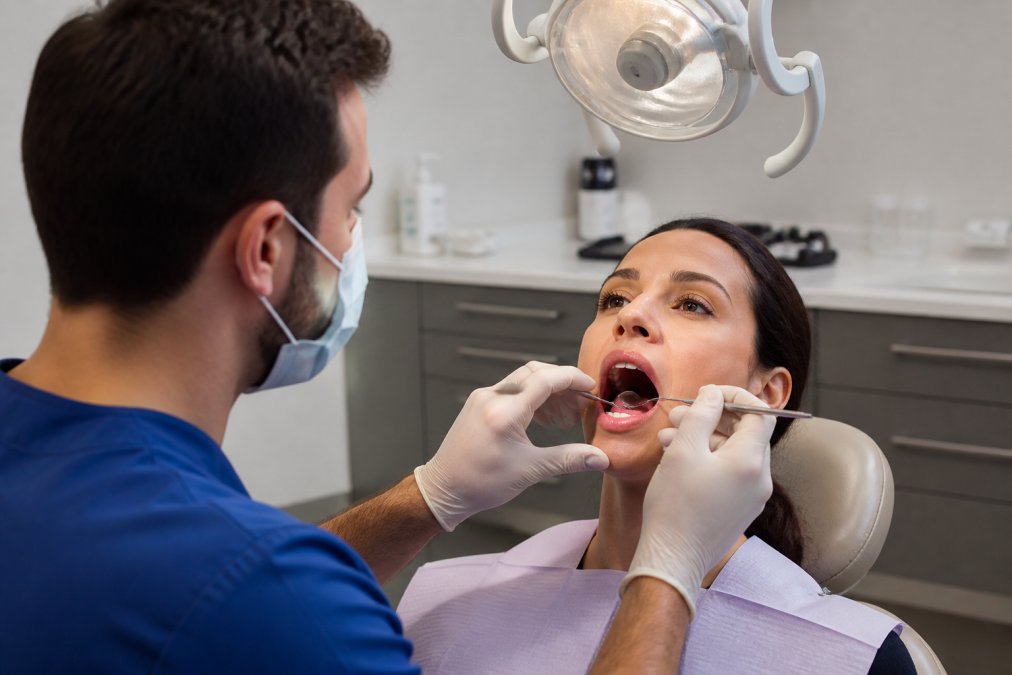
Oral Clues Linked to Nocturnal Breathing Disruption
Bruxism (tooth grinding) is one of the most consistent indicators. Many patients with OSA grind their teeth as the body attempts to reactivate the airway during an apnea event. Worn, flattened, or fractured teeth are a visible record of that pattern.
Other oral signs dentists look for include:
- Scalloped tongue edges: Lateral indentations suggesting the tongue sits too far back in the airway
- Enlarged tonsils or uvula: Soft tissue crowding that narrows the upper airway passage
- High, arched palate: A narrow palate reduces airway space and increases collapse risk
- Retrognathia (recessed jaw): A lower jaw positioned further back is a structural risk factor for obstruction
- Soft palate elongation: A longer, thicker soft palate contributes to snoring
Patients with several of these findings, combined with reported symptoms like daytime fatigue, morning headaches, or witnessed apneas, warrant immediate referral.
If you [grind your teeth at night](/dental-services/general-dentistry/custom-nightguards/) and wake up feeling unrested, mention both symptoms at your next dental visit. Bruxism and OSA frequently occur together, and the combination is a strong clinical signal worth investigating.
How a Dental Sleep Apnea Screening Actually Works
A thorough sleep apnea screening combines patient history, clinical observation, and validated questionnaire tools. Patients complete a sleep health questionnaire covering snoring frequency, witnessed apneas, daytime fatigue, and neck circumference. The dentist then conducts an airway evaluation, assessing tongue position, soft palate anatomy, and jaw structure. Findings are combined to determine whether the patient’s risk profile justifies a referral for diagnostic testing.
Airway Evaluation and Risk Assessment Tools
Two validated tools appear frequently in dental sleep medicine practice. The Epworth Sleepiness Scale measures daytime fatigue by asking patients to rate their likelihood of dozing in common situations. The STOP-BANG questionnaire screens for OSA risk using eight yes/no questions covering snoring, tiredness, observed apneas, blood pressure, BMI, age, neck circumference, and gender. According to peer-reviewed guidance from the Journal of Clinical Sleep Medicine, STOP-BANG performs well as a pre-screening tool in non-sleep-clinic settings, including dental offices.
Neither tool produces a diagnosis, they produce a risk score that guides the referral decision.
What Happens After the Screening: Referral and Follow-Up
A positive screening result leads to a referral, typically to a sleep medicine physician, board-certified otolaryngologist, or certified sleep center. The referral letter should document clinical findings, the risk assessment score, and relevant oral anatomy observations. The most effective approach includes a scheduled check-in after the patient’s sleep study results arrive, allowing the dentist to coordinate with the treating physician on whether oral appliance therapy is appropriate.
Home Sleep Test vs. In-Lab Polysomnography: What Comes Next
Once a dentist refers a patient for diagnostic testing, two primary options exist.
In-lab polysomnography is the gold standard. Conducted at a certified sleep center, it measures brain activity, eye movement, muscle activity, heart rhythm, respiratory effort, oxygen saturation, and body position throughout the night. The apnea-hypopnea index (AHI), the number of apnea and hypopnea events per hour of sleep, forms the basis of diagnosis. According to National Heart, Lung, and Blood Institute sleep apnea resources, an AHI of 5-14 indicates mild OSA, 15-29 moderate, and 30 or above severe.
Home sleep testing (HST) is a simplified alternative. The patient wears a portable monitor at home that records airflow, oxygen saturation, and respiratory effort. HST is less comprehensive but more accessible, less expensive, and appropriate for patients with high pre-test probability of moderate-to-severe OSA without significant comorbidities.
| Feature | Home Sleep Test | In-Lab Polysomnography |
|---|---|---|
| Setting | Patient’s home | Certified sleep center |
| Channels monitored | Airflow, oxygen, effort | Full sleep architecture + cardiorespiratory |
| AHI accuracy | Estimated (may undercount) | Most precise |
| Best for | High-probability, uncomplicated cases | Complex cases, CPAP titration, pediatric |
| Convenience | High | Lower |
The sleep specialist determines which test is appropriate. The dental office’s role is to generate a well-documented referral that gives the specialist enough clinical context to make that call efficiently.
Oral Appliance Therapy for Sleep Apnea: What Dentists Provide
Oral appliance therapy for sleep apnea is one of the most clinically meaningful services a dentist can offer, where the dental-sleep medicine relationship becomes truly therapeutic.
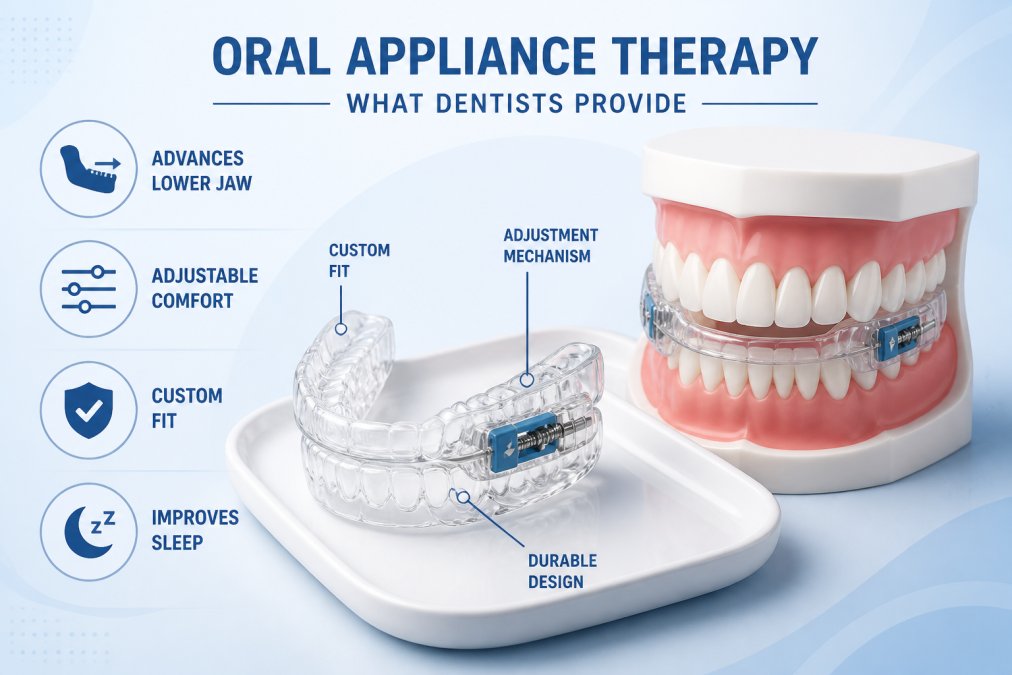
Oral appliance therapy (OAT) uses a custom-fitted, removable intraoral device to reposition the lower jaw and tongue during sleep, maintaining a patent airway and reducing apnea events. The American Academy of Dental Sleep Medicine clinical practice guidelines recommends OAT as a front-line treatment for mild-to-moderate OSA and as an alternative for patients with severe OSA who cannot tolerate CPAP.
Mandibular Advancement Devices vs. Other Appliance Types
The mandibular advancement device (MAD) is the most widely prescribed oral appliance for sleep apnea. It holds the lower jaw in a forward position, pulling the tongue and soft palate away from the posterior airway wall. Custom-fitted MADs are titrated incrementally over several appointments until symptoms resolve and follow-up testing confirms efficacy.
Tongue-retaining devices (TRDs) represent a second category, holding the tongue forward using a suction bulb. TRDs are less commonly prescribed but useful for patients who cannot tolerate jaw advancement.
Over-the-counter boil-and-bite devices are not a substitute for custom-fitted appliances. The fit is imprecise, titration is not possible, and they are not cleared by the FDA for OSA treatment in the same clinical context as custom devices.
Who Is a Good Candidate for Oral Appliance Therapy
Good candidates generally include:
- Adults with mild-to-moderate OSA confirmed by sleep study
- Patients with severe OSA who are intolerant of CPAP
- Patients with primarily positional OSA
- Individuals who travel frequently and find CPAP impractical
OAT is generally not the first choice for patients with severe OSA who can tolerate CPAP, those with significant central sleep apnea components, or patients with active temporomandibular joint disorders.
Never use an over-the-counter mouth guard as a substitute for a custom-fitted sleep appliance. Without proper titration and follow-up sleep testing, there is no way to confirm the device is actually reducing apnea events.
Cost of Dental Sleep Apnea Appliances: What Affects the Price
The cost of oral appliance therapy varies based on several factors. Factors that affect appliance pricing include device type, number of follow-up appointments, insurance coverage, and geographic market.
The critical point: oral appliance therapy is typically covered under medical insurance, not dental insurance, because OSA is a medical diagnosis. Patients should contact their medical insurer before assuming OAT is an out-of-pocket expense. Contact Sendero Dental Studio directly to understand the specific costs and insurance coordination options available for your situation.
Always verify OAT coverage with your medical insurer, not your dental insurer. Because OSA is a medical condition, medical benefits, including Medicare Part B for qualifying patients, often apply, which can significantly reduce your out-of-pocket cost.
What to Look for in the Best Dentist for Sleep Apnea Screening
Finding the best dentist for sleep apnea screening means looking beyond general dental credentials. Sleep medicine is a specialized area within dentistry.
Specific qualities to prioritize:
- Training in dental sleep medicine: Look for dentists who have completed coursework through the American Academy of Dental Sleep Medicine or equivalent continuing education
- Use of validated screening tools: The practice should use standardized questionnaires like STOP-BANG or Epworth
- Established referral network: Direct relationships with sleep medicine physicians and certified sleep centers accelerate your path from screening to diagnosis
- Experience fitting oral appliances: The dentist should have documented experience with MAD titration and post-treatment follow-up
- Willingness to coordinate care: The best providers communicate actively with your medical team, sharing records and reviewing post-treatment sleep study results
- Comprehensive approach: Practices that address overall body health alongside oral health are better positioned to understand how sleep apnea fits into your broader clinical picture
Pediatric Sleep Apnea Screening: A Note for Parents
Sleep apnea is not exclusively an adult condition. Children can develop OSA, with hyperactivity, behavioral issues, and poor school performance frequently appearing instead of daytime fatigue. Enlarged tonsils and adenoids are the most common structural driver.
Pediatric sleep apnea screening focuses on airway anatomy, palate width, tonsil size, and bite development. Early identification matters: untreated pediatric OSA affects sleep quality, growth, and cognitive development during critical developmental windows.
If your child snores regularly, breathes through their mouth, or seems chronically tired despite adequate sleep, raise it at their next dental visit.
Choosing the right dental partner for sleep apnea screening means finding a practice that takes the connection between oral health and systemic health seriously. At Sendero Dental Studio, our team combines comprehensive family dental care with a genuine commitment to overall body health, including the early identification of sleep-related breathing concerns. If you suspect you or a family member may be at risk for sleep apnea, Request Your Appointment and let us help you take the first step toward better sleep and better health.
Frequently Asked Questions
Can a dentist treat sleep apnea, or do they only screen for it?
A dentist cannot diagnose sleep apnea, that requires a licensed medical doctor or sleep specialist interpreting a sleep study. However, dentists trained in sleep medicine can perform a pre-screening, identify oral risk factors, and, once a physician confirms the diagnosis, provide oral appliance therapy for sleep apnea. The dentist and sleep specialist work as a team. Your dentist manages the appliance; your physician owns the diagnosis and treatment plan.
How does a dental sleep apnea screening differ from a medical sleep study?
A dental sleep apnea screening is a clinical consultation that assesses risk factors: airway anatomy, tongue position, soft palate size, jaw structure, bruxism signs, and patient-reported symptoms like snoring and daytime fatigue. It does not measure oxygen saturation or the apnea-hypopnea index. A sleep study, either a home sleep test or in-lab polysomnography at a certified sleep center, actually records nocturnal breathing patterns and produces the data needed for a formal diagnosis.
What qualifications should I look for in a dentist for sleep apnea screening?
Look for a dentist with additional training in dental sleep medicine, such as coursework through the American Academy of Dental Sleep Medicine (AADSM). Membership in sleep medicine organizations and experience fitting custom mandibular advancement devices are strong indicators. The practice should also have clear protocols for referring patients to a sleep specialist when screening results suggest moderate or severe obstructive sleep apnea, rather than attempting to manage diagnosis in-house.
How much does a custom sleep apnea mouth guard cost from a dentist?
The cost of dental sleep apnea appliances varies based on the device type, the number of fitting appointments required, and your insurance coverage. Custom-fitted mandibular advancement devices generally cost more than over-the-counter alternatives because they are fabricated from precise impressions and adjusted over multiple visits. Some medical insurance plans, including Medicare, may cover oral appliance therapy when a physician has documented a sleep apnea diagnosis. Contact your dental office directly for current pricing and to verify your benefits.
When should you see a dentist about snoring and possible sleep apnea?
Schedule a dental consultation if you or a partner notice loud or frequent snoring, if you wake feeling unrefreshed despite a full night’s sleep, or if you experience daytime fatigue without a clear cause. Dentists also recommend screening if you grind your teeth (bruxism), have a small jaw, or have been told your airway looks narrow. Early screening improves long-term health outcomes by catching obstructive sleep apnea before it contributes to cardiovascular or metabolic problems.
Can children be screened for sleep apnea at a dental visit?
Yes. Pediatric sleep apnea screening is an often-overlooked part of routine dental care for children. Dentists can assess enlarged tonsils, narrow palates, and mouth-breathing patterns that raise the risk of sleep-disordered breathing in kids. Oral appliance therapy is not typically used in growing children, but early referral to a sleep specialist or ENT allows timely intervention, often through orthodontic expansion or adenotonsillectomy, that can improve sleep quality and development.
This article was written using GrandRanker