
How to Find a Gentle Dentist: A Guide

Table of Contents
- What Defines a Gentle Dentist
- Assessing Your Dental Anxiety Level
- Questions to Ask a New Dentist
- Dental Anxiety Management Techniques
- Sedation Dentistry Options
- Evaluating Local Dental Practices
- What to Expect at Your First Visit
- Frequently Asked Questions
Last Updated: August 18, 2026
What Defines a Gentle Dentist
A gentle dentist is a dental professional who prioritizes patient comfort, anxiety reduction, and minimally invasive techniques while delivering comprehensive oral care. This approach combines clinical expertise with emotional intelligence, creating an environment where nervous patients feel heard and supported.
What separates a gentle dentist from a standard practice is a deliberate clinical philosophy. Gentle dentistry emphasizes preventative care, uses advanced diagnostic imaging to catch problems early, and employs techniques that minimize pain and trauma to teeth and gums. The dentist communicates clearly about what’s happening, explains options without pressure, and respects a patient’s pace and comfort level.

Sendero Dental Studio exemplifies this approach through its patient-centered care model. The practice recognizes that dental anxiety is real and common, not something to dismiss. A truly gentle dentist understands that building trust takes time and that each patient arrives with their own history.
Key characteristics of a gentle dentist include:
- Clear communication: Explaining procedures in plain language before they begin, checking in during treatment, and answering questions without impatience
- Minimally invasive techniques: Using methods that preserve tooth structure and reduce discomfort
- Advanced technology: Employing digital imaging, intraoral cameras, and other tools that improve precision and reduce treatment time
- Sedation options: Offering anxiety management choices for patients who need additional support
- Personalized care plans: Tailoring treatment recommendations to individual needs rather than pushing unnecessary procedures
- Comfortable environment: Maintaining a spa-like setting with soft lighting, calming music, and a relaxed atmosphere
The difference becomes apparent on your first visit. A gentle dentist asks about your concerns before the exam, doesn’t judge your dental history, and involves you in every decision about your care.
Assessing Your Dental Anxiety Level
Understanding where you fall on the anxiety spectrum helps you communicate your needs clearly and choose a practice equipped to support you. Dental anxiety exists on a spectrum, from mild nervousness to severe phobia that prevents people from seeking care entirely.
Many people experience some level of dental anxiety triggered by the sound of the drill, the sensation of instruments in your mouth, fear of pain, loss of control, or trauma from a previous negative experience.
Assess your anxiety level honestly by considering these questions:
- Do you feel nervous before a dental appointment but still go?
- Does anxiety increase as the appointment date approaches?
- Do you experience physical symptoms like increased heart rate or sweating in the waiting room?
- Have you postponed or cancelled appointments due to fear?
- Do you avoid the dentist for years at a time?
- Does the thought of dental work cause panic or severe distress?
If you answer yes to the first two questions, you likely have mild to moderate anxiety that a calm, communicative dentist can manage. If you’re answering yes to the later questions, you may benefit from sedation options or a dentist with specific training in treating anxious patients.
Knowing your anxiety level lets you ask the right questions when calling a new practice and helps you prepare, whether that’s arriving early to acclimate, bringing headphones, or requesting a sedation consultation before your first appointment.
Questions to Ask a New Dentist
Your first conversation with a potential dentist reveals whether they understand patient anxiety and prioritize comfort. Start with questions about their philosophy and experience:
- “How do you approach patients with dental anxiety?” Listen for specificity about sedation options, extra time, and step-by-step explanations.
- “What’s your experience with patients who’ve had negative dental experiences?” A gentle dentist will have a framework for rebuilding trust.
- “Can I meet the dentist before my first appointment?” Some practices offer brief consultations so you can assess comfort level face-to-face.
- “How do you decide what treatment is necessary versus optional?” This reveals their approach to recommending care and respect for your autonomy.
Ask about specific comfort measures:
- “What sedation options do you offer?” Understanding the full range helps you know what’s available.
- “Do you use a signal system if I need a break during treatment?” Many gentle dentists use a hand signal so patients can pause without speaking.
- “Can I listen to music or wear headphones during procedures?” Small accommodations significantly reduce anxiety for some patients.
- “How much time do you typically schedule for appointments?” Practices that book longer slots for anxious patients demonstrate commitment to comfort.
Ask about the team and continuity:
- “Will I see the same dentist each visit?” Consistency builds trust.
- “How accessible is the dentist if I have concerns between appointments?” Emergency responsiveness matters for anxious patients.
Ask about credentials and preventative care:
- “What’s your approach to preventative care and oral hygiene education?” Gentle dentistry emphasizes prevention over intervention.
- “Do you use digital imaging and intraoral cameras?” These tools help patients understand their own mouths and feel more in control.
A gentle dentist welcomes these questions because they demonstrate you’re thoughtful about your care.
Dental Anxiety Management Techniques
Before you sit in the dental chair, evidence-based strategies can help you manage anxiety and make your appointment more tolerable.
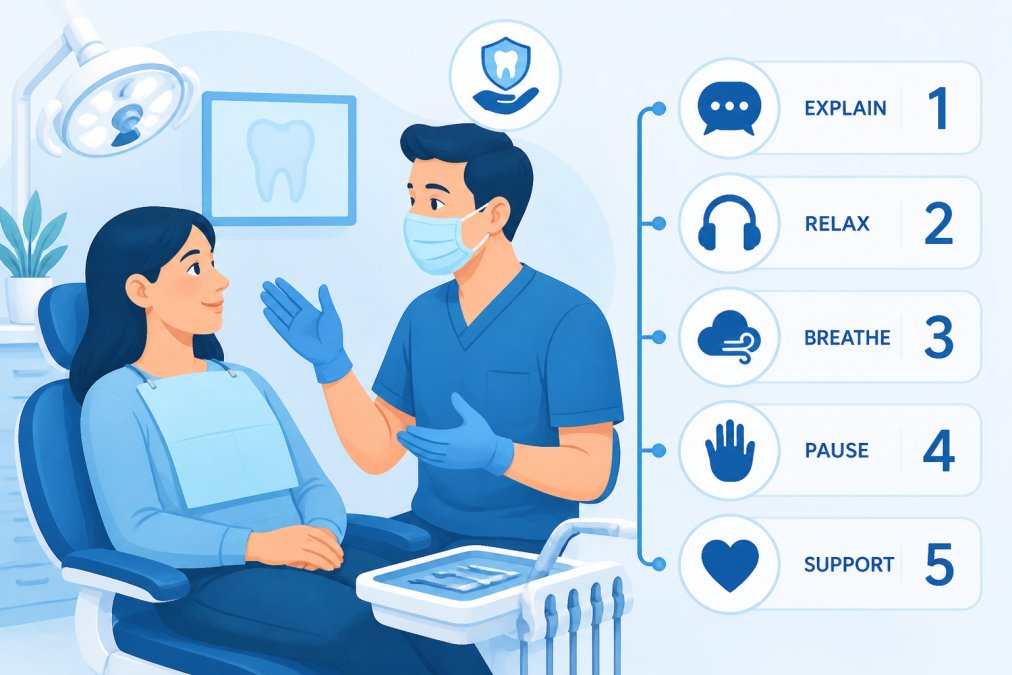
Breathing and relaxation techniques are your first line of defense. Deep breathing activates your parasympathetic nervous system, which counteracts the fight-or-flight response. Practice the 4-7-8 technique: breathe in for 4 counts, hold for 7, exhale for 8. Use this during the appointment when anxiety rises. Progressive muscle relaxation, tensing and releasing muscle groups from your toes upward, also calms your nervous system.
Cognitive reframing involves challenging anxious thoughts with realistic ones. Instead of “This is going to hurt,” try “The dentist is trained to minimize discomfort, and I can ask for a break if needed.” You’re acknowledging your anxiety while also acknowledging your agency and the dentist’s competence.
Distraction techniques work well during procedures. Ask if you can watch a show or listen to a podcast during treatment. Mental distraction, counting tiles on the ceiling, or focusing on a specific memory also helps.
Arrive early to acclimate to the environment. Spending 10 minutes in the waiting room allows your nervous system to adjust to the sounds and sights.
Communicate with your dentist about your anxiety before treatment begins. Let them know your triggers, preferred pace, and any accommodations that help. Establish a signal, often raising your hand, that means you need a break. Knowing you have control reduces anxiety significantly.
Bring support. Some practices allow a trusted friend or family member in the treatment room. Their presence can be grounding, especially for severe anxiety.
Manage pre-appointment stress. The night before and morning of your appointment, avoid caffeine and get adequate sleep. Exercise earlier in the day reduces overall anxiety levels.
Sedation Dentistry Options
For patients with moderate to severe anxiety, sedation dentistry offers a way to receive necessary care without psychological distress. Sedation doesn’t mean you’re unconscious; it means you’re in a deeply relaxed state where you’re less aware of what’s happening.
Nitrous oxide (laughing gas) is the mildest option. You inhale a mix of nitrous oxide and oxygen through a mask, and within minutes you feel relaxed and slightly euphoric. You remain fully conscious and can communicate. The effect wears off quickly after the mask is removed. Nitrous oxide works well for mild to moderate anxiety and shorter procedures.
Oral sedation involves taking a prescribed medication before your appointment. You remain conscious but deeply relaxed, often with limited memory of the procedure. This option works well for moderate anxiety and longer appointments. Recovery takes a few hours, so you’ll need someone to drive you home.
IV sedation delivers medication directly into your bloodstream, allowing the dentist to adjust the depth of sedation in real time. You may have little to no memory of the procedure. IV sedation is used for severe anxiety, complex procedures, or patients with gag reflexes that interfere with treatment. Recovery takes longer than oral sedation.
General anesthesia renders you completely unconscious. It’s reserved for extensive procedures or patients with severe anxiety who haven’t responded to other options. General anesthesia requires specialized training and monitoring equipment, so it’s typically available only in surgical or hospital settings.
The choice depends on your anxiety level, the procedure’s complexity, your medical history, and your preferences. A gentle dentist discusses all options without pressure, explaining the benefits and considerations of each. Cost varies; nitrous oxide is usually included in procedure fees, while oral and IV sedation add to the cost. Insurance sometimes covers sedation for specific procedures, so check your plan.
Evaluating Local Dental Practices
Once you’ve assessed your own needs, evaluate practices in your area. Look beyond the website and marketing materials.
Read patient reviews critically. Look for patterns rather than individual complaints. Pay attention to reviews specifically mentioning anxiety management, comfort, and whether the dentist explains treatment recommendations.
Check credentials and training. Look for dentists who pursue continuing education in anxiety management, sedation, or restorative techniques. Membership in professional organizations like the American Dental Association indicates commitment to standards and ethics.
Visit the practice before scheduling an appointment. A welcoming, clean environment with modern equipment signals that the practice invests in patient experience. Notice whether staff members seem stressed or calm.
Ask about emergency access. A practice that offers same-day emergency appointments demonstrates commitment to patient care.
Evaluate communication. When you call with questions, do staff members answer patiently? During your consultation, does the dentist listen more than they talk?
Confirm insurance and payment options. Ask whether they accept your insurance, offer payment plans, and what their policy is for uninsured patients. Sendero Dental Studio offers special pricing for uninsured patients, a sign they prioritize access to care.
Assess continuity of care. Will you see the same dentist each visit? Consistency matters, especially for anxious patients.
What to Expect at Your First Visit
Your first appointment sets the tone for your relationship with the practice. Knowing what to expect reduces anxiety.
Arrive early, typically 10-15 minutes before your scheduled time. You’ll complete intake forms with your medical and dental history. Be honest about your anxiety; this information helps the dentist tailor their approach.
Meet the staff. A warm greeting and genuine interest in your comfort signal what kind of practice this is.
Have a consultation before treatment. During your first visit, a gentle dentist typically does an exam and discusses findings before launching into treatment. They explain what they see, what treatment options exist, and what you should prioritize. They ask about your goals and concerns.
Expect a thorough exam. The dentist will check your teeth, gums, and jaw. They may take X-rays or use digital imaging. They’ll ask about your oral hygiene routine, diet, and any habits like grinding or clenching.
Discuss anxiety management. If you’ve indicated anxiety, the dentist will ask what helps you feel calm. They’ll explain their approach and offer options. Establish a hand signal for breaks if needed.
Don’t expect major treatment on visit one. The first appointment is typically diagnostic and relationship-building. Major treatment usually happens at a follow-up appointment.
Ask questions. A gentle dentist encourages questions and doesn’t make you feel rushed.
Discuss next steps. Before you leave, you should understand what happens next and how to reach the practice if questions arise.
Your first visit is as much about you evaluating the practice as it is about the dentist evaluating your teeth. Trust your gut. If you feel heard and respected, you’ve likely found a good fit.
Finding a gentle dentist is about matching your needs with a practice that shares your values around comfort, communication, and patient-centered care. The right dentist understands that anxiety is valid, that trust takes time to build, and that your role in your own care matters.
At Sendero Dental Studio, we’re committed to creating that experience for every patient. From comprehensive dental care for the entire family to same-day emergency appointments and advanced restorative solutions, we combine clinical expertise with genuine compassion. Whether you’re managing dental anxiety, seeking preventative care, or addressing complex restorative needs, we prioritize building a relationship based on trust and personalized attention.
Ready to experience the difference a truly gentle approach makes? Request your appointment with Sendero Dental Studio and take the first step toward comfortable, confident dental care.
Frequently Asked Questions
What makes a dentist considered ‘gentle’?
A gentle dentist prioritizes patient comfort and communication. They listen to your concerns, explain procedures before starting, use a calm tone, and take time to address anxiety. They employ minimally invasive techniques, offer sedation options for nervous patients, and create a stress-free environment. A gentle approach also includes preventative education and personalized treatment plans that respect your pace and preferences.
What questions should I ask a new dentist during a consultation?
Ask about their experience with anxious patients and what comfort measures they offer. Inquire about sedation dentistry options, their approach to treatment recommendations, and whether they coordinate comprehensive care (pediatric, orthodontic, restorative). Ask about appointment availability, emergency care, payment plans, and how they handle patient communication. Request information about their diagnostic imaging technology and how they involve you in treatment decisions.
What sedation dentistry options are available for nervous patients?
Common options include nitrous oxide (laughing gas), which provides mild relaxation while keeping you awake; oral sedation, where you take a prescribed medication before your appointment; and IV sedation for deeper relaxation during more complex procedures. Some practices also offer general anesthesia for extensive work. Your dentist will discuss which option suits your anxiety level and medical history during a consultation.
How can I overcome dental anxiety before an appointment?
Start by communicating your fears to your dental team, they can adjust their approach accordingly. Practice relaxation techniques like deep breathing, meditation, or progressive muscle relaxation before and during your visit. Bring headphones and listen to calming music in the waiting room. Schedule morning appointments when you’re less anxious. Arrive early to acclimate to the environment. Consider asking a trusted friend or family member to accompany you for support and reassurance.
This article was written using GrandRanker