
Routine Dental Hygiene for Families: A Step-by-Step Guide
Table of Contents
- Why a Family Dental Routine Needs a Plan
- Preventive Dental Care for Families: The Core Schedule
- Children’s Dental Hygiene Steps by Age
- How to Make Brushing Fun for Kids (Without the Battle)
- When to Start Professional Dental Visits
- The Family Budget: Affordable Preventive Care
- Sensory-Friendly and Anxiety-Free Dental Care
- Building Your Family’s Routine for the Long Run
- Frequently Asked Questions
Last Updated: September 6, 2026
Why a Family Dental Routine Needs a Plan
Most parents don’t fail at dental care because they forget to buy toothpaste. They fail because they treat oral hygiene as a daily chore instead of a coordinated system that accounts for different ages, schedules, and temperaments.
This guide walks through the preventive schedule that actually works, age-specific steps for children, and the behavioral strategies that turn resistance into cooperation.
Preventive Dental Care for Families: The Core Schedule
Preventive dental care for families rests on a simple premise: consistent daily habits prevent the painful and costly problems that bring most people to the dentist. When everyone brushes twice daily and flosses once, plaque removal happens before it hardens into tartar. But knowing the ‘what’ is not the same as mastering the ‘how’ in a busy household.
The Morning and Bedtime Non-Negotiables
The morning routine clears away bacteria that accumulate overnight. The bedtime routine matters more: saliva production drops during sleep, meaning less natural protection against cavity formation, so brushing removes food particles and plaque that would otherwise sit on teeth for eight hours.
Both sessions should last two minutes using fluoride toothpaste and a soft-bristled brush. Replace brushes every three months or sooner if bristles fray. If you only supervise one session closely, make it the evening one.
The Mechanics of an Effective Two-Minute Brush
Most people brush the same way every day, usually the front teeth, and miss the areas that matter most. The American Dental Association recommends placing the brush at a 45-degree angle to the gums using short, gentle strokes (the American Dental Association). Focus on one quadrant of the mouth at a time, spending 30 seconds on each, to reach the gumline and back molars where cavities form first.
For parents supervising young children, follow a consistent ‘inside, outside, top, bottom’ pattern and say it out loud so the child internalizes the sequence. For older kids and adults, an electric toothbrush with a quadrant timer can enforce this structure automatically.
The Interdental Step: Where Most Families Drop the Ball
The American Dental Association recommends cleaning between teeth once daily. That interdental step is where most families drop the ball, yet it reaches the 40% of tooth surfaces a brush cannot touch, making it essential for periodontal health.
Traditional string floss is the gold standard, but it has a learning curve. Match the tool to the user: floss picks for children under ten, interdental brushes or a water flosser for teenagers with braces, and waxed floss for adults with tight contacts. The key is that interdental cleaning happens daily, if the current tool causes friction, change it.
The 2-2-2 Rule and Its Limits
The 2-2-2 rule, two minutes of brushing, twice a day, two dental visits per year, is a useful memory aid, but it oversimplifies preventive care. It says nothing about flossing or tongue cleaning, yet the tongue harbors a significant portion of the bacteria responsible for bad breath. A quick scrape after brushing takes five seconds and makes a noticeable difference.
The rule also fails to account for behavioral reality. A two-minute brush is a sequence of behaviors that must be initiated, supervised, and completed; for a family with a toddler and a school-age child, the bedtime routine can stretch to fifteen minutes. Planning for that time separates families who maintain the routine from those who abandon it.
The Family Schedule That Works
A realistic schedule builds in buffer time. Brush together as a family after breakfast and before bed to create a shared activity. For the bedtime session, start fifteen minutes earlier than you think you need to, absorbing inevitable delays without turning the routine into a rushed event.
Consistency matters more than perfection. If a session is rushed or skipped occasionally, the routine does not collapse.
Children’s Dental Hygiene Steps by Age
Children’s dental hygiene steps vary significantly from toddlerhood through the teenage years. Matching the approach to the developmental stage is the difference between a routine that sticks and one that fades.
Toddlers and Preschoolers: Building the Habit
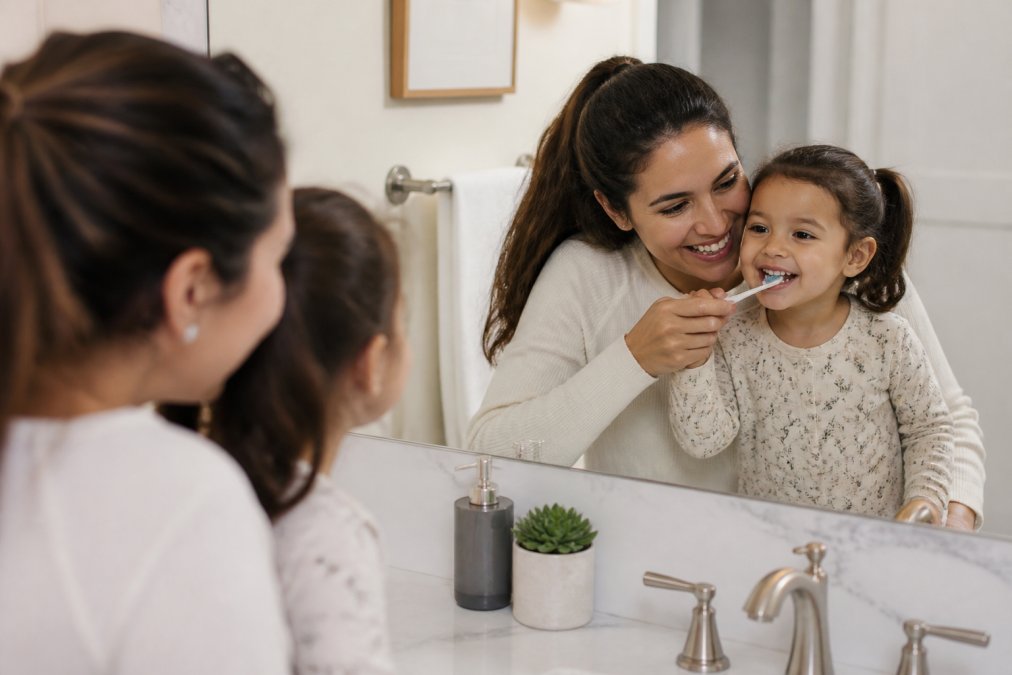
For children under three, use a smear of toothpaste the size of a grain of rice; from ages three to six, a pea-sized amount (the American Dental Association). Parents should brush their child’s teeth, as young children lack the dexterity for a thorough job. Let the child hold the brush and “help,” then finish yourself.
Make it a fixed part of the bedtime schedule, paired with a consistent sequence: pajamas, brush, book, bed. Predictability builds the neural pathway that turns effort into habit.
School-Age Kids: Moving to Independence
Around age seven or eight, most children can brush effectively on their own, though supervision remains wise. A two-minute timer or song helps maintain the full duration.
This is also the age to introduce daily flossing. Floss picks or interdental brushes can bridge the gap until fine motor skills catch up.
Teenagers: The Motivation Problem
Teenagers present a different challenge. They know how to brush; many simply don’t prioritize it. Lectures rarely land. What works is connecting oral hygiene to things they already care about: fresh breath, a bright smile in photos, and avoiding visible dental problems.
Give teenagers ownership of their routine. Let them choose their own toothbrush and toothpaste flavor. If they wear braces, emphasize that meticulous cleaning prevents white spot lesions that become permanent reminders of poor brushing.
How to Make Brushing Fun for Kids (Without the Battle)
The answer isn’t bribery or force; it’s reframing brushing as something enjoyable rather than obligatory.
- Use a visual chart. A sticker chart that leads to a small reward gives children a tangible sense of progress.
- Let them pick supplies. A toothbrush featuring their favorite character costs the same as a plain one but generates dramatically more enthusiasm.
- Brush together. Children mimic parents. When they see you brushing and flossing, it normalizes the behavior.
- Use apps and timers. Many free apps turn two minutes into a game with animated characters and rewards.
- Tell stories. Invent a narrative where brushing “defeats the sugar bugs” that cause cavities.
The underlying principle is to make oral hygiene education feel like play. Children who associate brushing with positive attention are far more likely to maintain consistent habits into adulthood.
When to Start Professional Dental Visits
The recommendation from pediatric dental authorities is clear: schedule the first visit by the child’s first birthday or within six months of the first tooth erupting, whichever comes first (aapd.org).
Early visits acclimate the child to the dental environment before fear develops, allow the dentist to monitor development, and provide parents with personalized guidance. After the first visit, the standard cadence is every six months, though higher-risk children may need more frequent check-ups.
Frame a check-up as a routine part of staying healthy, like a pediatrician visit. For anxious children, a practice experienced with young patients can make the difference between a positive association and lasting fear.
The Family Budget: Affordable Preventive Care
Dental care costs are a legitimate concern, particularly for families without insurance. Preventive care is the most cost-effective dental expense: a routine cleaning and exam cost a fraction of a single filling or root canal.
Budget-friendly dental health starts with prevention. Consistent home care reduces the need for restorative work, and regular check-ups catch small problems early. Many practices offer options for uninsured patients, including specials or in-house payment plans.
Don’t let cost concerns delay care. Addressing a small cavity promptly costs far less than waiting until it requires a crown or extraction. Ask about payment options before assuming a treatment is unaffordable. microbiome friendly oral care.
Sensory-Friendly and Anxiety-Free Dental Care
Dental anxiety is not limited to children. Many adults postpone necessary care because of a bad childhood experience or a sensitive gag reflex. Sensory-friendly dental care addresses these concerns directly.
For children with sensory processing differences, the dental office can be overwhelming. Accommodating practices might offer sunglasses to dim the lights, allow the patient to hold the suction tool, or explain each step before proceeding.
For anxious adults, the approach includes clear communication, gentle pacing, and the option to signal for a break at any time. A practice that honors your comfort level will earn your trust far faster than one that rushes.
Building Your Family’s Routine for the Long Run
The most effective routine is the one that actually happens. A perfect plan executed sporadically loses to an imperfect plan executed daily. Start with the non-negotiables: two minutes of brushing morning and night, daily interdental cleaning, and check-ups every six months.
| Family Member | Daily Minimum | Key Focus | Common Pitfall |
|---|---|---|---|
| Toddlers | Parent brushes twice daily | Building habit, smear of toothpaste | Skipping bedtime brush when child is tired |
| School-age kids | Self-brushing with supervision | Full two minutes, starting floss | Rushed brushing, missed back molars |
| Teenagers | Independent brushing and flossing | Motivation, braces care | Skipping flossing, sugary sports drinks |
| Adults | Brushing and flossing twice daily | Gum health, modeling behavior | Treating flossing as optional |
The Motivation Problem No One Talks About: Teenagers
Most family dental guides focus on toddlers, but the biggest drop-off in routine hygiene happens during the teenage years. A teenager who brushed diligently at ten may view oral care as optional by fifteen. What works is connecting oral hygiene to things they already care about: fresh breath, a bright smile, and avoiding visible dental problems.
The most effective strategy is to shift from supervision to ownership. Give teenagers complete control over their dental supplies. If they wear braces, emphasize that meticulous cleaning prevents white spot lesions, one of the most common reasons teenagers end up with visible discoloration after braces come off.
Another angle that resonates is the financial one. A single cavity can cost several hundred dollars to fill, while a routine cleaning is a fraction of that cost. When teenagers understand their daily habits impact future expenses and smiles, they are more likely to take ownership.
The Budget-Friendly Dental Care Angle
Effective routine hygiene does not require expensive tools. A manual soft-bristled toothbrush is just as effective as an electric one when used properly. Generic store-brand fluoride toothpaste carries the same American Dental Association seal of acceptance as premium brands, provided it contains fluoride.
For families without insurance, community health centers and dental schools offer reduced-cost cleanings and check-ups. The investment in a routine cleaning every six months is far less than the cost of a single filling or root canal.
Troubleshooting Common Routine Breakdowns
Every family hits a wall eventually. Here are the most common breakdowns and practical fixes.
The bedtime brush is constantly skipped. Move brushing earlier in the bedtime sequence, before pajamas, not after. Brushing right after the bath, when the child is still alert, removes the friction of doing it at the very end.
The child refuses to brush. Refusal is often about control. Offer a choice within a boundary: ‘Do you want to brush first or put on pajamas first?’ or ‘Bubblegum or mint toothpaste?’ This gives agency without eliminating the non-negotiable outcome.
The teenager ‘forgets’ to floss. Forgetting is usually a motivation problem disguised as a memory problem. Move the floss next to their phone charger or on their desk as a visible reminder.
The routine falls apart during vacations or holidays. Pack a family dental kit with a toothbrush, toothpaste, and floss for each person. Keep the schedule as close to normal as possible; the routine is more resilient than you think, as long as you do not abandon it entirely.
The Long-Term Payoff
Families who maintain a consistent routine through the difficult years are the ones who rarely need more than a cleaning at their six-month check-ups. The habit becomes self-sustaining because the positive reinforcement is built in: no cavities, no pain, no emergency visits.
Sendero Dental Studio provides comprehensive, family-oriented dental care in Rancho Mission Viejo, focusing on both preventive education and advanced restorative solutions. Our experienced team utilizes cutting-edge technology to ensure comfortable, health-centered treatments tailored to your unique needs. Whether you require routine hygiene or urgent emergency care, we are dedicated to building long-term trust and maintaining your family’s oral health. Experience the difference of truly personal dental care designed to keep you smiling.
Frequently Asked Questions
What is the 2-2-2 rule in dentistry?
The 2-2-2 rule is a simple memory aid: brush twice a day, visit the dentist twice a year, and wait two minutes after eating before brushing. It helps families remember the basics, but it is not a complete plan. A full family routine also includes daily flossing, tongue cleaning, and using fluoride toothpaste. For children, the rule works best as a starting point, not the whole strategy.
What is the perfect dental hygiene routine for families?
A perfect family routine is consistent and age-appropriate. It starts with brushing for two minutes, twice daily with fluoride toothpaste. Add daily interdental cleaning once teeth touch. Keep a predictable bedtime schedule that includes brushing before stories. Schedule professional cleanings every six months for each family member. The routine only works if it fits your family’s daily rhythm, so adjust timing to make it sustainable.
What are three signs of poor dental hygiene in a child?
Three common signs are persistent bad breath, bleeding gums during brushing, and visible plaque buildup near the gumline. Complaints of tooth sensitivity or pain also signal a problem. If you notice any of these, review your child’s brushing technique and increase supervision. Schedule a professional dental visit sooner rather than waiting for the next six-month checkup to catch issues early.
How often should families schedule professional dental cleanings?
Most families should schedule professional cleanings every six months. This standard interval allows the dentist to catch cavities early and remove tartar that home brushing cannot. Some family members may need more frequent visits based on their gum health or cavity history. Your dentist will recommend the right recall schedule for each person. Consistency matters more than the exact interval.
Building a family dental routine is challenging, especially when schedules are full and kids resist. You don’t have to figure it out alone. At Sendero Dental Studio, we support families with preventive education, comfortable treatments, and a team that takes time with anxious patients of all ages. Request Your Appointment and let us help your family’s smiles stay healthy for years to come.