
What to Expect During a Root Canal Procedure

Table of Contents
- Why a Root Canal Procedure Is Recommended
- Root Canal Procedure Steps, From Exam to Sealing
- How Long Does a Root Canal Take?
- Does a Root Canal Hurt?
- Root Canal Recovery Time and Aftercare
- When Treatment Differs: Tooth Type, Complexity, and Retreatment
- Risks, Warning Signs, and When to Call Your Dentist
- Conclusion
- Frequently Asked Questions
Last Updated: October 19, 2026
Why a Root Canal Procedure Is Recommended
A root canal procedure is a dental treatment that removes infected or damaged pulp from inside a tooth, then cleans, seals, and restores it so you can keep the tooth. At Sendero Dental Studio, we explain it this way: the goal is to save your natural tooth and stop the pain.
The pulp holds nerves and blood vessels. When bacteria get inside, the tissue can’t heal on its own. Left alone, the infection spreads.
Signs Your Tooth Pulp May Be Infected or Damaged
Watch for these warning signs:
- Sharp pain when biting or pressing on a tooth
- Lingering sensitivity to hot or cold
- A small bump on the gum near the tooth
- Darkening of the tooth
- Swelling or tenderness in the gums
Some infected teeth cause no pain at all. That’s why a dental examination with X-rays matters. Imaging shows damage that you can’t feel.
The American Dental Association’s guidance on endodontic treatment notes that saving the natural tooth is usually the best option when it can be done.
Waiting for the pain to pass is a common mistake. An infected tooth does not heal on its own, and the infection can spread to your jaw or other parts of your body. Call a dentist as soon as symptoms appear.
Root Canal Procedure Steps, From Exam to Sealing
Here is the root canal procedure steps sequence, from first exam to final seal, along with a realistic timeline and the planning questions most patients wish they had asked before arriving. Most visits follow the same order, but the number of appointments and the total time depend on the tooth and the infection.
Step 1: Examination and X-rays (10 to 20 minutes). The dentist checks the tooth, tests how it responds to cold, pressure, and tapping, and takes images of the root canal system. A cone beam CT scan may be ordered for complex anatomy. This is also when you should ask about cost estimates and insurance coverage.
Step 2: Local anesthesia (5 to 10 minutes). The dentist numbs the tooth and surrounding area. The injection feels like a brief pinch, then a spreading warmth. Numbness typically sets in within a few minutes.
Step 3: Isolation (5 minutes). A small rubber dam keeps the tooth dry and clean and protects your throat from rinse solution. You’ll feel tight pressure around the tooth.
Step 4: Access opening (10 to 15 minutes). The dentist opens the top of the crown to reach the pulp. Expect pressure and vibration, not sharp pain.
Step 5: Pulp removal (10 to 20 minutes). Infected and damaged pulp is taken out of the root canals. You may hear scraping sounds.
Step 6: Cleaning and shaping (15 to 30 minutes). Tiny files clean and shape each canal. Molars with curved or extra canals take longer than front teeth.
Step 7: Irrigation and disinfection (5 to 10 minutes). A rinse flushes out bacteria and debris. You may taste a faint medicinal flavor.
Step 8: Sealing (5 to 10 minutes). A biocompatible filling material seals the canals.
Step 9: Temporary filling (5 minutes). A temporary filling protects the tooth between visits. It can wear down, so avoid chewing on that side.
Step 10: Permanent restoration (a separate appointment). A dental crown or filling restores the tooth for chewing. This is usually scheduled one to three weeks after the root canal.
One Visit or Two?
Most front teeth and many premolars are finished in a single visit of 30 to 90 minutes. Molars, teeth with severe infection, and retreatment cases often need two visits, with the temporary filling protecting the tooth in between. Ask your dentist before treatment starts which pattern applies to you so you can plan time off work and arrange transportation if you choose sedation.
Cost Factors and Insurance Questions to Ask
Root canal treatment is a covered benefit under many dental insurance plans, but coverage varies by plan and by tooth type. Before treatment, ask:
- Is the procedure covered, and at what percentage?
- Does my plan require preauthorization for a molar root canal or a crown?
- Is an endodontist referral covered at the same rate as a general dentist?
- What is my estimated out-of-pocket cost after insurance?
- Does the plan cover the permanent crown, and when can it be placed?
If you are uninsured or your plan doesn’t cover the procedure, ask about payment plans or financing before the appointment. Cost depends on the tooth, the complexity of the canals, whether retreatment is needed, and whether a crown is required afterward. Get a written estimate so there are no surprises.
Skipping the permanent restoration to save money is a common and costly mistake. An unrestored tooth can crack and need removal, which usually costs more than the crown would have.
How Long Does a Root Canal Take?
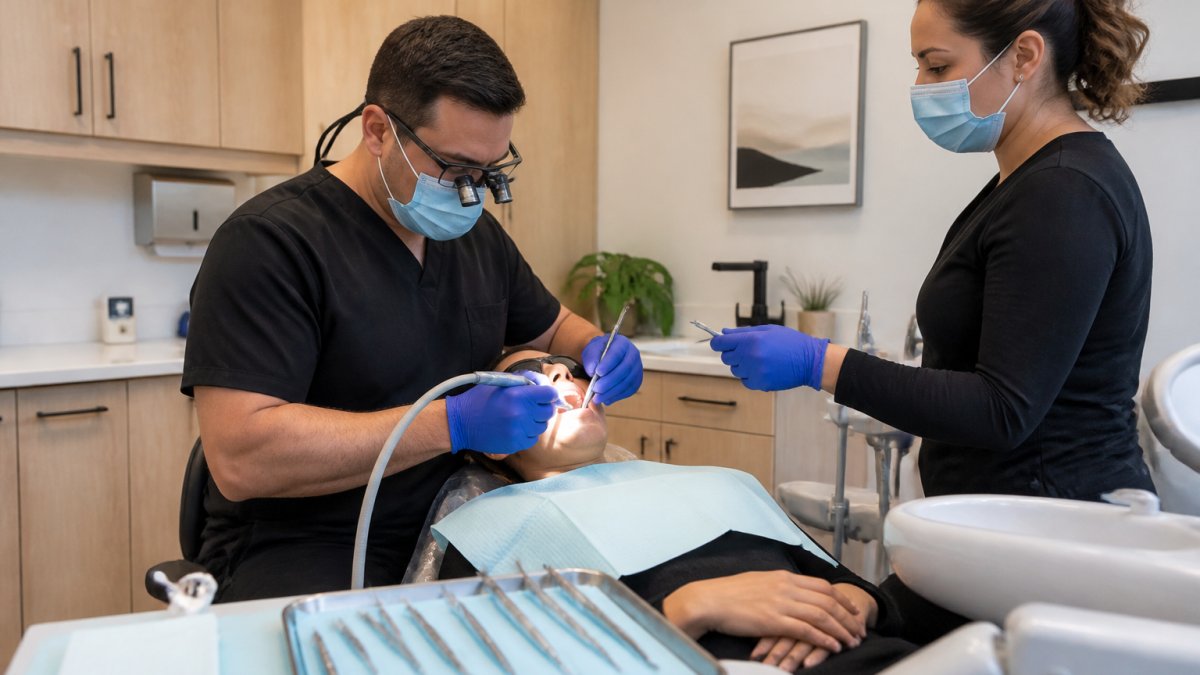
Most root canals take 30 to 90 minutes. Front teeth usually go faster because they have one or two canals. Molars take longer because they have more canals and more complex anatomy.
Some teeth need two visits. That happens when the infection is severe or the canals are hard to reach. Your dentist will tell you what to expect before treatment starts.
Does a Root Canal Hurt?
No. With modern local anesthesia, a root canal should not hurt during the procedure. The numbing works well, and most patients report pressure rather than pain.
Mild soreness afterward is normal. It usually fades within a few days. Over-the-counter pain relievers often help.
If you feel anxious about dental work, tell us. At Sendero Dental Studio, we offer a calm, comfortable setting and take time to explain each step. Sedation options may be available for patients who need extra support, so ask during your consultation.
The National Institute of Dental and Craniofacial Research’s overview of dental care confirms that saving natural teeth through endodontic treatment remains a standard, well-established approach.
Root Canal Recovery Time and Aftercare
Most people return to normal activity the next day. Numbness wears off in a few hours. Follow these aftercare steps:
- Wait until numbness fades before eating, so you don’t bite your cheek or tongue
- Avoid hard foods and chewing on the treated tooth until your permanent restoration is placed
- Take pain relievers as directed
- Brush and floss gently around the tooth
- Keep your follow-up appointment for the final restoration
A temporary filling can wear down. If it chips or falls out, call your dentist. Skipping the permanent crown is a common mistake. An unrestored tooth can crack and need removal.
Chew on the opposite side for the first few days. It protects the temporary filling and lowers the chance of soreness when biting.
When Treatment Differs: Tooth Type, Complexity, and Retreatment
Not every root canal follows the same path. Front teeth are the simplest: one or two straight canals, quick access. Premolars sit in the middle. Molars have three or four canals, sometimes curved, which takes more time and skill.
Retreatment is another case. If a tooth was treated before and the infection returned, the dentist removes the old filling material and cleans the canals again. Retreatment usually takes longer than a first-time root canal.
An endodontist, a dentist who specializes in root canal treatment, may handle complex cases. We refer when a case calls for that level of care, and we coordinate so you’re not left guessing.
| Situation | Typical Complexity | What to Expect |
|---|---|---|
| Front tooth | Low | One visit, shorter appointment |
| Premolar | Moderate | One visit, more canals to clean |
| Molar | High | Longer visit, possibly two |
| Retreatment | High | Old material removed, re-cleaned |
Risks, Warning Signs, and When to Call Your Dentist
Root canal treatment is generally safe and predictable, but no procedure is risk-free. Rare issues include a canal that’s missed, a small instrument fracture, or a filling that doesn’t seal fully. Most problems are manageable when caught early.
Call your dentist right away if you notice:
- Pain that gets worse instead of better after a few days
- Swelling in your face, jaw, or neck
- A fever
- The temporary filling comes loose
- A bad taste or new bump on the gum
Facial swelling with fever needs urgent care. Don’t wait for a routine appointment.
A root canal saves your natural tooth and stops infection. Numbing keeps it comfortable, recovery is short, and the biggest risk comes from skipping the permanent restoration afterward.
Conclusion
Dental pain is stressful, and putting off care usually makes it worse. If you have a toothache, swelling, or lingering sensitivity, get it checked. Sendero Dental Studio offers same-day emergency care, family-friendly appointments, and a comfortable, health-centered approach. Our team uses advanced technology to plan treatment and explain every step, and we welcome uninsured patients too. Request your appointment and get your smile back on track.
Frequently Asked Questions
How long do you take to recover from a root canal?
Most people return to normal routines the next day, though mild soreness or tenderness when biting can last a few days to about a week. That discomfort usually responds to over-the-counter pain relievers. If a crown is still needed, your dentist will schedule that follow-up, and the tooth may feel different until the permanent restoration is in place. Contact the office if soreness worsens instead of easing, or if swelling, a returning ache, or a loose temporary filling appears.
Do you get shots for a root canal?
Yes. Local anesthesia is standard for a root canal procedure, so the treatment area is numbed before any work begins. Your dentist will test the numbness first and can add more anesthetic if you feel anything sharp. If needles make you anxious, tell the team ahead of time; topical gel, a slower injection pace, and sedation options can make the appointment more comfortable. Pressure and vibration are normal during cleaning, but pain is not, so raise your hand if you feel it.
Will I need a crown after a root canal?
Often, yes, especially on back teeth that take heavy chewing forces. After the canals are sealed, the tooth can be more brittle, and a dental crown protects it from fracture. Front teeth may sometimes be restored with a filling instead. Your dentist will discuss what your tooth needs, place a temporary filling in the meantime, and explain the timeline for the permanent restoration so you know what to expect at the follow-up appointment.
What should you avoid after a root canal?
Skip hard foods and sticky candy on the treated side until your permanent restoration is placed, and avoid very hot drinks while numbness lingers so you do not burn yourself. Chewing ice or biting fingernails can crack a weakened tooth. Keep brushing and flossing gently, take pain relievers as directed, and attend your follow-up appointment. If the tooth feels high when you bite or the temporary filling chips, call your dentist rather than waiting for your next visit.
This article is general information, not dental advice for your specific situation. For diagnosis and treatment, schedule a consultation with a qualified dentist.