
How to Maintain Oral Health in 2026: Complete Guide
Table of Contents
- Building a Daily Dental Hygiene Routine That Works
- ADA Oral Hygiene Recommendations You Should Follow
- How to Prevent Gum Disease Before It Starts
- The Importance of Professional Dental Cleanings
- Diet, Hydration, and Habits That Protect Your Teeth
- 2026 Trends and Smart Tools for Oral Health
- Frequently Asked Questions
Last Updated: September 12, 2026
Building a Daily Dental Hygiene Routine That Works
Learning how to maintain oral health 2026 starts with two daily habits that take under five minutes each. At Sendero Dental Studio, we tell every patient: consistency beats intensity, and technique beats effort. The American Dental Association recommends brushing twice daily for two minutes and cleaning between teeth once a day, yet many people rush both (the American Dental Association).
A daily dental hygiene routine protects enamel, controls plaque, and keeps gum inflammation from taking hold.
Brushing Technique and Frequency
Brushing works only when the bristles reach the gum line. Many people scrub across the crowns and miss where plaque causes damage, or press hard with a stiff brush, wearing down enamel and irritating gums.
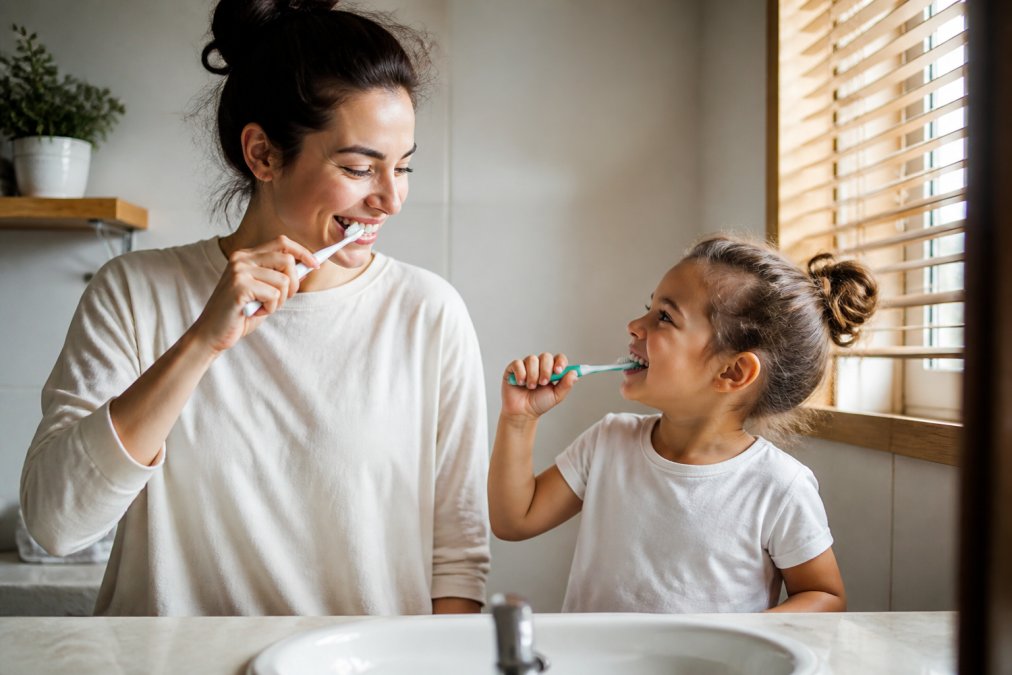
Use a soft-bristled brush at a 45-degree angle toward the gums, moving in short, gentle strokes across outer, inner, and chewing surfaces. Two minutes, twice a day. Replace your brush every three to four months, or sooner if bristles splay.
Flossing and Interdental Cleaning
Flossing reaches the 40 percent of tooth surfaces a brush cannot touch, where decay and gum inflammation often begin.
String floss works for most people; for wider gaps, braces, or bridges, interdental brushes and water flossers are practical alternatives. Bleeding gums in the first week are common if you have not flossed in a while and usually settle as tissue heals. If bleeding continues past two weeks, book a routine dental examination.
ADA Oral Hygiene Recommendations You Should Follow
The ADA oral hygiene recommendations are the baseline every home routine should meet: brush twice daily with fluoride toothpaste, clean between teeth daily, eat a balanced diet, and see a dentist regularly. Refining these habits requires a discerning approach to the ingredients in your daily products, making choosing clean oral care a vital step in ensuring your routine remains as safe as it is effective.
Fluoride toothpaste benefits go beyond cleaning. Fluoride remineralizes early enamel damage and makes teeth more resistant to acid erosion. Look for the ADA Seal of Acceptance on the tube, which confirms a product has been independently evaluated for safety and effectiveness. The ADA Seal of Acceptance program explains what that seal verifies.
Most people use far too much toothpaste. A pea-sized amount is enough for adults, and a thin smear is enough for children under three. Using more does not clean better; it just makes you rinse sooner and lose the fluoride contact time.
How to Prevent Gum Disease Before It Starts
Gum disease prevention comes down to removing plaque before it hardens into dental calculus. Gingivitis is reversible; periodontal disease is not.
Watch for these early signs:
- Gums that bleed when you brush or floss
- Persistent bad breath, or halitosis management that never quite works
- Red, swollen, or tender gum tissue
- Gums pulling away from the teeth
The systemic health link matters here. Gum inflammation does not stay in your mouth; research continues to connect periodontal health to broader conditions like cardiovascular disease and diabetes. The CDC information on oral health conditions outlines how oral health connects to overall health.
If you notice any of those signs, do not wait for your next visit. Early treatment is simpler, less invasive, and less costly than treating advanced disease.
The Importance of Professional Dental Cleanings
Professional dental cleanings remove what home care cannot reach. Even with excellent brushing and flossing, tartar hardens below the gum line, and only a professional prophylaxis can clear it, the importance of professional dental cleanings is about more than a polished smile.
A routine dental examination also catches small cavities, early gum inflammation, and soft-tissue changes easy to miss at home. Most adults benefit from a checkup every six months, though your dentist may recommend a different interval.
| What You Do at Home | What a Professional Cleaning Adds | Why It Matters |
|---|---|---|
| Brush twice daily | Removes hardened tartar | Prevents gum inflammation |
| Floss daily | Cleans below the gum line | Protects periodontal health |
| Limit sugar | Applies fluoride treatments | Strengthens enamel protection |
| Self-check your mouth | Screens for early disease | Catches problems sooner |
Skipping cleanings because your teeth feel fine is the most common mistake we see. Gum disease and cavities are usually painless in the early stages. By the time something hurts, the treatment is typically more involved.
Diet, Hydration, and Habits That Protect Your Teeth
What you eat and drink shapes your oral microbiome as much as brushing does.
Sugar, Acid Erosion, and the Twenty-Minute Window
Every time sugar hits your teeth, plaque bacteria ferment it into acid. That acid drops the pH at the tooth surface below the level where enamel dissolves, around pH 5.5, and demineralization continues for roughly twenty minutes after you stop eating. Then saliva buffers the acid and minerals return to the enamel.
The practical takeaway: frequency beats quantity. One dessert at dinner triggers one twenty-minute acid attack. The same sugar spread across a day of sipping soda triggers a near-constant acid bath, and saliva never gets a chance to remineralize. Grazing and sipping are harder on teeth than a single treat.
What helps:
- Drink water with and after meals. It clears food particles, dilutes acid, and supports saliva flow.
- Chew sugar-free gum after eating. Chewing stimulates saliva without feeding bacteria; xylitol-sweetened gum cannot be fermented by oral bacteria.
- Pair sugar with a meal. The saliva triggered by a larger meal helps clear sugar faster.
- Rinse, do not brush, right after acid. Brushing immediately after something acidic, citrus, soda, wine, scrubs softened enamel. Wait about thirty minutes, or rinse with water and brush later.
Acid Erosion Beyond Sugar
Not all enamel damage comes from sugar. Dietary acid erodes enamel directly, without bacteria. Common culprits: citrus, soda (including diet), sports and energy drinks, wine, and frequent coffee. Sipping an acidic drink slowly over hours does the most damage.
A few swaps that preserve the habit without the erosion:
- Use a straw for acidic drinks to reduce contact with the front teeth.
- Do not swish or hold soda in your mouth.
- Finish acidic meals with cheese or water to help neutralize.
- If you have reflux or frequent vomiting, tell your dentist, stomach acid is far more erosive than anything in your diet, and it often shows up as thinning enamel on the back of the front teeth.
Saliva: Your Mouth’s Built-In Defense
Saliva is the most underrated part of oral health: it rinses food and bacteria, buffers acid, carries minerals that repair early enamel damage, and contains antimicrobial enzymes. When saliva flow drops, decay and gum problems rise.
What reduces saliva: many common medications (antihistamines, antidepressants, blood pressure drugs), alcohol, tobacco, excess caffeine, and mouth breathing. If your mouth feels persistently dry, raise it with your dentist and physician, because the cause is often an adjustable medication.
What supports saliva: water throughout the day, sugar-free gum or lozenges, and limiting alcohol and caffeine. For chronic dry mouth, a dentist can recommend saliva substitutes or a fluoride rinse.
Tobacco, Alcohol, and Tongue Cleaning
Tobacco is one of the most damaging habits for oral health. It stains teeth, restricts blood flow to the gums, masking the bleeding that would signal gum disease, and raises the risk of gum disease and oral cancer. Smokeless tobacco is not safer; it holds carcinogens against gum tissue. Quitting is the single highest-value change, and a dentist can point you to cessation resources.
Frequent alcohol dries out the mouth and reduces saliva, compounding erosion and decay risk.
Tongue scraping is a small habit with an outsized effect. The tongue’s papillae harbor the bacteria responsible for most bad breath, and a scraper or toothbrush removes that layer in seconds. Add it right after brushing. A coated tongue that does not clear with scraping can signal dry mouth or another issue worth mentioning at your next visit.
Do not brush immediately after acidic food or drink. Enamel softened by acid is more vulnerable to abrasion, so brushing right away can wear it down faster than waiting. Rinse with water, wait about thirty minutes, then brush.
2026 Trends and Smart Tools for Oral Health
Three shifts are changing how people maintain oral health this year: connected devices, sustainability, and a broader definition of “preventive.”
Smart Toothbrushes, Apps, and Teledentistry
A smart toothbrush is a sensor array strapped to a motor. The useful features fall into three buckets:
- Pressure sensors. These vibrate or flash when you push past the force a soft brush needs to clean without abrading enamel and recessing gums. This is the feature with the clearest everyday payoff, because overbrushing is the most common self-inflicted damage we see.
- Quadrant timers. A 30-second pulse per quadrant enforces the full two minutes the ADA recommends. Most people brush for well under a minute when they self-time.
- Coverage tracking. Some brushes pair with an app that maps which surfaces you actually hit. The catch: the map is only as good as your technique, and a brush that logs data does nothing for the 40 percent of tooth surfaces between your teeth.
Teledentistry has matured into a triage layer rather than a replacement for the chair. A phone-based photo review can help a dentist decide whether a chipped tooth, mouth sore, or swollen gum needs an in-person visit this week or can wait, useful when traveling or when a child spikes a fever on a Sunday. It cannot take X-rays, probe periodontal pockets, or remove tartar. Treat it as a filter, not a substitute.
If you buy a connected brush, turn off the streak notifications after the first month. The habit is already built by then, and gamified nagging is a common reason people abandon the device entirely.
Sustainable Oral Care Without Giving Up Fluoride
The eco-friendly dental aisle has a real trade-off: the ingredients that make a product work often make it hard to package plastic-free.
- Bamboo and refillable handles. These cut the plastic in the handle, the largest single component by mass. Look for handles with replaceable heads so you are not tossing the whole brush every three to four months.
- Toothpaste tablets. These are chewable, low-water alternatives to paste. The catch is concentration: some tablets rely on hydroxyapatite or lower fluoride levels, so check the label for the ADA Seal of Acceptance before switching, especially for children.
- Plastic-free floss and refillable containers. Silk and plant-based flosses exist, but many are waxed with coatings that affect how they glide. If a plastic-free floss shreds or snaps, switch back rather than skip the habit.
- Recyclable brush heads. Some manufacturers now run mail-back programs for used heads. The environmental math only works if you actually send them in.
The rule that cuts through all of it: sustainability is a bonus, not a substitute for fluoride and the ADA Seal. A bamboo brush with a fluoride paste beats a plastic-free routine that skips fluoride every time.
Mental Health, Bruxism, and the Anxiety Loop
The connection between mental health and oral hygiene runs in both directions.
- Stress and bruxism. Clenching and grinding, bruxism, often spikes during high-stress periods and frequently happens during sleep. Over time it wears enamel, flattens chewing surfaces, and can crack teeth or aggravate the jaw joint. Signs to watch for: waking with a sore jaw, temple headaches, and flattened or shiny spots on the back teeth. A dentist can fit a custom night guard; a store-bought boil-and-bite guard is a stopgap, not a long-term solution.
- Anxiety and avoidance. Dental anxiety is one of the most reliable predictors of skipped appointments, and skipped appointments let small problems compound into painful, expensive ones. Comfort-focused practices now offer noise-canceling headphones, agreed hand signals to pause treatment, numbing before injections, and a walkthrough of each step. Telling your dental team about your anxiety up front changes how the visit is run.
- Depression and self-care. When brushing and flossing fall off during a depressive episode, shrink the routine rather than abandon it. A 30-second brush with fluoride paste on the days you cannot manage two minutes still protects more enamel than skipping entirely.
Cost-Effective Home Care
You do not need a premium device to protect your teeth. A soft-bristled brush, fluoride toothpaste, and floss cover the core of what the ADA recommends, and the cheapest version of each works as well as the expensive one when used correctly.
Where money is well spent: a pressure-sensing brush if you brush hard, and dental sealants for children. Sealants are a thin coating applied to the chewing surfaces of back teeth, where grooves trap food. They are one of the few preventive treatments that pay for themselves by preventing cavities rather than treating them.
Where money is wasted: whitening strips used to mask stains that a cleaning would remove, and mouthwash substituted for flossing. Mouthwash reaches surfaces; it does not get between teeth.
The tools matter less than the routine. An electric brush used twice daily beats a premium brush used sporadically, and daily flossing does more for gum health than any gadget. In 2026, the smartest upgrade is usually a cheaper one: better technique, a pressure sensor if you need it, and a night guard if you grind.
Frequently Asked Questions
What are the leading dental trends for 2026?
Dental care in 2026 is moving toward at-home technology that supports professional care. Electric toothbrushes with pressure sensors, smart flossers, and apps that track brushing habits are more common. Teledentistry consultations help patients get quick answers between visits. Sustainable products like bamboo toothbrushes and refillable toothpaste tablets are also growing. None of these replace regular checkups, but they make daily habits easier to stick with.
What is the 3-3-3 rule for teeth?
The 3-3-3 rule is a simple reminder: brush three times a day, for three minutes each time, and wait three minutes after eating before you brush. It is not an official ADA guideline, but it helps people remember the basics. The ADA recommends brushing twice daily for two minutes with fluoride toothpaste. If you follow the 3-3-3 rule, you may exceed the minimum, which is fine as long as you use a soft-bristled brush and gentle pressure.
Can unhealthy teeth become healthy again?
It depends on the stage of damage. Early gum inflammation and the beginning stages of tooth decay can often be reversed with improved brushing, flossing, fluoride toothpaste, and professional cleanings. Once decay reaches the inner tooth or gum disease advances to periodontitis, the damage is not reversible, but it can be managed and stopped from getting worse. Your dentist can assess what stage you are in and recommend the right treatment.
What drink kills bacteria in the mouth?
No drink kills all harmful bacteria, but some help reduce them. Green tea contains compounds that may slow bacterial growth. Water, especially fluoridated water, rinses away food particles and supports saliva production, which is your mouth’s natural defense. Sugary and acidic drinks feed the bacteria that cause cavities and acid erosion. If you want to support microbial balance, plain water is your best choice between meals.
How often should you replace your toothbrush according to ADA guidelines?
The ADA recommends replacing your toothbrush every three to four months, or sooner if the bristles look frayed. Worn bristles do not clean effectively and can miss plaque along the gumline. If you have been sick, replace your brush once you recover. Children may need new brushes more often because they tend to brush harder and chew on the bristles. Mark the calendar so you do not forget.
Do I really need professional cleanings if I brush and floss every day?
Yes. Daily brushing and flossing remove most plaque, but tartar buildup hardens on teeth and can only be removed with professional instruments. The importance of professional dental cleanings goes beyond scraping. Your dentist checks for early signs of decay, gum inflammation, and oral cancer during the exam. Most people benefit from a cleaning every six months, though your dentist may suggest a different schedule based on your gum health and risk factors.