
Advanced Restorative Dental Solutions 2026: What to Know
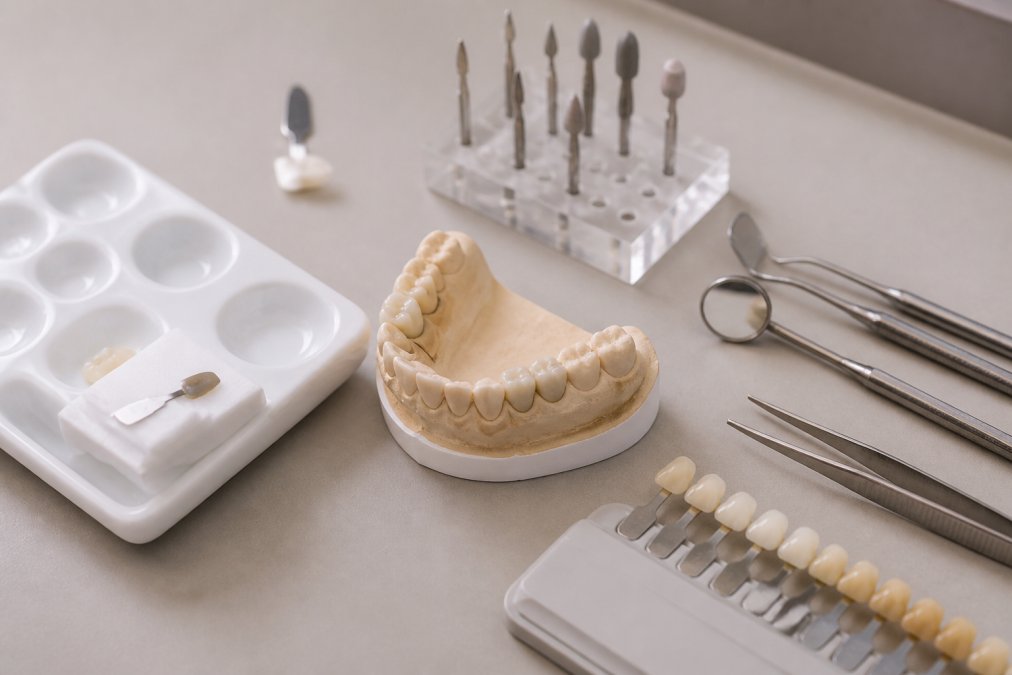
Table of Contents
- How Restorative Dentistry Changed by 2026
- Digital Dentistry Workflows 2026: From Scan to Seat
- Minimally Invasive Dental Restoration Techniques
- Advanced Implant and Overdenture Protocols
- Ultra-Thin Veneers and Custom Prosthetics
- Restorative Dentistry Patient Recovery Time
- Cost, Materials, and Questions to Ask Before You Commit
- Conclusion
- Frequently Asked Questions
Last Updated: September 10, 2026
How Restorative Dentistry Changed by 2026
Restorative dental care has shifted decisively toward preservation, and restorative dental planning now starts with saving structure rather than replacing it. Where the previous decade rewarded aggressive preparation and replacement, today’s leading clinicians rebuild damaged teeth with the smallest possible footprint. This guide from Sendero Dental Studio covers what that shift means for anyone facing a crown, an implant, or a full-mouth reconstruction.
The change is driven by materials, imaging, and a better understanding of how teeth behave under stress. Bonded ceramics now rival older metal systems while removing far less healthy structure, and digital workflows let dentists design and seat a restoration in a single visit.
That matters because every preparation is irreversible. A preserved tooth stays available for future treatment; an over-prepared one becomes a long-term liability. The specialty now asks one question: what is the least invasive way to solve this problem well?
American Dental Association guidance on restorative care
Digital Dentistry Workflows 2026: From Scan to Seat
Digital dentistry workflows in 2026 begin with an intraoral scan and end with a restoration designed, milled, and seated without a physical impression. The scan replaces the tray, the digital model replaces the stone cast, and software replaces much of the guesswork in fit and occlusion.
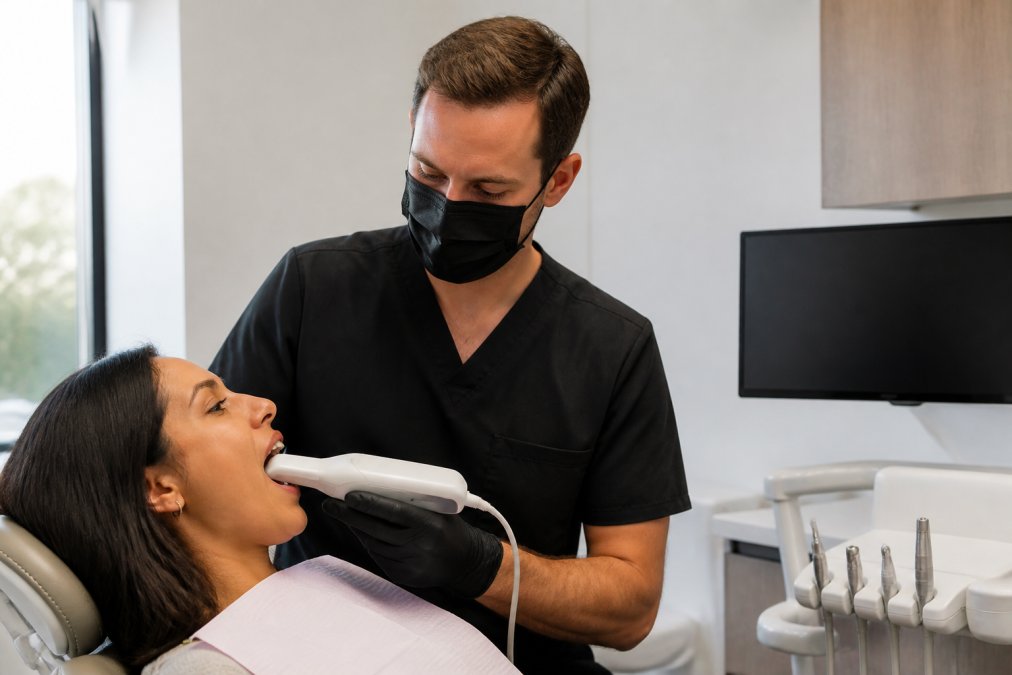
The practical gain is fewer remakes: margins are evaluated on screen before anything is milled, so a thin edge is corrected in software rather than discovered after cementation.
Intraoral Scanning and CAD/CAM Integration
Intraoral scanning captures the prepared tooth, adjacent teeth, and opposing arch as a single digital dataset, which CAD/CAM integration turns into a milled ceramic restoration, often within the same appointment.
For patients, the difference is comfort and time: no impression material, no temporary crown for weeks, and no second numbing appointment for a simple single-unit case. For complex cases, the same scan data feeds planning software that maps implant position before surgery.
A typical chairside workflow runs in four stages:
- Scan, the prepared tooth, adjacent teeth, and opposing arch are captured in a single pass, usually in under five minutes for a single unit.
- Design, the restoration is modeled in CAD software, with the margin, contact points, and occlusal surface set on screen.
- Mill or print, a ceramic block is milled, or a resin or ceramic restoration is printed, depending on the material and the indication.
- Finish and seat, the restoration is stained, glazed, polished, and bonded, often within the same visit.
For multi-unit and implant cases, the same scan data is exported to a laboratory or surgical planning platform, coordinating with CBCT imaging and a printed surgical guide.
AI-Driven Diagnostic Integration
AI-assisted software now flags suspicious areas on radiographs and compares a current scan against a prior one to catch changes in bone level or wear. It is a second set of eyes, not a replacement for clinical judgment.
AI’s real value is consistency: software reviews every image the same way, every time, reducing the chance a slow-developing problem is overlooked between visits. The clinician still decides what it means.
In practice, AI shows up in restorative planning in four concrete places:
- Caries detection on bitewings and periapicals, software highlights regions of reduced density that may indicate demineralization, which a clinician then confirms visually or with a explorer.
- Bone-level change tracking, when prior radiographs are on file, the software overlays the current image and flags differences in crestal bone height around implants or natural teeth.
- Marginal fit and clearance checks in CAD, design software can flag a margin that is too thin, an occlusal clearance that is insufficient, or a contact that is too tight before milling.
- Implant position planning, planning platforms use the CBCT and intraoral scan together to propose a position that respects bone volume, nerve location, and the planned prosthetic.
Three limits are worth knowing. AI tools are trained on datasets that may not represent every patient population, so a flagged area still needs clinical confirmation. Software sees an image, not the mouth, it cannot feel a soft spot or test a bite. And output is only as good as input; a poor scan or poorly positioned radiograph produces poor guidance.
If your dentist uses AI-assisted software, ask what it flagged and what they concluded. A clinician who can walk you through the specific finding, and explain why they agreed or disagreed with it, is using the tool the way it is meant to be used.
American Dental Association guidance on restorative care
Minimally Invasive Dental Restoration Techniques
Minimally invasive dental restoration techniques preserve healthy tooth structure by removing only what is diseased and rebuilding with bonded materials that reinforce what remains. The more natural tooth you keep, the stronger the long-term result.
A few of these techniques have become standard:
- Adhesive bonding instead of full-coverage crowns for suitable fractures
- Partial coverage restorations that leave the healthy cusps untouched
- Resin infiltration for early lesions that have not yet cavitated
- Occlusal analysis before preparation to avoid adjusting the wrong surface
A common mistake is assuming a cracked tooth automatically needs a full crown. In many cases a bonded onlay preserves far more structure and performs just as well. Ask your dentist why a specific restoration was chosen over a more conservative option.
Advanced Implant and Overdenture Protocols
Implant and overdenture protocols have grown more predictable because planning now happens digitally before the patient is in the chair. A CBCT scan combined with an intraoral scan lets the clinician position the implant in software, then transfer that position to surgery with a printed guide.
For patients missing several teeth, an implant-supported overdenture offers a middle path between a removable denture and a full arch of individual implants. It clips onto two or more implants, improving stability and chewing over a conventional denture.
For patients requiring implant and full-mouth rehabilitation, coordination between surgery, prosthetics, and follow-up is crucial when treatment spans months.
Ultra-Thin Veneers and Custom Prosthetics
Ultra-thin veneers are ceramic facings, often under half a millimeter thick, bonded to the front of teeth with minimal or no preparation. They suit patients whose enamel is largely intact and whose goal is shape or color rather than structural repair.
Custom prosthetics extend the same principle to larger restorations. A crown or bridge is designed from the patient’s own scan data, so fit, shade, and bite match the individual rather than a stock kit. For esthetic dentistry, the difference shows in how the restoration reflects light and blends at the gumline.
The trade-off is real. Ultra-thin veneers demand careful case selection, and they are not the right answer for a tooth with significant decay or a heavy grinding habit.
Restorative Dentistry Patient Recovery Time
Restorative dentistry patient recovery time varies by procedure more than most patients expect. A bonded filling usually means no downtime; a crown or onlay may bring mild sensitivity for a few days; implant placement typically involves swelling and tenderness for several days, with full bone healing taking months.
| Procedure | Typical Discomfort Window | Return to Normal Eating |
|---|---|---|
| Bonded filling | None to 1 day | Same day |
| Crown or onlay | 1-3 days sensitivity | 1-2 days |
| Ultra-thin veneers | 1-3 days sensitivity | Immediate, with care |
| Single implant | 3-7 days swelling | 1-2 weeks |
| Implant overdenture | 1-2 weeks | 2-4 weeks |
Most patients manage discomfort with over-the-counter pain relief. Call your dentist if swelling increases after day three or if a restoration feels high when you bite.
Ignoring a restoration that sits too high causes more than discomfort. An uneven bite loads one tooth harder than the others and can lead to fracture, which turns a simple adjustment into a replacement.
Cost, Materials, and Questions to Ask Before You Commit
Restorative costs depend on the material, the number of teeth, and whether treatment is surgical. Ceramic and zirconia restorations generally cost more than metal-based options because of material and laboratory work, while implant cases add surgical fees. Because pricing varies by case, the only reliable figure is a written estimate after an examination. Sendero Dental Studio provides estimates and discusses payment options, including an uninsured patient special, before treatment begins.
What most guides skip is the cost-benefit side of the decision. A cheaper restoration that fails in five years is not cheaper than one that lasts fifteen. The right question is not “what does this cost today” but “what does this cost per year of service, and what is the cost of replacing it if it fails.”
What Actually Drives the Price
Four factors move the number more than anything else:
- Material, a direct composite filling uses inexpensive material and no laboratory work; a milled ceramic onlay or a zirconia crown adds material cost plus lab or milling time.
- Number of units, a single crown is one unit; a three-unit bridge is three, and a full-arch reconstruction can be ten or more.
- Surgical component, implant placement, bone grafting, and extraction add surgical fees that a purely prosthetic case does not carry.
- Complexity of the bite, a patient with heavy wear, a shifted bite, or a history of grinding may need occlusal analysis, a night guard, or a phased plan, all of which add visits and cost.
A common pattern is that the material itself is a smaller share of the total than patients expect. Chair time, laboratory work, and the number of visits usually drive the bill more than the ceramic block does.
Material Trade-Offs in Plain Terms
| Material | Typical Strength | Typical Weakness | Best For |
|---|---|---|---|
| Direct composite | Conservative, repairable, lower cost | Wears faster, stains over time | Small to moderate fillings |
| Lithium disilicate (e.max) | Strong, esthetic, bonds well | Requires adequate enamel for bonding | Onlays, single crowns, veneers |
| Zirconia | Very strong, good for high load | Less translucent, harder to adjust | Molars, bridges, implant crowns |
| PFM (porcelain-fused-to-metal) | Predictable, covered by many plans | Gray line at gumline over time | Back teeth, insurance-driven cases |
| Full metal | Extremely durable, cheapest material | Esthetically obvious | Far back molars, limited budget |
Each row is a trade-off, not a ranking. A zirconia molar crown may outlast a lithium disilicate one under heavy grinding, but it will not blend as naturally at the front of the mouth. A composite filling is the most conservative choice for a small cavity but the wrong choice for a cracked cusp.
The Sustainability Angle Most Guides Miss
Restorative dentistry has a materials footprint that rarely gets discussed. Amalgam contains mercury and is regulated as dental waste in most states, one reason its use has declined sharply (the FDA). Composite resins are petroleum-derived and generally not recyclable. Milling a zirconia or lithium disilicate crown from a block produces discarded waste, and single-use impression materials and disposable barriers add to the stream.
A few practical directions are emerging:
- Digital scanning over impression trays reduces the volume of single-use impression material and the shipping of physical models.
- Milled restorations over layered lab work can reduce the number of firings and the associated energy use, though the trade-off is less control over esthetics.
- Repair over replacement, bonding a chipped veneer or re-cementing a crown keeps the existing restoration in service and avoids the material and energy cost of a new one.
- Material selection by indication, using a conservative composite where it will perform well avoids the larger footprint of a full-coverage crown.
This is not a reason to choose a restoration you would not otherwise choose. It is a reason to ask whether a more conservative option would perform just as well, because the most sustainable restoration is usually the one that lasts and preserves the most natural tooth.
Questions to Ask Before You Commit
- Which material are you recommending, and why is it right for this tooth?
- Is there a more conservative option that would also work?
- What is the expected lifespan, and what shortens it?
- What happens if the restoration fails, repair, replace, or something else?
- What will this cost in total, including any follow-up visits?
- Is there a phased plan that spreads the cost without compromising the outcome?
The single most useful question is the second one. A clinician who can explain why a more conservative option was ruled out is usually one who has thought carefully about preserving your tooth, and about the cost of replacing it later.
A written estimate should list the material, the number of units, the laboratory fee, and any surgical or follow-up charges separately. If a quote is a single lump sum with no breakdown, ask for the breakdown before you schedule.
Conclusion
Choosing a restoration is a decision you live with for years, and the options have never been broader or more confusing. What separates a good outcome from a compromised one is planning, materials, and a clinician willing to explain the trade-offs rather than push the most expensive path.
At Sendero Dental Studio, we handle preventive care, restorative work, and full-mouth rehabilitation under one roof, with same-day emergency care and advanced technology that keeps treatment comfortable. If you have been putting off a crown, an implant, or a second opinion, request your appointment and get a clear plan before you commit to anything.
Frequently Asked Questions
What are the latest advancements in restorative dentistry for 2026?
Three areas stand out. First, digital workflows now connect intraoral scanning, CAD/CAM milling, and same-day seating for many crowns and onlays. Second, minimally invasive techniques preserve more natural tooth structure than older crown-heavy approaches. Third, AI-assisted imaging helps clinicians spot decay and bone changes earlier on radiographs. Ultra-thin veneers and custom overdentures have also improved in fit and material options. Your dentist can explain which of these apply to your specific case during an exam.
How do digital dentistry workflows 2026 improve restorative outcomes?
Digital workflows replace goopy impression trays with intraoral scans, which reduces remakes and shortens the time between prep and seat. CAD/CAM integration lets many restorations be designed and milled in one visit. For patients, that often means fewer appointments and a more predictable fit. Digital records also make it easier to track changes over time and share files with specialists if a case needs a referral. Ask whether your practice uses these tools in-house or sends cases to an outside lab.
What is the difference between cosmetic and restorative dentistry?
Restorative dentistry rebuilds function and structure: fillings, crowns, bridges, implants, and dentures that replace or repair damaged teeth. Cosmetic dentistry focuses on appearance: whitening, bonding, and veneers that change how teeth look. The two overlap often. An ultra-thin veneer, for example, can restore a chipped tooth and improve its appearance at the same time. If you are unsure which category your treatment falls into, ask your dentist to explain the functional goal, not just the visual one.
How long is restorative dentistry patient recovery time?
Recovery depends on the procedure. A single filling or same-day crown usually means mild sensitivity for a few days. Minimally invasive techniques tend to shorten this because less tooth structure is removed. Implant placement often involves several days of soft-diet eating and a few weeks of healing before the final restoration. Full mouth rehabilitation takes longer, with staged appointments over weeks or months. Your dentist should give you a written timeline and clear instructions for what to expect at each stage.