
How to Choose a Local Dentist: A 2026 Guide
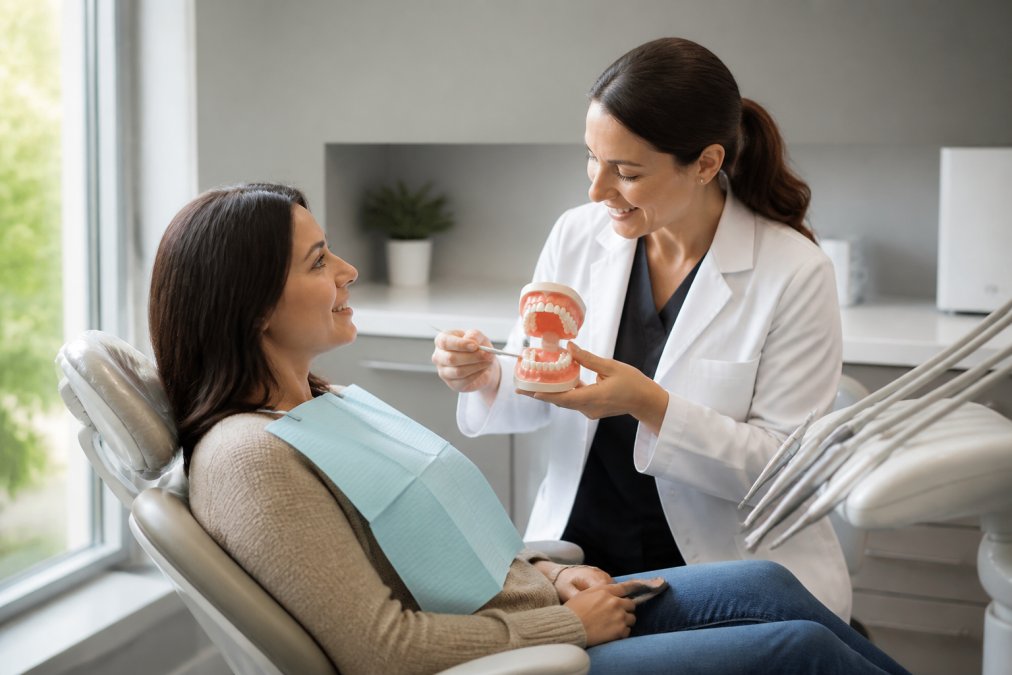
Table of Contents
- Why Choosing the Right Local Dentist Matters for Your Health
- How to Verify Dental License and Credentials
- Dental Insurance Network vs Out of Network: What You Need to Know
- Questions to Ask a New Dentist Before You Commit
- Evaluating Office Environment, Technology, and Safety Standards
- Accessibility, Emergency Care, and Anxiety Management
- Conclusion: Making Your Final Decision
- Frequently Asked Questions
Last Updated: September 11, 2026
Why Choosing the Right Local Dentist Matters for Your Health
Choosing the right local dentist is one of the most consequential healthcare decisions a family makes, because oral health is directly tied to cardiovascular health, diabetes management, and sleep quality. This guide from Sendero Dental Studio walks through the practical steps: verifying credentials, comparing insurance networks, asking the right questions, and evaluating safety standards.
Most people pick a dentist the way they pick a gas station: closest one, first appointment available. That approach works fine until it doesn’t. A rushed crown, a missed diagnosis, or a hygienist who lectures instead of explains can cost you thousands and years of trust.
The stakes are higher than a filling. Research from the CDC Division of Oral Health shows that gum disease is associated with conditions well beyond the mouth, including heart disease and diabetes complications. A dentist who treats you as a whole person, not just a set of teeth, catches those connections.
Below, we break down the seven evaluation criteria that separate a good local dentist from a convenient one.
The single most important step is verifying the license and credentials before your first appointment. Everything else, from insurance to chairside manner, comes second.
How to Verify Dental License and Credentials
A dentist’s license and credentials are verifiable public records, and checking them takes less than ten minutes. Every state dental board maintains a searchable license database, and you can confirm status, expiration, and any disciplinary history.
Start with the state dental board’s online lookup. Search the dentist’s full name and confirm four things: active status, no disciplinary actions, correct license type, and current expiration date.
Then look at credentials beyond the license:
- DDS or DMD: Both are equivalent doctoral degrees; the difference is the granting institution, not the training.
- Board certification: For specialists like orthodontists or oral surgeons, board certification through the American Dental Association’s recognized boards signals additional training and examination.
- Continuing education: Ask how many hours per year the dentist completes and in what areas.
- Dental society membership: Membership in the American Dental Association or a state dental society is voluntary and signals a commitment to professional standards.
What most guides miss is that a license only confirms minimum competency. It says nothing about how the dentist handles anxious patients, whether they upsell, or how they treat children. Those answers come from the questions in the next section.
Dental Insurance Network vs Out of Network: What You Need to Know
The difference between in-network and out-of-network comes down to negotiated rates and how much you pay out of pocket. An in-network provider has a contract with your insurance company that sets maximum allowable fees; an out-of-network provider does not, which means you may owe the difference between what insurance pays and what the dentist charges, a practice known as balance billing.
Here’s how the two compare:
| Factor | In-Network Provider | Out-of-Network Provider |
|---|---|---|
| Negotiated rates | Yes, set by contract | No, provider sets fees |
| Balance billing | Prohibited | Allowed in most cases |
| Co-pay and deductible | Apply as stated | Apply, plus potential difference |
| Paperwork | Provider files claims | You may file claims yourself |
| Provider choice | Limited to network | Any licensed dentist |
| Annual maximum impact | Predictable | Can be exhausted faster |
Before booking, call your insurance company and confirm four things: whether the dentist is currently in-network, what your deductible and annual maximum are, whether preventive care like cleanings and exams is covered at 100 percent, and whether the plan uses a fee schedule or a usual, customary, and reasonable (UCR) reimbursement model. That last distinction matters: under UCR, the insurer pays a percentage of what it considers reasonable, and you absorb the rest.
A dentist’s website may still list an insurance carrier they dropped months ago. Always call your insurance company directly to confirm network status before your appointment, or you could be billed at out-of-network rates.
What to Ask Your Insurer Before You Book
Get answers in writing or note the representative’s name and the call date. Ask:
- Is this specific dentist in-network today, and does that contract renew this plan year?
- What is my annual maximum, and how much have I already used?
- Are there waiting periods for major services like crowns or root canals?
- Does the plan cover out-of-network care at all, and at what percentage?
- Are there frequency limits, such as one cleaning every six months?
If You Don’t Have Dental Insurance
Roughly a quarter of adults report no dental coverage, and the uninsured often pay more than insured patients for the same procedure because they lose the negotiated rate. Ask every practice three questions:
- Do you offer an in-house membership or discount plan? These typically bundle two cleanings, exams, and X-rays for a flat annual fee and discount other services by a set percentage.
- What is your self-pay rate for a standard cleaning, exam, and full set of X-rays?
- Do you offer third-party financing or installment plans for larger treatment?
Many practices also participate in public programs or sliding-scale clinics. If cost is the barrier, ask directly, front-office teams field this question daily and usually have a scripted answer.
Ask for a written pre-treatment estimate before any major work. A good practice will itemize the procedure codes, the fee, the estimated insurance payment, and your expected out-of-pocket cost. If a practice won’t provide one, treat that as a warning sign.
If you don’t have dental insurance, ask about uninsured patient specials and payment plans. Sendero Dental Studio offers an uninsured patient special and can walk you through payment options during your consultation.
Questions to Ask a New Dentist Before You Commit
The right questions to ask a new dentist fall into four categories: credentials, treatment philosophy, emergency availability, and financial policy. Asking them upfront prevents surprises and tells you whether the practice is a good fit for your family.
Bring this list to your first call or consultation:
- Who will I see at each visit? Will you see the same dentist and hygienist consistently, or rotate?
- What is your approach to recommending treatment? Do you present options with pros and cons, or a single plan?
- How do you handle dental anxiety? What comfort options do you offer?
- What are your emergency protocols? Do you offer same-day appointments for urgent issues?
- What are your billing policies? Do you offer payment plans, and how are estimates provided?
- Do you treat the whole family? Can you handle children, adults, and seniors under one roof?
A common mistake is asking these questions only after a problem arises. By then, you’re committed and stressed. Ask them before you sit in the chair.
At Sendero Dental Studio, our team answers these questions during the initial consultation.
Evaluating Office Environment, Technology, and Safety Standards
Office environment, technology, and safety standards tell you more about a practice than any brochure. When you walk in, look for visible sterilization, modern diagnostic tools, and a staff that explains what they’re doing.
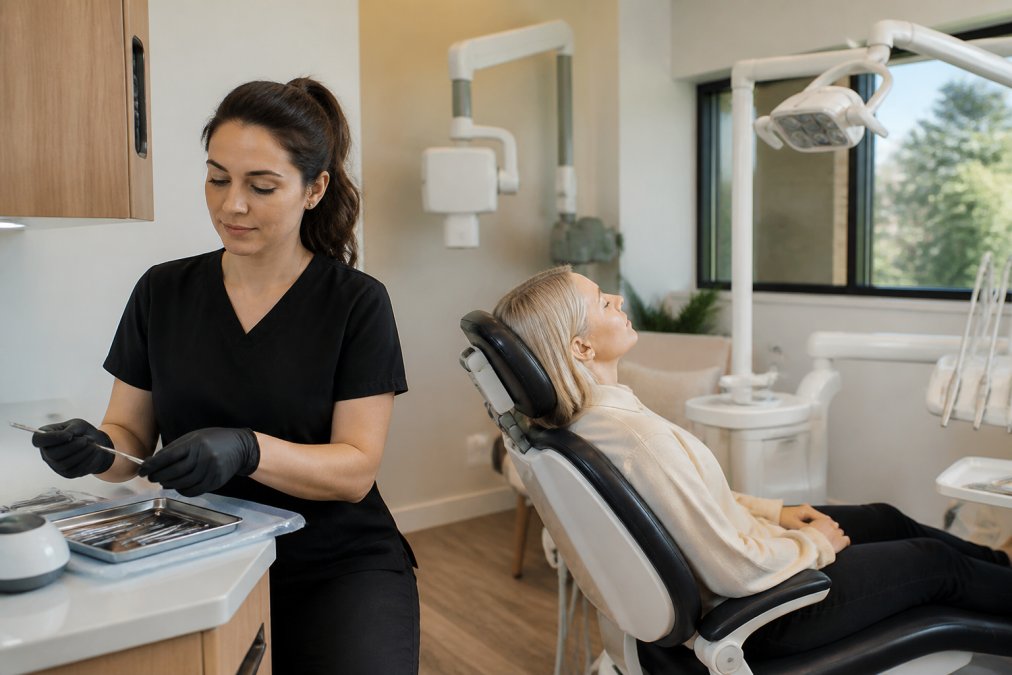
Infection control standards are set by the CDC guidelines for dental settings and enforced by state boards. You should see staff wearing gloves and masks, instruments sealed in sterilization pouches, and surface barriers changed between patients. If anything looks off, ask.
Technology matters too. Digital radiography reduces radiation exposure compared with traditional film and lets the dentist show you images on screen. Intraoral cameras let you see what they see. These aren’t luxuries; they change how well you understand your own treatment plan.
Where it falls short: not every practice invests in the newest equipment, and that’s not automatically a red flag. What matters is whether the tools they use are current, calibrated, and explained to you.
Ask to see the sterilization area on your tour. A practice confident in its protocols will show you without hesitation. If they deflect, that tells you something.
Accessibility, Emergency Care, and Anxiety Management
Accessibility, emergency care, and anxiety management are the three areas where practices most often fall short, and where the difference between a good and a great local dentist shows. Most guides skip them entirely, which is exactly why they deserve their own evaluation checklist.
Accessibility and ADA Compliance
The Americans with Disabilities Act requires dental offices to provide accessible facilities and effective communication, but compliance varies widely in practice. Before you commit, verify:
- Physical access: Is there a wheelchair-accessible entrance, and is the path from parking to the door step-free? Are doorways wide enough for a wheelchair or walker?
- Restrooms: Is at least one restroom ADA-compliant, with grab bars and adequate turning space?
- Treatment room: Can the dental chair accommodate a patient who uses a wheelchair for transfer, or is a lift available?
- Communication: Are staff prepared to work with patients who are deaf or hard of hearing, or who need interpreter services? Are forms available in large print or alternate formats?
- Sensory needs: Is there a quiet space, and can lights or sounds be adjusted for patients with sensory sensitivities?
A quick phone call before booking answers most of these. Ask specifically: “If I arrive in a wheelchair, walk me through the path from my car to the chair.” A practice that has thought about this will answer without hesitation.
Emergency Care Protocols
Dental emergencies don’t schedule themselves. A broken tooth, a knocked-out crown, or sudden severe pain on a Saturday night needs a plan you already know. Ask before you need it:
- What are your after-hours instructions? Is there a recorded message with a call-back number, an answering service, or a direct line?
- Do you offer same-day appointments for urgent issues? How quickly can a patient in pain be seen?
- Who covers when you’re away? Is there a colleague or on-call dentist who handles your patients?
- What should I do in the meantime? A good practice will give you first-aid guidance, how to manage a knocked-out tooth, control bleeding, or handle swelling, over the phone.
A practice with a real emergency protocol will tell you exactly how to reach them and how quickly you’ll be seen. If the answer is “call back Monday,” that’s your answer.
Dental Anxiety and Phobia Management
Dental anxiety is more common than most people admit, and it’s not something to push through alone. A patient-centered practice recognizes that fear is a legitimate clinical concern, not a character flaw, and builds its visit flow around it.
Look for these concrete accommodations:
- A calm, spa-like environment with noise reduction, comfortable seating, and a private area to collect yourself before treatment.
- Clear explanations before any procedure, so there are no surprises, including a stop signal you can use at any time.
- Comfort options, from topical numbing before injections to nitrous oxide or oral sedation where appropriate. Ask which options the practice offers and who administers them.
- A no-judgment approach to patients who haven’t seen a dentist in years. Shame is the single biggest reason people delay care; a good practice replaces it with a plan.
- Pacing control, the ability to break treatment into shorter visits rather than forcing everything into one appointment.
If your child had a bad experience elsewhere, tell the new practice upfront. Ask whether the dentist has experience with anxious pediatric patients and whether parents can stay in the room. Sendero Dental Studio’s team is experienced with anxious patients of all ages and tailors each visit to the patient’s comfort level.
Accessibility, emergency readiness, and anxiety management are the three questions most patients never think to ask, and the three that most often determine whether a practice is a good long-term fit.
Conclusion: Making Your Final Decision
Choosing a local dentist comes down to matching the practice’s strengths to your family’s actual needs. Verify credentials and network status first, ask the six questions before you commit, and trust your read of the office environment and staff.
Sendero Dental Studio is a locally owned practice in Rancho Mission Viejo offering comprehensive care for the entire family, same-day emergency appointments, advanced technology, and an uninsured patient special. Our team builds long-term trust through preventive education and personalized treatment plans.
Request your appointment with Sendero Dental Studio and get a care team that treats your whole health, not just your teeth.
Frequently Asked Questions
What should I look for when choosing a new dentist?
Look for a dentist with valid credentials, a clean and modern office, and a range of services that match your needs. Check patient reviews, confirm insurance coverage, and ask about emergency protocols. Visit the office to assess the environment and staff friendliness. A good local dentist will prioritize preventive care and explain treatment options clearly without pressure.
How can I verify a dentist’s credentials and licensing?
You can verify a dentist’s license through your state dental board’s website, which lists active licenses and any disciplinary actions. Check for board certification in general dentistry or a specialty. Look for membership in professional organizations like the American Dental Association. You can also ask the office directly for their credentials and education background. This step ensures you’re choosing a qualified provider.
Does my dental insurance influence which local dentist I should choose?
Yes, dental insurance can significantly affect your choice. In-network dentists have negotiated rates, lowering your out-of-pocket costs. Out-of-network dentists may charge more, but some plans offer partial coverage. Check your plan’s network status, deductible, co-pay, and annual maximum. If you’re uninsured, ask about payment plans or discounts. Always confirm coverage with the office before booking.
What questions should I ask during a first-time dental consultation?
Ask about the dentist’s experience with your specific needs, such as anxiety management or restorative care. Inquire about sterilization protocols, emergency availability, and whether they use digital radiography. Discuss treatment planning and financial policies. Ask if you’ll see the same dentist each visit. These questions help you gauge if the practice aligns with your preferences and comfort level.
How do I know if a dental office uses modern technology and safety standards?
Look for digital radiography, which reduces radiation exposure, and intraoral cameras for detailed views. Ask about sterilization methods, such as autoclaving, and whether they follow CDC guidelines. A modern office may offer laser dentistry or 3D imaging. During your visit, observe the cleanliness and ask staff about their infection control protocols.