
Step by Step Guide to Children’s Dental Hygiene
Table of Contents
- What You’ll Need Before You Start
- When to Start Brushing Baby Teeth (and How Much Toothpaste to Use)
- Step 1: Master the Brushing Routine for Children’s Dental Hygiene
- Step 2: How to Make Brushing Fun for Kids
- Step 3: Start Flossing and Add Mouthwash at the Right Age
- Step 4: Pediatric Dental Checkup Frequency and What Happens at the Visit
- Common Mistakes to Avoid in Children’s Dental Hygiene
- Frequently Asked Questions
Last Updated: September 14, 2026
What You’ll Need Before You Start
A step by step guide to children’s dental hygiene only works if you have the right tools within arm’s reach. Gather these before the first brushing session, and the routine gets easier for everyone.
- A soft-bristled toothbrush sized for your child’s age
- Fluoride toothpaste (amount varies by age, covered below)
- Unwaxed dental floss or floss picks
- A small cup for rinsing
- A two-minute timer or a brushing app
At Sendero Dental Studio, we tell parents the same thing: consistency matters more than perfection. A child who brushes twice daily with a soft-bristled toothbrush builds better habits than one who brushes “perfectly” once a week.
The American Academy of Pediatric Dentistry offers [guidance on infant oral health(/blog/how-to-maintain-oral-health-2026/) | aapd.org] that confirms what most parents discover on their own: starting early is the single biggest factor in cavity prevention.
When to Start Brushing Baby Teeth (and How Much Toothpaste to Use)
Start brushing your baby’s teeth as soon as the first tooth appears, usually around six months. Before that, wipe the gums with a clean, damp cloth after feeding.
This early start sets the foundation for lifelong oral hygiene habits. Primary teeth matter more than most parents realize. They hold space for permanent teeth, support speech development, and make chewing comfortable.
Fluoride Toothpaste Amounts by Age
| Age | Toothpaste Amount | Who Brushes |
|---|---|---|
| Under 3 | Rice-sized smear | Adult brushes |
| 3 to 6 | Pea-sized amount | Adult supervises |
| 6 and up | Pea-sized amount | Child brushes, adult checks |
Fluoride toothpaste is safe in these amounts. The CDC’s fluoride guidance explains that small doses strengthen enamel protection without risk when used as directed.
Step 1: Master the Brushing Routine for Children’s Dental Hygiene
The core of children’s dental hygiene is a simple routine: brush twice daily for two minutes using soft circular motions. That’s it. The technique matters less than the consistency.
Brushing Techniques for Children
Position yourself behind your child and tilt their head slightly back. Use gentle circular motions along the gum line, where plaque removal matters most. Cover all surfaces: front, back, and chewing edges. Don’t forget tongue cleaning, which reduces bacteria that cause bad breath.
For children under six, an adult should do the brushing. Kids this age lack the fine motor control to reach back molars properly. Let them practice on their own, then finish the job yourself.
A common mistake is brushing too hard. Firm pressure wears down enamel and irritates gum health. Let the bristles do the work with light pressure, and replace the toothbrush every three months or sooner if bristles fray.
Step 2: How to Make Brushing Fun for Kids
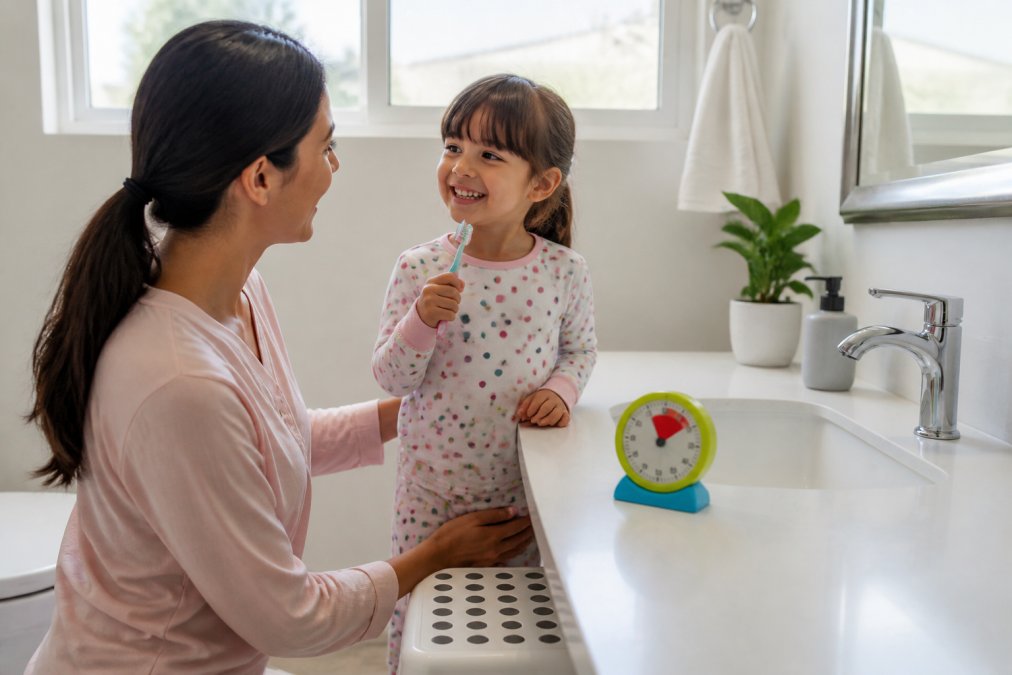
Turn brushing into a game, not a chore. Kids resist routines that feel like punishment. They engage with routines that feel like play.
Try these approaches:
- Play a two-minute song and brush until it ends
- Use a sticker chart with a small reward each week
- Let your child pick their own toothbrush color
- Brush together so they copy your motions
- Name the “sugar bugs” they’re washing away
Sensory-Friendly Brushing Strategies
Some children struggle with the sensation of bristles, the taste of toothpaste, or the sound of brushing. These reactions are common, especially for kids with sensory sensitivities. Try a softer brush, unflavored toothpaste, or a vibrating brush that provides consistent pressure. Let your child hold the brush first without brushing, just to get comfortable.
Never force brushing on a distressed child. Forcing creates long-term resistance that takes months to undo. If your child consistently refuses, talk to a pediatric dental provider about desensitization techniques rather than pushing through tears.
Step 3: Start Flossing and Add Mouthwash at the Right Age
Flossing is the step parents skip most often, and it’s also the one kids resist hardest. The rule of thumb: begin flossing as soon as two teeth touch, which usually happens between ages two and three. Until that point, there’s no gap for a brush to miss, so flossing adds nothing.
Flossing Technique for Young Children
An adult should do all the flossing until roughly age eight, and supervise until age ten. Kids don’t develop the dexterity to wrap floss and reach behind molars until then. Here’s the sequence that works for most families:
- Break off about 18 inches of floss and wind most of it around each middle finger, leaving a one- to two-inch span between your hands.
- Slide the floss gently between two teeth, never snap it down onto the gum.
- Curve the floss into a C shape against one tooth and slide it up and down, going just below the gumline.
- Repeat against the neighboring tooth, then move to a fresh section of floss for the next gap.
Floss picks are a reasonable shortcut for kids who won’t tolerate string floss, and many pediatric providers now recommend them for children under ten because they’re easier for small hands and less likely to cut gums. The trade-off is that picks reach fewer angles than string floss, so an adult should still do a pass with string floss a few times a week if the child’s teeth are tightly spaced.
When to Add Mouthwash
Most children shouldn’t use mouthwash until age six, when they can reliably spit without swallowing. Before that, a child who swallows fluoride rinse is getting a dose that isn’t meant for them. Once they’re ready, choose an alcohol-free rinse labeled for children, alcohol-based rinses sting and dry out young mouths. Fluoride rinses add enamel protection, but they’re not a substitute for brushing and flossing; they’re a supplement for kids with a history of cavities or orthodontic hardware.
If your child gags on mouthwash or finds the taste overwhelming, skip it. Mouthwash is optional. Brushing twice daily and flossing once daily do the heavy lifting, and a child who dreads the rinse may start dreading the whole routine.
What to Do When Flossing Hurts
A child who winces during flossing usually has one of three issues: gums that bleed because they’re inflamed from skipped flossing, a loose baby tooth, or a cavity between teeth. Bleeding that stops within a week of daily flossing is normal and means the gums are healing. Bleeding that continues, or pain on a specific tooth, is a reason to call the dentist rather than push through.
Step 4: Pediatric Dental Checkup Frequency and What Happens at the Visit
Schedule the first pediatric dental checkup by your child’s first birthday, then every six months after that. These visits are about preventive care, not just problem-finding.
A typical visit includes professional cleaning, a visual exam, and sometimes x-rays to check dental development. Many providers apply dental sealants to protect back teeth from decay. The American Dental Association’s patient resources outline what parents can expect at each stage.
For families in Rancho Mission Viejo, Sendero Dental Studio offers comprehensive care for kids and adults under one roof, which means fewer appointments across town.
Common Mistakes to Avoid in Children’s Dental Hygiene
The biggest mistake is skipping brushing on busy nights. One missed session won’t cause a cavity, but a pattern of missed sessions will. Other frequent errors:
- Letting kids brush unsupervised too early, most children need help until age eight
- Using too much toothpaste, which encourages swallowing and can cause fluorosis on developing teeth
- Skipping the back molars, where decay starts most often
- Ignoring sugar from juice, sports drinks, and sticky snacks like gummies and dried fruit
- Waiting until there’s a problem to see a dentist, when prevention is cheaper and easier
- Sharing a toothbrush or letting a child use a sibling’s, which spreads cavity-causing bacteria
Troubleshooting Resistance: What to Do When Your Child Refuses to Brush
Most guides assume a cooperative child. Real households don’t work that way. When a child refuses to brush, the fix depends on why, and the reasons fall into a few predictable buckets.
Testing boundaries. A toddler who says no to brushing is often saying no to everything. Don’t turn it into a power struggle. Offer two acceptable choices, “Do you want the blue brush or the green one?”, and let the child pick. The routine stays the same; the child gets a sense of control.
Sensory discomfort. If your child gags, covers their mouth, or melts down specifically at the sensation of bristles or the taste of toothpaste, the problem isn’t defiance. Try a brush with softer, smaller bristles, unflavored or mild-flavored toothpaste, or a silicone finger brush for kids who can’t tolerate a handle. Let the child hold and chew the brush for a few days before any actual brushing. A vibrating brush can help some kids because the sensation is consistent rather than scratchy.
Pain or a real problem. A child who brushed fine last week and now fights it may have a sore tooth, swollen gums, or a canker sore. Look inside the mouth before assuming it’s behavioral.
A bad experience. A rough brushing session, a scrape, or a scary dental visit can create resistance that lasts weeks. Back off to shorter sessions, brush in a different room, or let the child brush a stuffed animal first.
Never pin a child down or force a brush into their mouth. Forcing creates long-term dental anxiety that can follow them into adulthood and makes every future visit harder. If resistance lasts more than a week or two, or if your child seems genuinely distressed, bring it up at the next dental visit rather than pushing through tears.
Teething vs. Hygiene: Telling Them Apart
Teething and hygiene problems look similar, a fussy baby, drooling, chewing on everything, refusing the usual routine, but the fix is different, and treating one as the other wastes effort.
Teething pain typically shows up between four and seven months for the first teeth, then again around the two-year molars. Signs include swollen gums, heavy drooling, a low-grade temperature under 100.4°F, and a strong urge to chew. A teething baby needs a chilled teether (not frozen, frozen teethers can bruise gums), a gentle gum massage with a clean finger, and cool foods if they’re eating solids. Keep wiping the gums and any erupted teeth twice a day; teething is not a reason to pause hygiene.
A hygiene problem looks different. If a child who normally tolerates brushing suddenly cries at the sight of the brush, or if you can see white spots, brown edges, or swelling on a tooth, that’s not teething, that’s a reason to call the dentist. White spots near the gumline are an early sign of decay and are reversible with fluoride and better brushing; once they turn brown or black, the tooth needs treatment.
A simple rule: teething is discomfort without visible damage. If you can see something wrong on a tooth, it isn’t teething.
Frequently Asked Questions
At what age should a child start flossing?
Start flossing once two teeth touch, which usually happens between ages 2 and 3. Until your child can manage the string alone, typically around age 8, do it for them. Use a soft floss or floss pick and work gently between each pair of teeth, reaching below the gumline where plaque hides. Pair flossing with the evening brushing routine so it becomes automatic. If gums bleed slightly at first, keep going gently; bleeding usually settles as gums get healthier. Ask your dentist at the next pediatric dental checkup to show you the technique.
How much fluoride toothpaste should a child use?
For children under 3, use a rice-sized smear of fluoride toothpaste. From age 3 to 6, use a pea-sized amount. Always supervise brushing and encourage your child to spit rather than swallow. Fluoride toothpaste strengthens enamel and helps prevent dental caries, but swallowing too much can cause white spots on developing permanent teeth. Keep the tube out of reach between brushings, and check with your dentist if your child regularly swallows toothpaste. This is one of the most common questions at pediatric dental visits.
What is the 2-2-2 rule for teeth?
The 2-2-2 rule is a simple memory aid: brush twice daily, for two minutes each time, and see the dentist twice a year. It gives families one easy number to remember instead of a long list of instructions. Two minutes is the brushing duration that gives fluoride toothpaste enough contact time to help with plaque removal. Twice-yearly visits support preventive care, including professional cleaning and dental check-ups. Some children need more frequent visits based on cavity risk, so follow your dentist’s recommendation.
My child fights brushing every night. What actually helps?
Resistance is normal, especially between ages 1 and 3 when children want control. Try offering two choices, like which toothbrush or which song, so your child feels some control. Brush together in front of a mirror, use a two-minute timer, and let your child brush a stuffed animal’s teeth first. For sensory-sensitive children, a smaller soft-bristled toothbrush, unflavored toothpaste, and brushing in a calm room can help. Keep the routine short and consistent. If resistance continues, ask your dentist about strategies at your next visit.
Building a children’s dental hygiene routine takes patience, and some days will go better than others. Sendero Dental Studio supports families through every stage, from a baby’s first tooth to orthodontic evaluations and beyond. Our team offers same-day emergency care, an uninsured patient special, and comprehensive family services in one comfortable office. Request your appointment with Sendero Dental Studio and give your child a foundation for lifelong oral health.