
Nitrous Oxide vs Oral Sedation: Which Is Right?
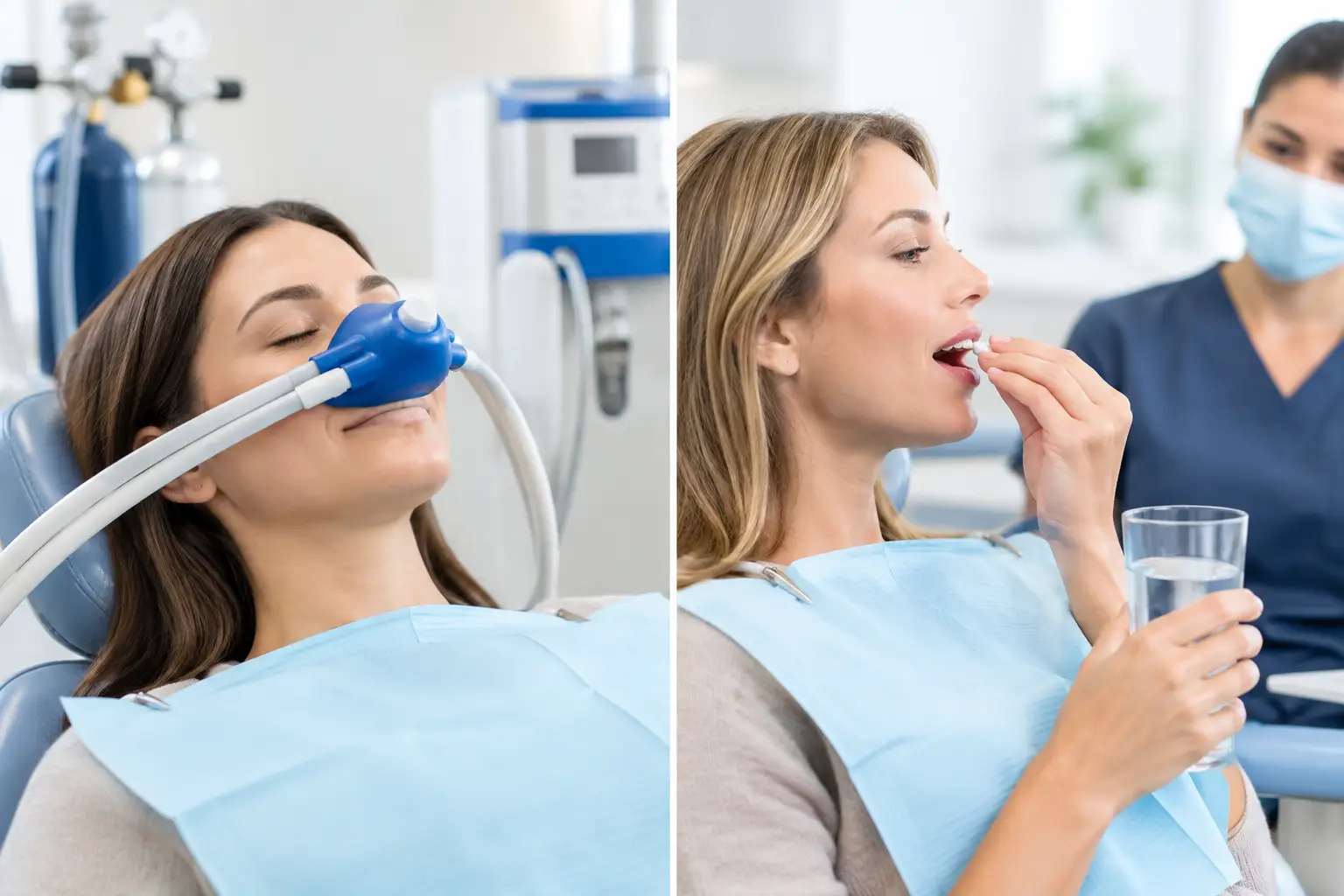
A delayed cleaning, a painful tooth, or an upcoming extraction can feel much bigger when dental anxiety is part of the picture. When patients ask about nitrous oxide vs oral sedation, they are usually asking a very practical question: “How can I get the care I need while feeling calm and safe?”
Both options can make treatment more comfortable, but they work differently. The best choice depends on your anxiety level, health history, the procedure planned, and how much recovery time you can arrange afterward. A personal conversation with your dental team is the right place to make that decision.
Nitrous Oxide vs Oral Sedation: The Key Difference
Nitrous oxide is an inhaled sedative often called laughing gas. You breathe it through a small nose mask while your dental team monitors how you are feeling. Most patients begin to feel lighter, calmer, and less focused on the sights and sounds of treatment within a few minutes. You remain awake and able to respond to questions.
Oral sedation involves taking a prescribed medication before your appointment, usually at a specific time instructed by your dentist. The medication is intended to create a deeper level of relaxation than nitrous oxide for many patients. You may feel sleepy, less aware of the passing time, and less likely to remember details of the procedure afterward.
Neither option is meant to make you unconscious. In most dental situations, local anesthetic is still used to numb the treatment area. Sedation helps with fear and comfort; local anesthetic helps control pain.
How Nitrous Oxide Feels During a Dental Visit
Nitrous oxide is often a good fit for patients who want relief from mild to moderate anxiety but would still like to return to their usual routine soon after the appointment. Your dentist adjusts the level of gas during treatment based on your needs. At the end of the visit, you breathe oxygen for several minutes as the effects wear off.
Many people describe the feeling as warm, floaty, or pleasantly detached. You can still hear the dental team, follow simple directions, and tell us if something feels uncomfortable. Because the effects typically fade quickly, nitrous oxide can be especially convenient for a busy adult fitting care into a workday or a parent scheduling a family appointment.
Nitrous oxide may also be helpful for patients with a strong gag reflex, sensitivity to dental sounds, or nervousness about a procedure such as a filling, crown preparation, or deep cleaning. It can be a reassuring option when a patient wants a little extra help without a lengthy recovery period.
That said, it is not the right answer for everyone. Some people do not like the nasal mask or find that their anxiety requires a stronger approach. A stuffy nose, certain breathing concerns, or specific medical conditions may also affect whether nitrous oxide is appropriate on the day of treatment.
What to Expect With Oral Sedation
Oral sedation is generally chosen when anxiety is more significant, when treatment is expected to take longer, or when a patient has had difficulty completing dental care in the past. Your dentist will provide detailed instructions about when and how to take the medication. Follow those instructions exactly, including any guidance about food, drinks, and regular medications.
The effects can vary from person to person. Some patients feel deeply relaxed but fully cooperative. Others become drowsy and remember very little after the appointment. Because oral medication takes time to start working and can remain in your system for hours, you will need a trusted adult to drive you to and from the office and stay available afterward.
Plan to take the rest of the day off from driving, working, signing important documents, caring for young children alone, or making major decisions. This preparation can feel like an extra step, but for someone who has postponed needed dentistry because of fear, it may make treatment feel much more manageable.
Oral sedation is often considered for longer restorative visits, surgical care, or patients who have a high level of dental anxiety. It may not be recommended for every child, every medical history, or every procedure. Your dentist will review your health information carefully before recommending it.
Comparing Recovery, Convenience, and Control
Recovery is one of the clearest differences between these choices. With nitrous oxide, most patients feel back to normal shortly after the gas is stopped and oxygen is administered. Your dental team will let you know whether you can safely drive yourself based on your individual visit and office protocols.
With oral sedation, arrange transportation in advance. Even if you feel alert after treatment, your judgment and coordination may still be affected. The lingering effects are a key trade-off: oral sedation may offer more powerful relaxation, but it requires more planning around your appointment.
There is also a difference in control. Nitrous oxide can be adjusted during the visit and stops working quickly once the mask is removed. Oral sedation cannot be adjusted in the same immediate way after the medication has been taken. For patients who like the idea of a short-acting option, nitrous oxide can feel more predictable.
Cost and insurance coverage can vary, too. Some dental plans offer limited sedation benefits, while others do not cover them. Before treatment, ask the office team to review estimated costs, your benefits, and available payment options so there are no surprises.
Safety Starts With a Complete Health Review
Sedation dentistry is not one-size-fits-all. Before recommending nitrous oxide or oral medication, your dentist should review your medical history, current medications, allergies, prior experiences with anesthesia, and any relevant conditions such as sleep apnea, breathing issues, liver concerns, or pregnancy.
Be candid about all prescription medications, over-the-counter products, vitamins, and supplements you take. Do not drink alcohol before or after a sedated appointment unless your dentist specifically says it is safe. Alcohol can interact dangerously with sedative medications.
It is also essential to follow pre-appointment instructions. Depending on the type of sedation and your health needs, you may be asked to eat a light meal, avoid food for a certain period, or take regular medications differently. If you are sick, congested, or uncertain about an instruction, call the office before you arrive.
A comfort-focused practice will also monitor you throughout treatment and make sure you are ready for discharge afterward. Sedation should never replace thoughtful planning, clear communication, or appropriate local anesthesia.
Which Option May Fit Your Situation?
Nitrous oxide may be a strong option if you have mild to moderate anxiety, want fast recovery, dislike the idea of taking sedative medication, or need a little help getting through routine or moderately involved care. It can be particularly convenient for patients who want to feel calmer without losing the ability to resume their day soon after the visit.
Oral sedation may be worth discussing if you have severe dental fear, a difficult gag reflex, a history of avoiding appointments because of anxiety, or a longer procedure planned. It can also help patients who find that small calming measures are not enough. The trade-off is the need for a ride, aftercare support, and a slower return to normal activities.
For some patients, the right choice is neither option. A relaxed pace, headphones, frequent breaks, a trusted dental team, and clear explanations can make a major difference. For others, sedation is the bridge that allows them to finally address a painful tooth, restore a damaged smile, or return to consistent preventive care.
At Sendero Dental Studio, the goal is not simply to finish a procedure. It is to help every patient feel heard, prepared, and comfortable enough to protect their long-term oral health. A calm conversation before your visit can help your dental team recommend the level of support that fits both your treatment and your life.