
How Long Does an Emergency Dental Appointment Take?

Table of Contents
- What Counts as a Dental Emergency
- What to Expect at an Emergency Dental Appointment
- How Long Does an Emergency Dental Appointment Take?
- Emergency Tooth Extraction Time: What Affects the Length
- Urgent vs Non-Urgent Dental Care: Knowing the Difference
- How to Prepare for Your Emergency Dental Visit
- Cost Transparency and Insurance Coverage for Emergency Dental Care
- Conclusion
- Frequently Asked Questions
Last Updated: September 16, 2026
What Counts as a Dental Emergency
A dental emergency is any condition involving the teeth, gums, or jaw that requires immediate professional attention to relieve severe pain, stop bleeding, save a tooth, or prevent a serious infection. At Sendero Dental Studio, the key distinction is whether the problem threatens your health or your tooth right now, or whether it can safely wait.
Symptoms That Need Immediate Attention
Some symptoms clearly signal that you should call a dental office the same day:
- Severe, throbbing tooth pain that does not respond to over-the-counter pain relievers
- A tooth that has been knocked out completely
- A tooth that is loose after an injury
- Visible swelling in your face, jaw, or neck
- Bleeding from the mouth that will not stop after a few minutes of pressure
- A broken or cracked tooth with exposed inner layers
- A dental abscess, often marked by a bad taste, a pimple-like bump on the gum, or fever
What to Expect at an Emergency Dental Appointment
Most emergency visits follow a predictable sequence: phone triage, a focused examination, imaging, and a treatment plan. Knowing the flow removes much of the anxiety. Arriving without your medical history or medications adds time, because the dentist has to work around unknowns.
Initial Assessment and Symptom Evaluation
The visit starts with a conversation, not a drill. The dentist asks when the problem began, what makes it worse, and how severe the pain is. Bring your medical history, medications, and allergies, since they affect which anesthetics and antibiotics are safe for you.
Diagnostic Imaging and Treatment Planning
Diagnostic imaging usually comes next. X-rays reveal what the eye cannot: decay under a filling, a fracture below the gumline, an infection at the root, or bone loss. Many practices use digital x-rays, which take seconds and can be reviewed on screen with you.
How Long Does an Emergency Dental Appointment Take?
An emergency dental appointment typically takes 30 to 90 minutes from check-in to walking out the door. Some are diagnosed and finished in half an hour; others require a longer procedure or a referral.
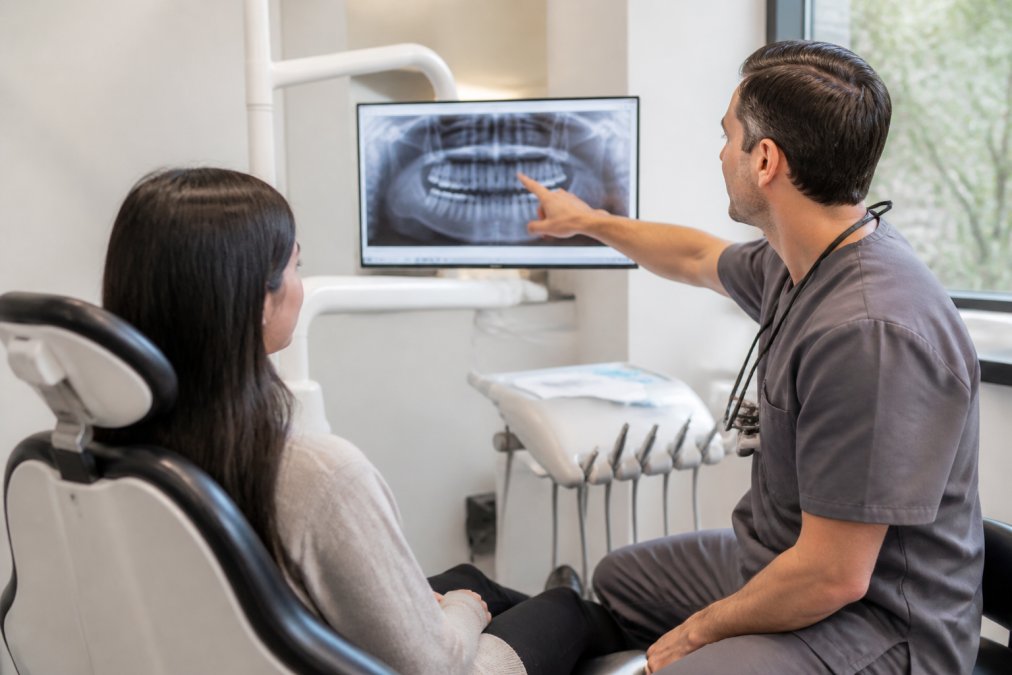
Here is how the time usually breaks down:
| Phase | Typical Duration | What Happens |
|---|---|---|
| Check-in and paperwork | 5-10 minutes | Registration, medical history review |
| Initial assessment | 5-15 minutes | Symptom review, clinical triage |
| Diagnostic imaging | 5-15 minutes | X-rays of the affected area |
| Treatment | 15-45 minutes | Pain management, procedure, or stabilization |
| Discharge and plan | 5-10 minutes | Aftercare instructions, follow-up scheduling |
Emergency Tooth Extraction Time: What Affects the Length
An emergency tooth extraction usually takes 20 to 45 minutes for a straightforward tooth, and longer when the tooth is broken at the gumline, impacted, or infected. The extraction itself is often the shortest part of the visit; preparation and aftercare take just as long.
Four factors drive emergency tooth extraction time:
- Tooth position. A fully erupted tooth comes out faster than one that is cracked below the gumline.
- Infection and swelling. Active infection can make local anesthesia less predictable, so the dentist may need to adjust the approach or stage treatment.
- Root anatomy. Curved or multiple roots take more time and skill to remove cleanly.
- Patient comfort. Numbness needs to be complete before the dentist begins. Rushing this step is how patients end up remembering the appointment for the wrong reasons.
Urgent vs Non-Urgent Dental Care: Knowing the Difference
Urgent dental care addresses problems that need attention within a day or two, while non-urgent care can wait for a routine appointment. Getting this distinction right saves you an unnecessary emergency visit and keeps you from delaying care that genuinely cannot wait.
The Three Tiers
Think of dental problems in three tiers, not two:
- Emergency (same-day, sometimes immediate). Severe uncontrolled pain, a knocked-out tooth, a tooth fractured with exposed inner layers, uncontrolled bleeding, facial or neck swelling, fever with a dental source, or any trauma to the face or jaw. These need care today.
- Urgent (within 24-48 hours). A cracked tooth with pain on biting, a lost filling or crown with discomfort, a dental abscess without systemic symptoms, or persistent pain that over-the-counter relievers only partly control. These should be seen within a day or two.
- Non-urgent (routine appointment). A small chip without pain, mild sensitivity to cold, a lost filling with no discomfort, a dull ache that comes and goes, or a cosmetic concern. These can be scheduled during normal hours.
The Tricky Middle Ground
Intermittent pain is the most misread symptom. A tooth that hurts only when you bite down may have a cracked cusp; one that aches at night may have an inflamed nerve. Neither heals on its own, and both are easier and cheaper to treat before they escalate.
Waiting on intermittent tooth pain is the most common mistake we see. The problem rarely disappears; it usually escalates into an abscess or a fracture that turns a simple filling into a root canal or extraction.
After-Hours and Weekend Availability
The urgent/non-urgent decision gets harder at 9 p.m. on a Saturday, when your regular office is closed. Here is how the options differ:
- Your dentist’s on-call line. Many practices route after-hours calls to an on-call dentist or answering service. This is usually the fastest path to advice and, if needed, a same-night or next-morning appointment.
- Urgent dental care offices. These keep extended evening and weekend hours specifically for emergencies. They can often see you the same evening or on a weekend morning, and they are set up to do definitive treatment, not just triage.
- Hospital emergency room. Appropriate for facial trauma, uncontrolled bleeding, difficulty breathing or swallowing, or swelling that is closing your eye or spreading down your neck. An ER can manage the medical emergency but typically cannot perform definitive dental treatment, so a dental follow-up is still required.
How to Decide in the Moment
Ask three questions: Is there swelling, fever, or bleeding I cannot stop? Is the pain severe enough that I cannot function? Did this start with trauma? If any answer is yes, treat it as an emergency and call now. If all three are no, it is likely urgent or non-urgent, and a next-day call to schedule is appropriate.
How to Prepare for Your Emergency Dental Visit
Preparation shortens your appointment and improves your outcome. The most useful step is calling before you leave the house and letting the office triage your symptoms by phone. That call determines whether you need a same-day, next-day, or routine visit, and lets the front desk pull your records and set up the room before you arrive.
The Phone Triage Script
When you call, describe four things in order: what happened, when it started, how bad the pain is now, and whether you have swelling, fever, or bleeding that will not stop. Lead with the symptom, not the story. “I have a broken molar and throbbing pain that started last night, no swelling, no fever” gives the scheduler everything needed to place you correctly.
What to Bring
- Photo ID and your dental insurance card
- A written list of current medications, doses, and allergies (including blood thinners, which affect bleeding)
- Relevant medical history: heart conditions, diabetes, pregnancy, prior reactions to anesthesia
- For a knocked-out tooth, keep it moist in milk or saline and bring it with you, do not scrub the root
- For bleeding, clean gauze for gentle pressure
- For swelling, a cold compress for the outside of your face (never heat)
- A ride home if you expect sedation or a lengthy procedure
- Your questions written down, because it is easy to forget them once you are in the chair
What Not to Do Before You Arrive
Avoid aspirin for pain, since it can increase bleeding, and never place an aspirin tablet directly on the gum, it can burn the tissue. Do not try to straighten a displaced tooth yourself, and do not delay because the pain eased; intermittent pain is a developing problem, not a resolved one.
After-Hours and Weekend Logistics
Most dental offices keep limited evening and weekend hours, so the practical question is how to reach care when yours is closed. Three options exist:
- Your dentist’s after-hours line. Many practices route emergency calls to an on-call dentist or a answering service that can page the dentist. Check your office’s website or voicemail before you assume no one is available.
- A dedicated urgent dental care office. These practices keep extended hours specifically for emergencies and can often see you the same evening or on a weekend morning.
- A hospital emergency room. Reserve this for facial trauma, uncontrolled bleeding, difficulty breathing or swallowing, or swelling that is closing your eye or spreading down your neck. An ER can manage the medical emergency but usually cannot perform definitive dental treatment, so you will still need a dentist afterward.
Save your dentist’s after-hours number in your phone now, before you need it. In a real emergency, you will not want to be searching for it while in pain.
A Note on Timing
If you can reach a dentist within the first hour of a knocked-out tooth, the odds of saving it improve (the American Dental Association). For most other emergencies, same-day care is the goal, and next-day care is acceptable if symptoms are stable. The phone triage call tells you which category you are in.
Cost Transparency and Insurance Coverage for Emergency Dental Care
Cost is the question patients ask last and worry about most. Emergency dental pricing depends on the procedure, the tooth involved, and whether you have insurance, which is why no honest office quotes a number before examining you.
Ask for the treatment plan in writing before you agree to anything. A practice that is confident in its recommendations will have no problem putting the costs, the alternatives, and the timeline on paper for you to take home.
Conclusion
A dental emergency is stressful, and uncertainty about how long the appointment will take makes it worse. Knowing the typical 30-to-90-minute window, the steps involved, and what to bring helps you walk in prepared instead of anxious.
Frequently Asked Questions
How fast can you get an emergency dental appointment?
Many practices offer same-day appointments for urgent issues, but availability depends on the provider and time of day. Call as soon as symptoms start to get the earliest slot. If you have severe pain, swelling, or a knocked-out tooth, explain that when you call so the team can prioritize your visit.
What should I do while waiting for an emergency dental appointment?
For a knocked-out tooth, hold it by the crown, rinse gently, and try to reinsert it or keep it in milk. For severe tooth pain, rinse with warm salt water and apply a cold compress to the outside of your cheek. Avoid chewing on the affected side and do not place aspirin directly on your gums, as this can burn tissue.
How long does a tooth extraction take during an emergency visit?
A simple extraction often takes 20 to 40 minutes, including local anesthesia and aftercare instructions. Surgical extractions for impacted or broken teeth can take longer. Your dentist will review your medical history and take x-rays first, so plan for the full appointment to last about an hour.
Will I need a follow-up appointment after an emergency dental visit?
It depends on the treatment. A filling or simple extraction may not require a follow-up unless you have complications. More involved procedures like root canals, surgical extractions, or dental implant placement usually need a follow-up to check healing and complete the treatment plan. Your dentist will tell you what to expect before you leave.