
What Is Sleep Dentistry and How It Works: A 2026 Guide
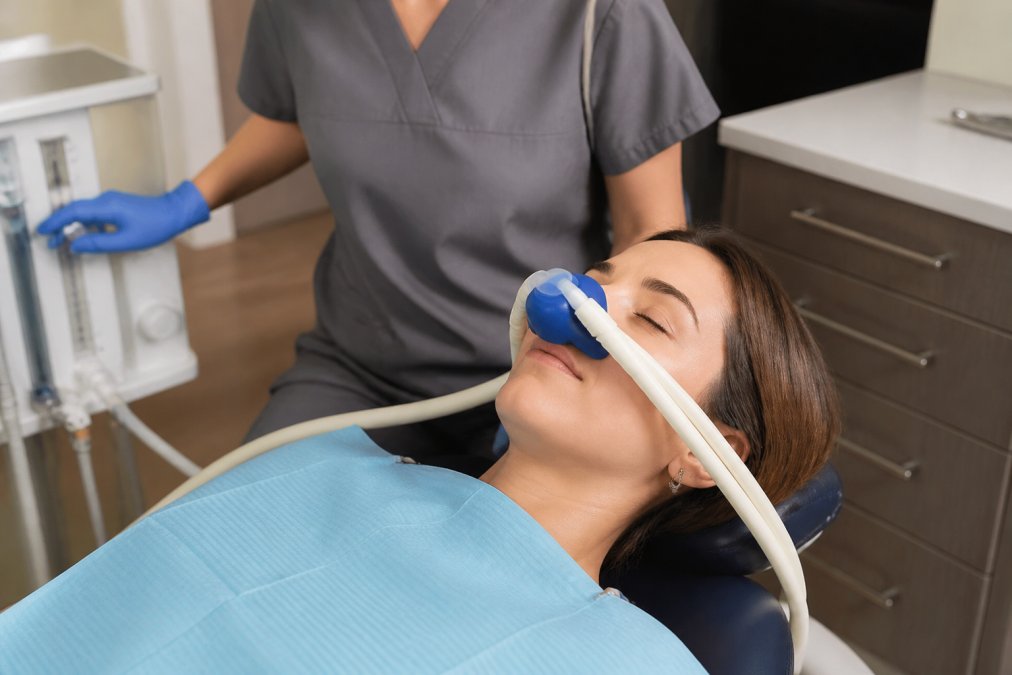
Table of Contents
- What Is Sleep Dentistry and How It Works
- Types of Dental Sedation: From Minimal to Deep
- Is Sedation Dentistry Safe? What You Need to Know
- Sedation Dentistry Recovery Time and Aftercare
- How to Prepare for Your Appointment: A Step-by-Step Checklist
- Insurance, Costs, and Financing Options
- Managing Dental Anxiety Before and After Treatment
- Frequently Asked Questions
Last Updated: September 25, 2026
What Is Sleep Dentistry and How It Works
Sleep dentistry uses sedative medications to keep you calm and comfortable during dental treatment.
The Real Difference Between Sleep and Sedation
Here is the part most people get wrong. “Sleep dentistry” is a nickname, not a clinical term. The medical name is sedation dentistry.
Types of Dental Sedation: From Minimal to Deep
Sedation is a continuum. The level you receive changes your awareness, memory, recovery time, and who can administer it. The table below maps the four levels; the sections after explain each mechanism so you can ask sharper questions at your consultation.
| Level | How It’s Given | Awareness | Onset | Best For |
|---|---|---|---|---|
| Minimal | Nitrous oxide, breathed in | Fully awake, relaxed | 2-3 minutes | Mild nerves, short visits |
| Moderate | Oral pills or IV | Drowsy, may not recall | 30-60 min (oral); near-immediate (IV) | Longer or anxiety-heavy visits |
| Deep | IV, supervised | Barely responsive | Minutes | Complex dental work |
| General | IV or inhaled, anesthesia team | Unconscious | Minutes | Surgery, hospital settings |
Nitrous Oxide (Laughing Gas)
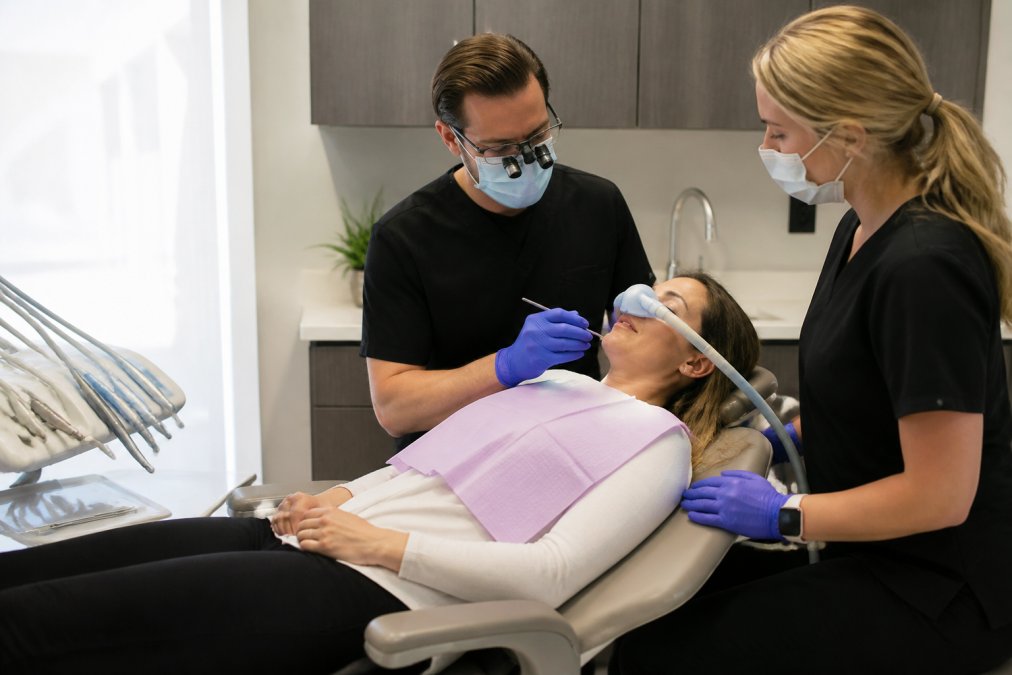
Nitrous oxide is a gas you breathe through a small mask over your nose, mixed with oxygen and adjusted by your dentist throughout the visit. It produces a floating, relaxed sensation within minutes. Because it leaves your system through your lungs rather than your liver, effects reverse within minutes once the mask comes off, which is why you can typically drive yourself home.
Oral Sedation
Oral sedation uses a pill, commonly a benzodiazepine, taken 30 to 60 minutes before your appointment. It is metabolized by your liver, so onset is slower and duration longer than nitrous. You will feel drowsy, may doze during treatment, and remember little of the visit.
IV Sedation
IV sedation delivers medication directly into your bloodstream, so effects begin almost immediately and your care team can titrate the dose in real time based on your response. It is the most controllable form of moderate sedation and the one most often chosen for long appointments, complex treatment plans, or pronounced dental phobia.
Pediatric Versus Adult Protocols
This is where most articles blur the lines, and it matters if you are researching for a child. Children are not small adults when it comes to sedation.
- Weight-based dosing. Pediatric doses are calculated by body weight, not a fixed adult dose, and recalculated at each visit as they grow.
- Different medication choices. Nitrous oxide is often first-line for children because it wears off quickly and lets them leave alert. Oral sedation is reserved for specific situations and dosed more conservatively.
- Fasting rules differ. Children dehydrate faster and have different fasting windows than adults. Follow your pediatric dentist’s exact instructions, do not borrow adult rules.
- Monitoring is more intensive. Children are monitored more closely for oxygen levels and breathing, and a parent or guardian usually must remain on site.
- Consent and observation. A parent or guardian signs consent, and the child must be observed at home for the rest of the day.
Ask your dentist which level they are recommending and why. A good answer will reference your specific procedure, your health history, and how long you will be in the chair, not just “what we usually do.”
The Real Difference Between Sleep and Sedation
Here is the part most people get wrong. “Sleep dentistry” is a nickname, not a clinical term. The medical name is sedation dentistry.
Is Sedation Dentistry Safe? What You Need to Know
For most healthy patients, sedation dentistry has a strong safety record when a trained team manages it. That record comes from specific safeguards before, during, and after your appointment, knowing them helps you evaluate whether a practice is set up to do this well.
The Pre-Procedure Safety Screen
Safety starts before any medication is given. A thorough screening covers:
- Medical history. Heart conditions, lung disease, kidney or liver function, and prior reactions to anesthesia influence which sedative is appropriate.
- Medication and supplement list. Some antidepressants, blood thinners, and opioids interact with sedatives. Herbal supplements are not exempt; St. John’s wort and kava can amplify sedative effects.
- Sleep apnea and airway risk. If you have diagnosed or suspected obstructive sleep apnea, your dentist needs to know. Sedatives relax the muscles that keep your airway open, which can worsen apnea during treatment and recovery, often changing the sedation level or monitoring plan.
- Pregnancy status. Some sedatives are avoided during pregnancy, and the plan may shift to nitrous oxide or deferral of elective treatment.
- Alcohol and substance use. Tolerance and cross-interactions affect dosing. This is a medical question, not a judgment call, and your care team needs an accurate answer.
What Monitoring Actually Looks Like
During moderate or deep sedation, your care team should be watching more than your comfort. Standard monitoring includes:
- Pulse oximetry, a finger clip that continuously tracks oxygen saturation in your blood.
- Blood pressure and heart rate, checked at intervals throughout the visit.
- Respiratory rate and depth, observed directly, since sedatives can slow breathing.
- Capnography, in deeper sedation settings, measures exhaled carbon dioxide and can detect breathing problems earlier than pulse oximetry alone.
Who Is at Higher Risk
Sedation is generally well tolerated, but certain factors raise risk and change the plan:
- Untreated or severe sleep apnea
- Significant heart or lung disease
- Very young children and older adults, who metabolize medications differently
- Obesity, which can affect airway management and drug distribution
- Multiple sedating medications, including opioids and certain psychiatric drugs
- A history of adverse reactions to anesthesia
Questions to Ask Before You Agree
- Who will administer and monitor the sedation, and what is their training?
- What monitoring equipment will be used?
- What reversal agents are on hand?
- What is the emergency protocol if something goes wrong?
- Who drives me home, and what is the observation plan afterward?
Never skip the medical history form or hide a medication you take. Certain drugs interact badly with sedatives, and an honest list is what keeps you safe.
If you have sleep apnea, heart conditions, or take multiple prescriptions, tell your dentist. These factors change which sedative is appropriate. The American Dental Association’s guidance on sedation outlines how providers should assess and monitor patients.
Sedation Dentistry Recovery Time and Aftercare
Recovery time depends on the type you received. Nitrous oxide clears in minutes. Oral and IV sedation can leave you drowsy for several hours, sometimes into the next day.
Plan for a quiet rest of your day:
- No driving for 24 hours after oral or IV sedation
- No operating machinery or making big decisions
- Rest, hydrate, and eat soft foods first
- Follow all post-operative instructions from your dentist
How to Prepare for Your Appointment: A Step-by-Step Checklist
Good preparation makes the visit smoother and safer. Use this checklist:
- Arrange a ride home, and confirm the driver ahead of time
- Skip food and drink for the hours your dentist tells you to fast
- List every medication, supplement, and allergy
- Share your full medical history, including sleep apnea
- Wear loose, comfortable clothing with short sleeves
- Leave jewelry and contact lenses at home
- Bring your insurance card and a form of ID
- Ask which sedation level you are getting and what to expect
Schedule sedation visits for the morning if you can. You will have the full day to rest, and you will not be fighting afternoon fatigue on top of the sedative.
Insurance, Costs, and Financing Options
Coverage varies. Many dental plans cover the treatment itself but treat sedation as a separate line item, and some cover it only when medically necessary, not for anxiety alone.
Before your visit, do three things:
- Call your insurer and ask if sedation is a covered benefit
- Ask the office for a written estimate in advance
- Ask about payment plans if the total is a stretch
Managing Dental Anxiety Before and After Treatment
A few approaches that help:
- Tell your dentist about your fear, in plain words, before treatment
- Agree on a stop signal you can use during the visit
- Ask for a walkthrough of what will happen, step by step
- Try relaxation techniques like slow breathing before you arrive
- Consider bringing headphones or a comfort item
Sedation is a tool, not a cure for fear. Pairing it with honest communication and a patient team is what actually changes how you feel about the dentist.
The National Institute of Dental and Craniofacial Research notes that avoiding care due to fear often makes problems worse and more costly to fix later.
Frequently Asked Questions
Are you completely asleep during sedation dentistry?
Not usually. Most sleep dentistry uses moderate sedation, which puts you in a deeply relaxed, drowsy state where you can still respond to instructions. You may feel like you slept through the appointment because sedatives often cause partial amnesia. Only deep sedation or general anesthesia brings full unconsciousness, and those are reserved for specific cases and administered by a qualified professional.
Is sleep dentistry worth it for anxious patients?
For many people with dental anxiety or a strong gag reflex, sleep dentistry makes it possible to receive necessary care they would otherwise avoid. It can reduce fear during complex dental work and help you complete multiple treatments in fewer visits. Whether it is right for you depends on your health history and the procedures you need, so discuss your options with a dentist who offers sedation.
How long does it take to recover from sedation dentistry?
Recovery time depends on the type of sedation. Nitrous oxide wears off within minutes, so you can usually drive yourself home. Oral sedation may leave you drowsy for several hours, and IV sedation can take longer. Plan to rest for the remainder of the day, avoid driving, and follow your dentist’s post-operative instructions. Most people feel normal by the next day.
Is sedation dentistry safe for children and older adults?
Sedation can be safe for both children and seniors when a qualified dentist reviews the patient’s medical history and adjusts the approach. Pediatric protocols often use nitrous oxide or mild oral sedation, while older adults may need lower doses due to medication interactions. Always share a complete list of medications and health conditions before scheduling a sedated appointment.
Dental fear and delayed care can turn a small problem into a painful, expensive one. At Sendero Dental Studio, we built our practice around comfort, from same-day emergency care to a calm, spa-like setting for anxious patients. Our team offers comprehensive care for the whole family, including sedation options, so you can get the treatment you need without the dread. Request your appointment with Sendero Dental Studio and take the first step toward care that actually feels manageable.